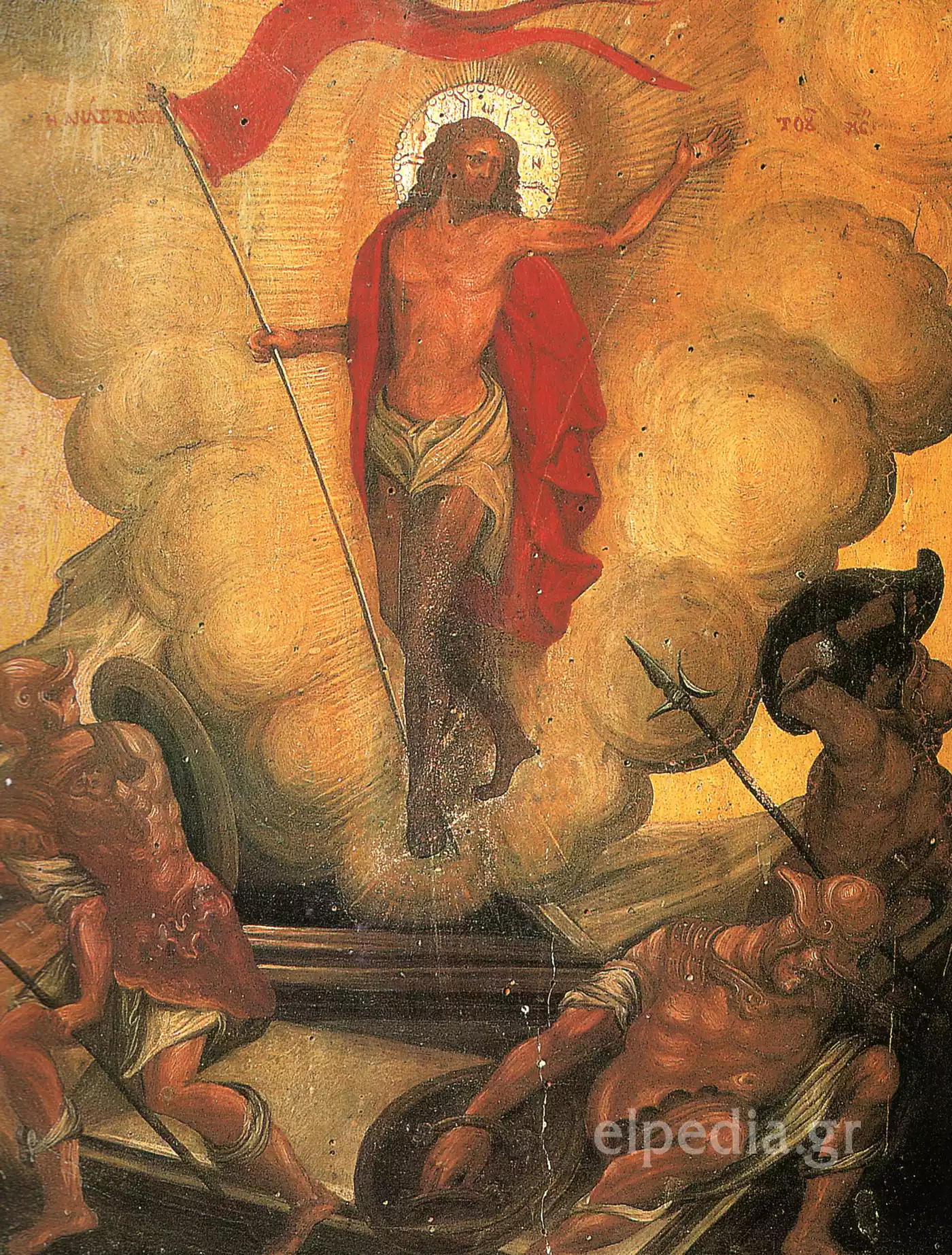
The Byzantine iconography of the Resurrection from an 18th-century Greek church combines theological depth with artistic excellence
The Byzantine iconography of the Resurrection is one of the most significant cycles in Orthodox Christian art. In the 18th century, despite Ottoman rule, Greek communities kept the tradition of iconography alive, creating works of profound theological significance that blend the ancient Byzantine tradition with newer artistic developments.
This particular icon from a Greek church in Barletta represents the traditional Byzantine iconography of the Resurrection, known as the Resurrection or “Descent into Hades.” Instead of depicting Christ emerging from the tomb, as is common in Western art, the Byzantine tradition focuses on the theologically rich scene of the salvation of the righteous from the Old Testament by Hades. This iconographic choice, established in the 8th century and continuing to flourish in the post-Byzantine communities of the 18th century, reflects a deep theological understanding of the mystery of the Resurrection as a cosmic event that transcends the temporal limits of Christ’s earthly life.
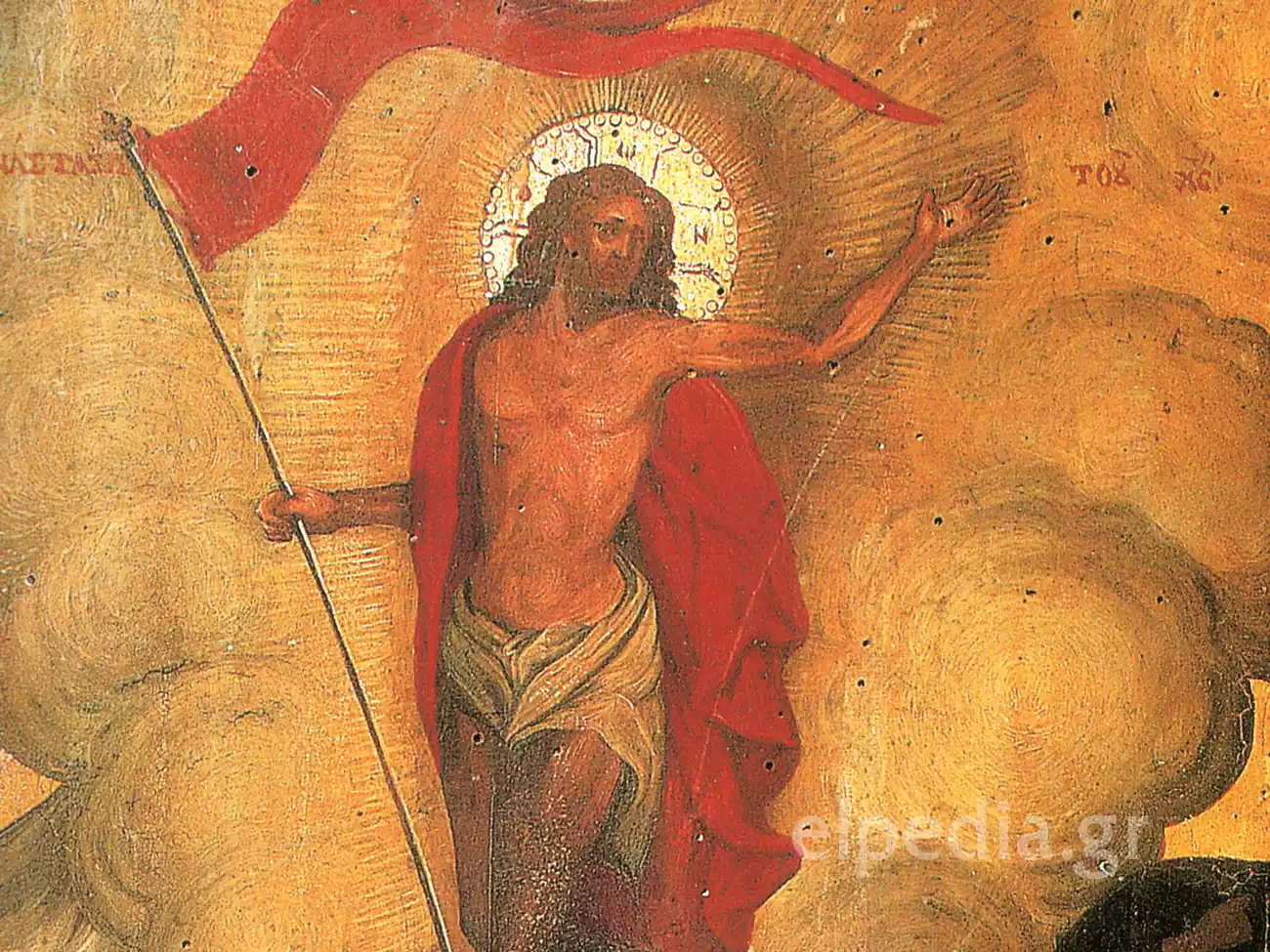
Christ in a purple robe and golden halo saves Adam in the Byzantine iconography of the descent into Hades
The Central Figure of Christ and Its Theological Significance
At the center of the composition stands the figure of Christ, dressed in a white robe symbolizing divine glory. His glorious appearance reflects the transformation achieved through the Resurrection.
The risen Lord holds a staff or cross, a weapon of victory over death, while simultaneously raising Adam from his tomb with a gesture that expresses infinite love and power. This dual role – as victor and savior – embodies the theological doctrine of Christ’s divine-human nature and His redemptive mission. Academic research on the iconography of the Resurrection highlights that this type of depiction represents a profound theological understanding of the mystery of salvation (Kartsonis).
The halo surrounding Christ’s figure is not merely a decorative element but a theological declaration of the uncreated glory manifested through victory over death. The traces of wounds on His hands and feet remain visible, reminding us that the Resurrection does not negate suffering but transforms it into a source of life and salvation.
Demonic Forces and the Semiology of Evil
At the bottom of the image, where Christ’s feet tread upon the broken gates of Hades, demonic figures are visible, symbolizing the forces of evil. These figures are not merely allegories but theological declarations about the nature of evil and the means of victory over it.
The semiology of demons in Byzantine art follows specific rules. The distorted forms, grotesque features, and chaotic arrangement contrast sharply with the harmonious and radiant presence of Christ. At the same time, the fact that they are not completely destroyed but merely subdued reflects the Byzantine theological understanding of the economy of salvation, where even the forces of evil are incorporated into the overall divine plan.
The keys and chains scattered around the broken gates serve as symbols of the freedom that the Resurrection brings to all creation, a freedom that extends beyond humanity to the very structure of the world.
The Overall Composition and Eschatological Dimension
The topology of the image – with Christ at the center, Adam and Eve on either side, and the holy prophets and righteous figures from the Old Testament in the margins – is not random but reflects a profound eschatological view of history. This arrangement, rooted in the ancient Byzantine tradition, represents the coherence of the divine plan from the beginning of time to its eschatological fulfillment.
The presence of the prophets and kings of Israel is not merely a historical reference but a theological declaration of the continuity of divine economy. Each figure bears distinctive characteristics and symbols that make them recognizable to the viewing audience, creating an iconographic code that serves as a theological catechetical manual. In the 18th century, when Greek communities were under foreign rule, these images gained additional significance as carriers of national and religious identity, keeping alive the memory of a lost cultural heritage and offering hope for spiritual and national resurrection.
The golden atmosphere enveloping the entire scene is not just an artistic choice but a theological statement about the nature of uncreated light that characterizes eschatological reality. This golden radiance, a hallmark of Byzantine iconography, symbolizes the transcendence of time and space achieved through the Resurrection and offers the faithful a glimpse of the future glory that awaits all creation.

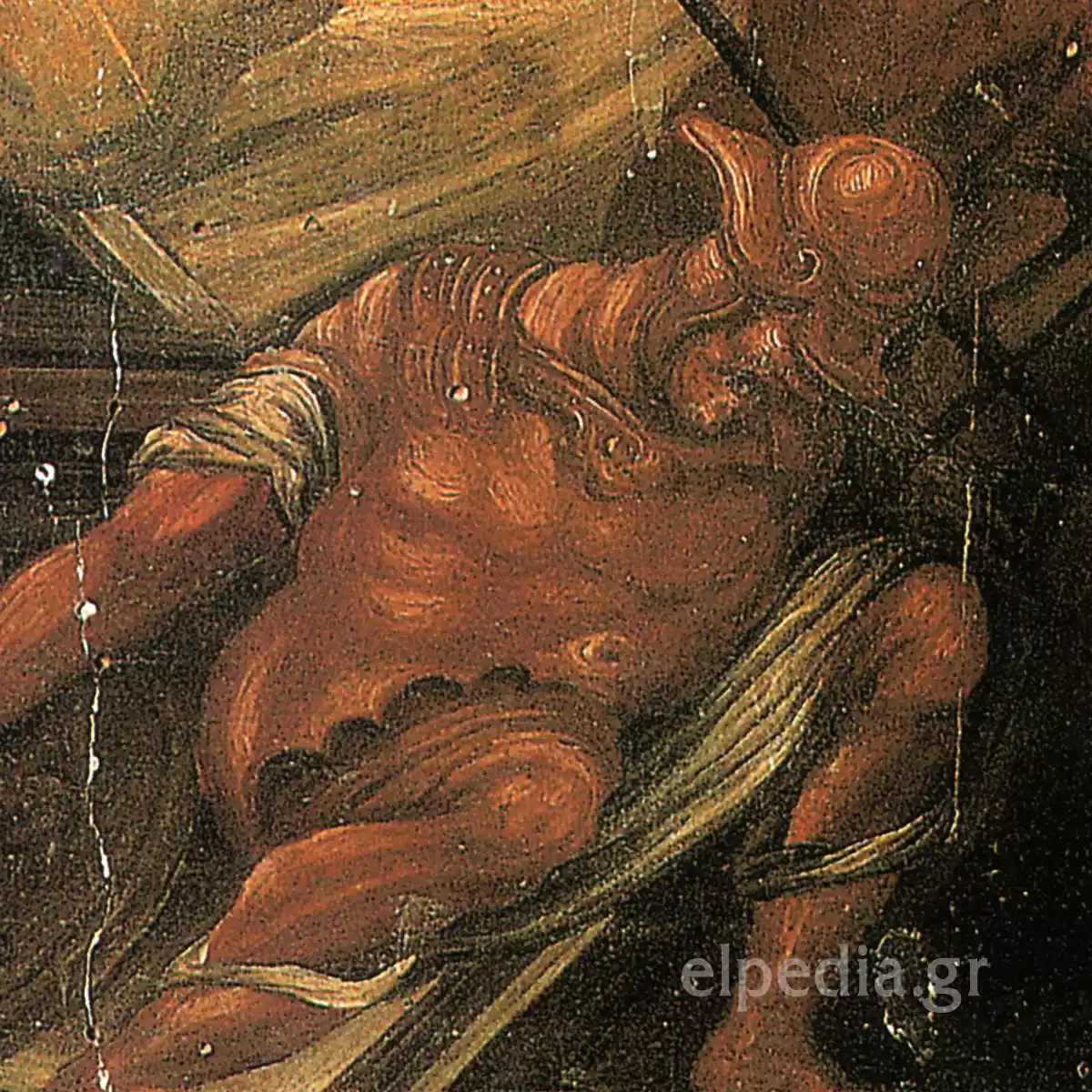
The Greek ecclesiastical community of Barletta kept the Byzantine tradition alive in the 18th century
Bibliography
Brooks, Sarah T. “Icons and Iconoclasm in Byzantium.” The Metropolitan Museum of Art, 2009.
Kartsonis, Anna. “The Anastasis in the Funerary Chapel of Chora Monastery in Constantinople: Meaning and Historical Interpretations.” In Biography of a Landmark, The Chora Monastery and Kariye Camii in Constantinople/Istanbul from Late Antiquity to the 21st Century. Leiden: Brill, 2023.
Smarthistory. “The Lives of Christ and the Virgin in Byzantine Art.” Smarthistory, 2021.
TheCollector. “Decoding Byzantine Art: Understanding Byzantine Religious Iconography.” TheCollector, 2022.
Cartwright, Mark. “Byzantine Icons.” World History Encyclopedia, 2017.
Unknown Author. “Anastasis: Icon, Text and Theological Vision.” Academia.edu, 2006.


