
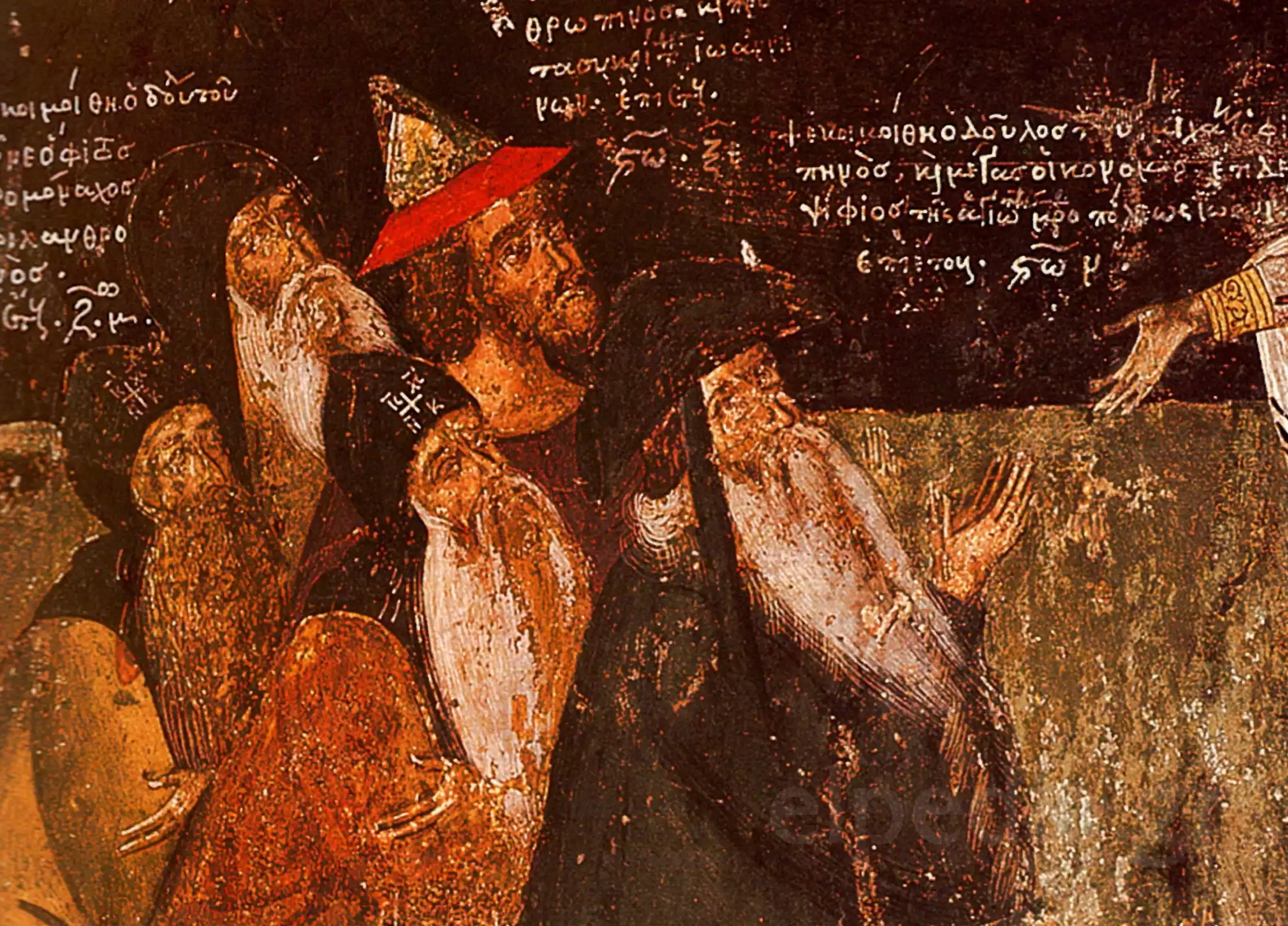
The Sleeping Philanthropists are depicted with realistic features, breaking away from the strict conventions of Byzantine iconography.
Fresco – Monastery of Philanthropists, Ioannina, Greece.
As you gaze at these figures, you wonder if they are asleep or if they have merely closed their eyes to perceive something that we, the living, cannot grasp. They are not saints in the traditional sense; they lack the blinding halos, they are simply people, the Philanthropists. They stand there, on the wall, eternal founders, having transformed death into a lasting presence, a way of life that seems to defy time. Their portrayal is not just a historical record; it is a visual testimony that balances between the realism of portraiture and the spirituality of the Byzantine tradition. It is remarkable how art manages to make absence feel so tangible, almost physical.
The Essence of Mortality and the Transcendence of Form
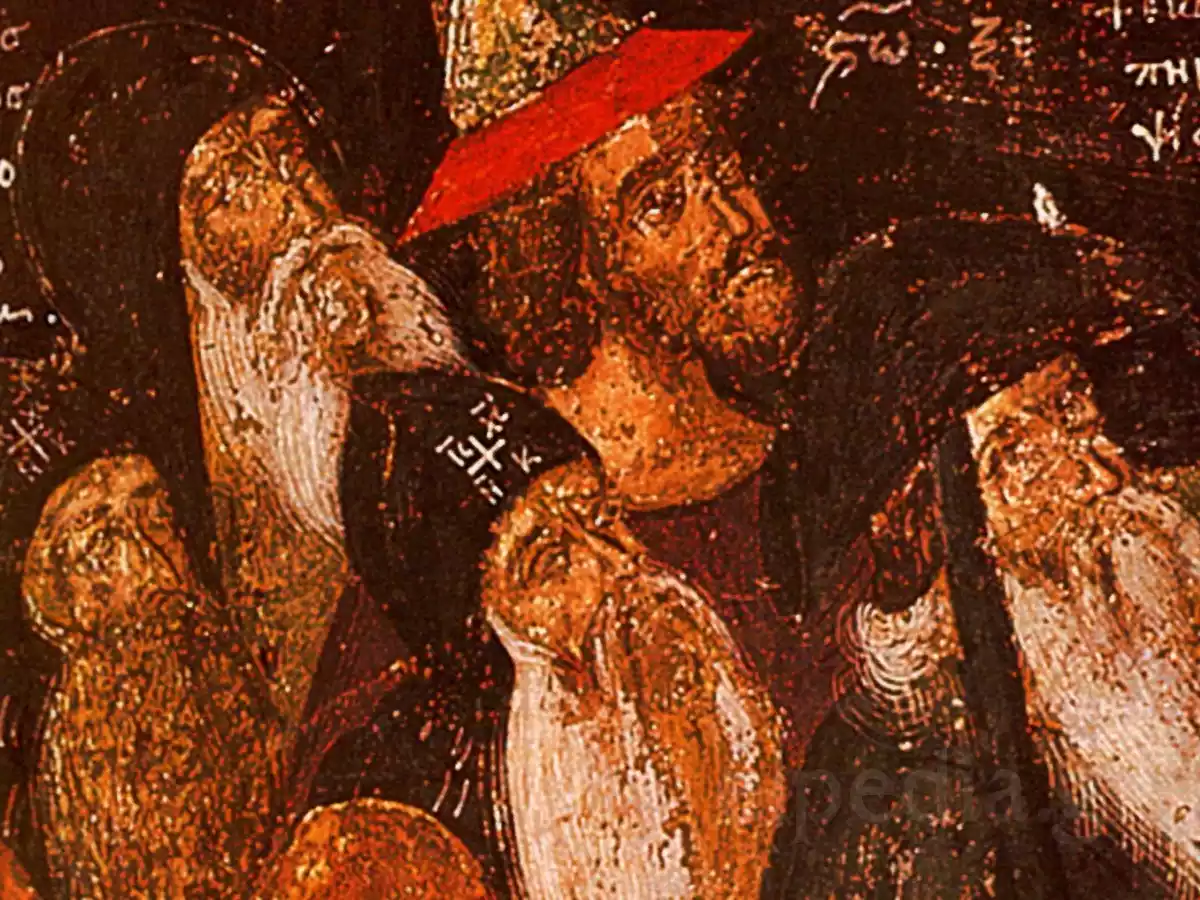
The gaze immediately falls upon the faces. Here, the artist does not adhere to the path of idealization. We see specific, individual features. A nose perhaps slightly more curved, a chin that conveys determination, eyes that, even when closed or lowered, carry the weight of a lived life. There is a sense of “humanity” in the technique, an effort to preserve the uniqueness of each face within the eternity of the church. They are not faceless figures; they are those who walked these lands, who suffered, who hoped.
Garments as Narrative and Color
Notice their clothing. The artist places great emphasis on attire, which serves as an identity marker of their social status and a field for color experimentation. The folds are not random; they have weight. They follow the movement of the body that bows or rests, creating a sense of volume that is earthy and material.
In contrast to the ethereal forms of ascetics often seen in other churches, here the Philanthropists retain their physicality. The colors are rich, with tones reminiscent of velvet and silk, materials of their time that have now acquired a patina of spirituality. The artist plays with light and shadow not to dramatize, but to give substance.
There is a delicate balance here. A crack in the typical Byzantine severity. On one hand, you see the formality of the noble, and suddenly, in a detail, in a tightening of the lips or the tilt of the head, you discern the anxiety of the mortal. The anxiety of not being forgotten. It is as if they are telling us: “We existed. And because we existed, we are still here.” This need for memory, for connection with those who come after, is what makes the work profoundly human.
The technique strongly resembles the explorations of the Cretan School, perhaps with a more popular, direct touch that characterizes the art of Epirus. There is no coldness of marble. There is warmth. The faces of the deceased are illuminated by an inner light, as if their souls shine through their skin, negating the pallor of death.
The Silence of the Hands
And the hands. Hands always reveal the truth in painting. Typically in a gesture of supplication or offering, the hands of the Philanthropists are not idle. They possess intensity. The fingers are carefully designed, long and expressive, indicating people who acted, who created. They are not hands that merely rest; they are hands that continue to give, even now that the body has succumbed to decay.
The rhythm of the composition, the way the figures are lined up next to each other, creates a sense of continuity. A chain of generations. No one stands alone in the void. They lean on each other’s presence, forming a community of memory. This may be the deeper meaning of the image: no one is saved alone, no one remembers alone. Existence is affirmed through relationship, through coexistence on the same wall, in the same story.
The artist, whoever they were, respected death but loved life. That is why they did not paint them as corpses, but as sleepers dreaming of resurrection. The imperfections in execution, perhaps some unskilled proportions or harshness in certain lines, do not diminish the value of the work. On the contrary, they make it more accessible. They remind us that art is a struggle. A struggle to conquer decay with a bit of color and lime.
And in the end, what remains? This gaze that follows you. A silent reminder of the futility of glory, but also of the greatness of the soul. The Philanthropists on the Island of Ioannina are not merely exhibits. They are hosts at a meeting that transcends time, inviting us to stand silently before the mystery of human presence that endures.


