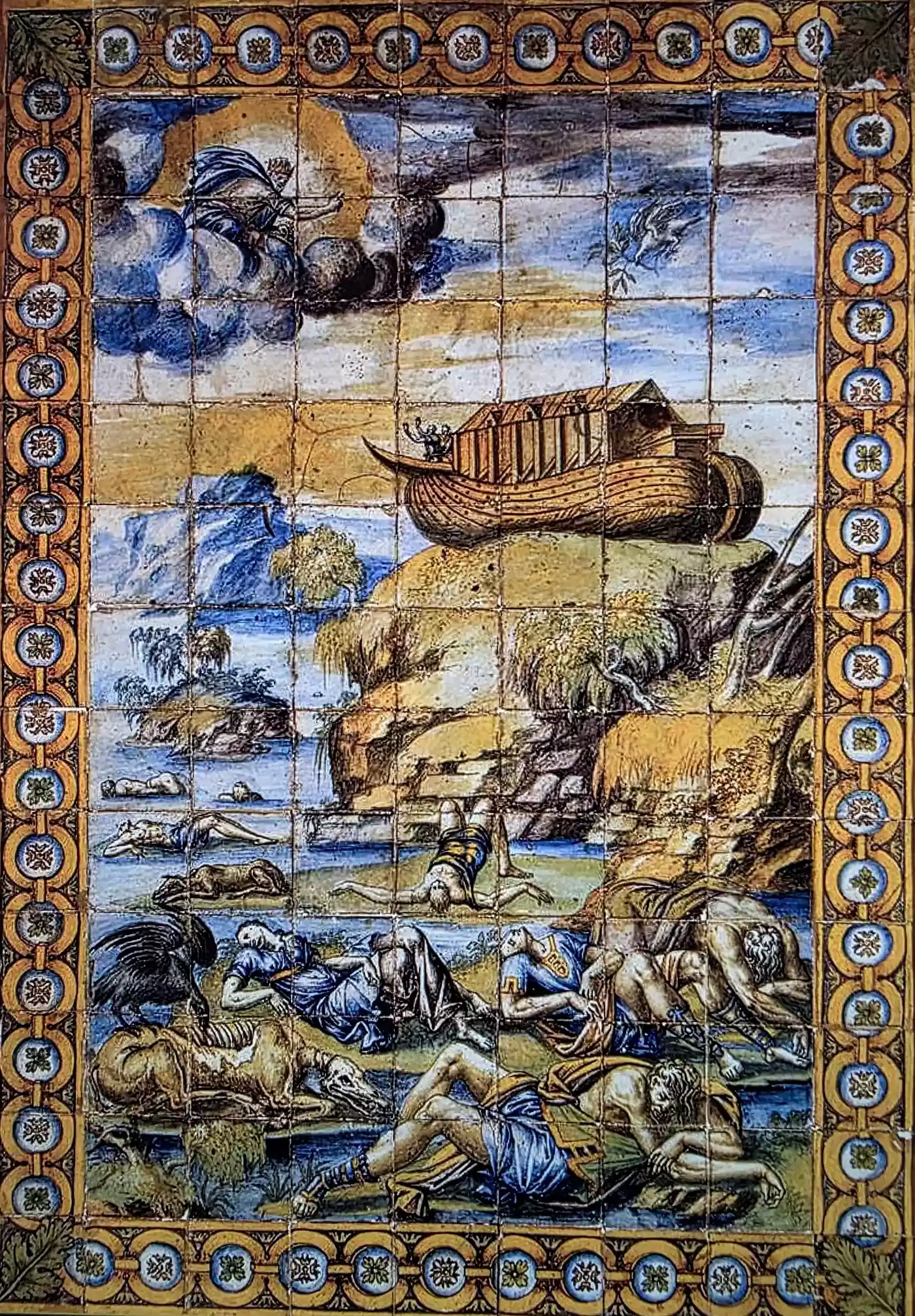
The ceramic composition of the Flood by Masséot Abaquesne (c. 1500-1564) at the National Museum of the Renaissance in Ecouen is an exceptional example of French faience
The ceramic composition of the Flood represents a remarkable example of French Renaissance art by Masséot Abaquesne (approximately 1500-1564). The renowned potter from Rouen created this impressive mural work, which is now housed in the National Museum of the Renaissance in Ecouen. It features a multi-layered theological narrative that combines the innovative technique of faience (Valentiner) with traditional biblical iconography of the 16th century.
The artwork is structured as a complex of ceramic tiles that vividly depict the dramatic moment of the Flood. This choice of subject reflects the deep Christian spirituality of the era and the Renaissance artists’ pursuit to interpret grand theological narratives through innovative artistic means. Abaquesne departs from traditional medieval forms, embracing a naturalistic approach that fully aligns with the aesthetic explorations of the Renaissance.
Theological Aspects and Artistic Composition
The biblical narrative of the Flood is captured with striking dramatic flair. At the center of the composition stands Noah’s Ark, clinging to a rocky formation that rises above the raging waters. The construction is presented with architectural precision: we can discern the wooden structure, the details of the planks, and the overall realistic rendering characteristic of Renaissance art (Lafont). Surrounding this central element is a complex scenography depicting the struggle for survival of both humans and animals.
The human figures at the bottom of the composition convey a shocking realism of human anguish and despair. We see men, women, and children desperately fighting against divine wrath. Each figure expresses a different emotional state: fear, anxiety, hope, resignation. The artist avoids any idealistic approach, opting instead to portray human reality in its most dramatic form.
Symbolism and Spiritual Interpretation
Animals play a prominent role in the composition, adding an almost paradisiacal dimension to the dark theme. Birds, quadrupeds, and reptiles are scattered across the surface, symbolizing divine providence that extends throughout creation. This choice reflects a deep theological tradition (de Brejon) that views the Flood not only as destruction but also as renewal, not just divine justice but also mercy.
The color palette primarily consists of vibrant shades of blue and brown, accented with gold and white. Blue dominates the depiction of the waters and the sky, creating a sense of vastness and cosmic power that surpasses human capacity for resistance. The brown tones of the rocks and earth symbolize stability and patience, while the golden details impart a metaphysical glow that suggests divine presence.
Technique and Innovation
Abaquesne’s technique represents a significant innovation in 16th-century French ceramics. The craftsmen of Limoges (Deprouw-Augustin) had already developed refined methods in glazing, but the Rouen potter introduces a different approach that blends Italian influence with French tradition. The methodology he employs allows for a painterly quality that transcends the usual boundaries of ceramic art.
The choice of a mural character for the composition is not incidental. On the contrary, it fits into a broader trend of the time aimed at creating decorative ensembles that transform both private and public spaces into fields of artistic expression and theological teaching.
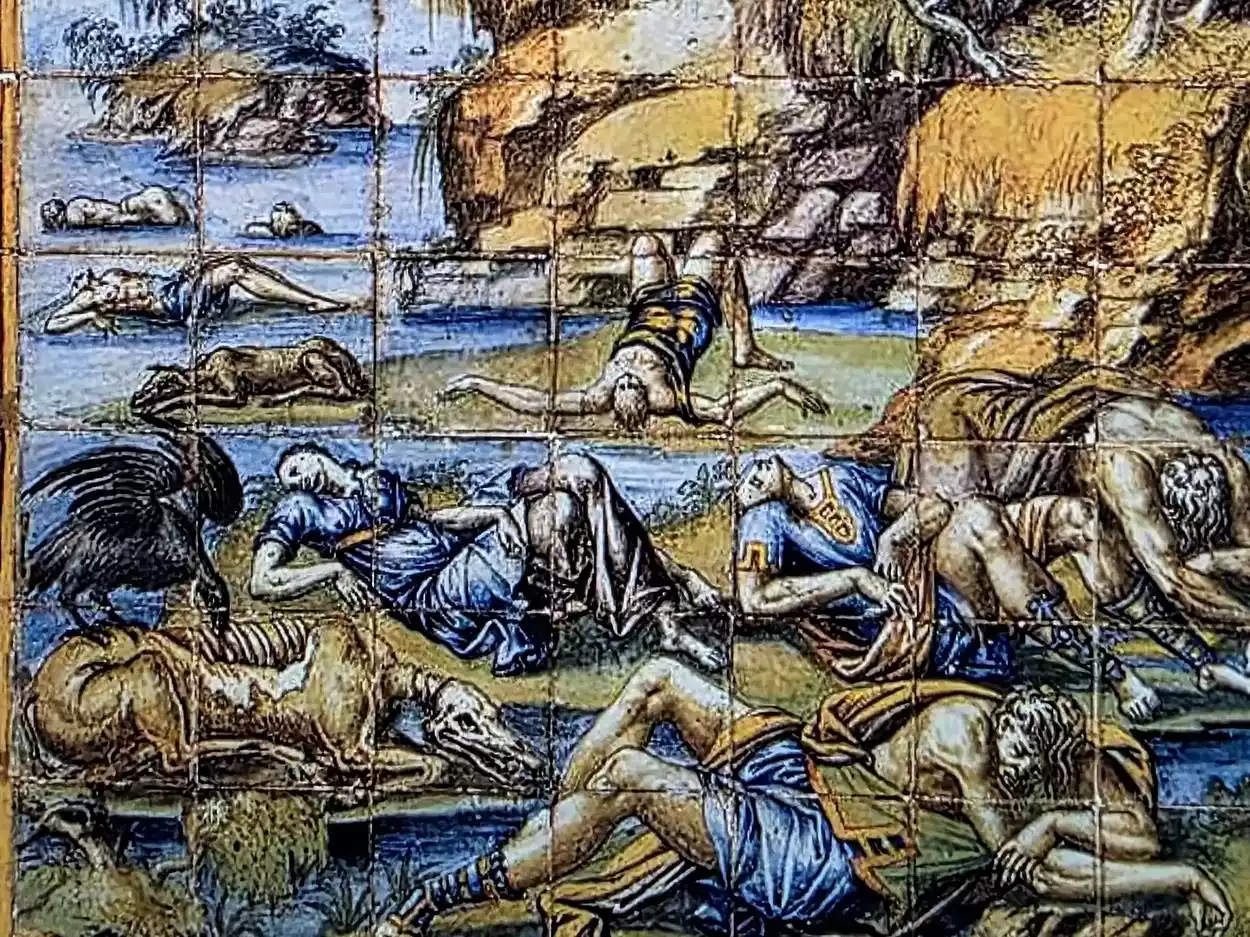
The scene of human struggle for survival in Masséot Abaquesne’s ceramic work captures the drama of the biblical narrative with Renaissance realism
Cultural Significance and Historical Context
Masséot Abaquesne’s work is situated within the broader context of the French Renaissance and the cultural changes brought about by contact with Italian art. The introduction of new techniques, themes, and aesthetic principles into French artistic production creates a unique synthesis that retains national characteristics while assimilating European innovations.
The thematic choice of the Flood corresponds to the theological priorities of the time. The Reformation and Counter-Reformation had highlighted the importance of biblical narratives and the theological education of the faithful through art. Abaquesne’s work serves as an educational tool that facilitates a more immediate understanding of theological concepts and the spiritual appropriation of biblical stories.
Museum Value and Conservation
The preservation of the work at the Museum of the Renaissance (van de Velde) in Ecouen provides an opportunity to study and appreciate a rare example of French Renaissance ceramics. The exceptional state of preservation allows for the observation of technical details and color nuances that would otherwise have been lost over time.
The significance of the work transcends narrow artistic boundaries. It serves as a valuable document for understanding the religious beliefs, artistic trends, and technological advancements of the French Renaissance. Additionally, it testifies to the importance that people of the time placed on creating spaces that combined aesthetic enjoyment with spiritual education.
Influence and Legacy
Masséot Abaquesne is among the pioneering artists who expand the boundaries of ceramic art, introducing it to new thematic and expressive realms. His approach influenced subsequent generations of potters and contributed to the formation of an autonomous French school that maintains its own identity within the broader context of the European Renaissance.
The theological dimension of the work remains equally significant today. The artistic representation of biblical narratives offers a valuable testimony to how people in the 16th century understood and interpreted theological texts, providing contemporary theological research with a valuable tool for understanding the historical evolution of Christian beliefs and practices.
Bibliography
de Brejon, D.E. “Masséot Abaquesne and the pavements of the Ecouen castle.” The Review of the Louvre and Museums of France, 1977.
Deprouw-Augustin, S. “The enamelers of Limoges, rivals of Masséot Abaquesne?” Art Dossier, 2016.
Lafont, O. “The inauguration in Rouen of the exhibition ‘Masséot Abaquesne; the brilliance of Renaissance faience’.” Review of the History of Pharmacy, 2017.
Valentiner, W.R. “French Faïence.” Bulletin of the Metropolitan Museum of Art, 1910.
van de Velde, D. “The Verzelini Cup (1578) from the Museum of the Renaissance in Ecouen: An update.” Journal of Glass Studies, 2011.


