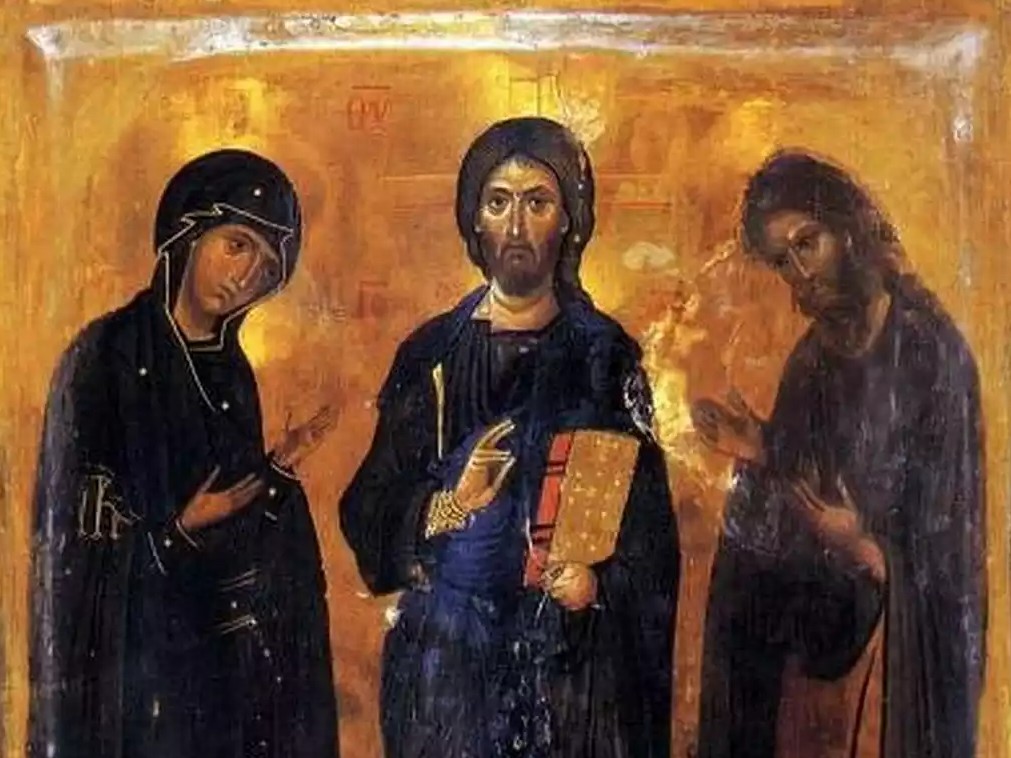
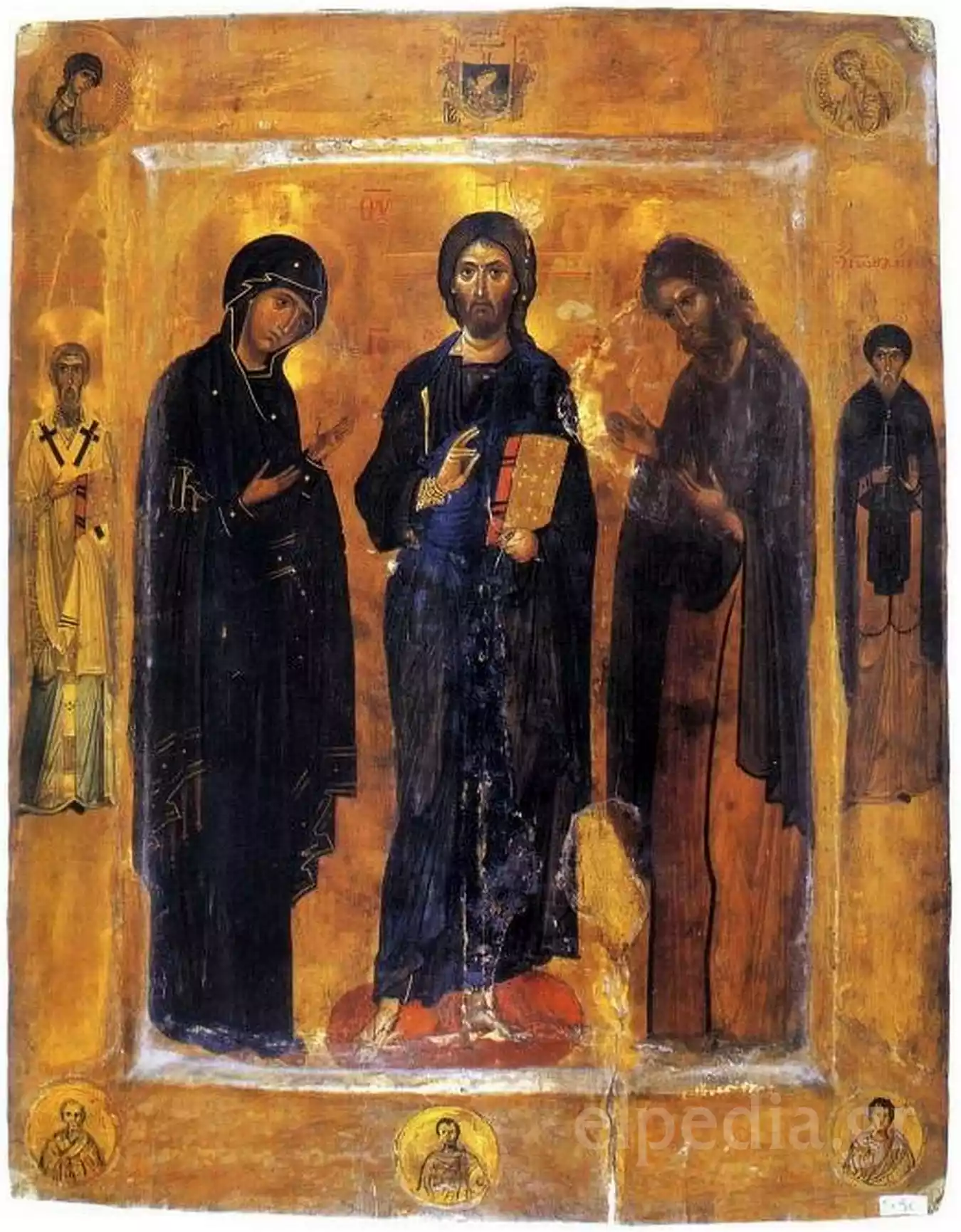
The Deesis icon (Triform) from Sinai Monastery, second half of the 11th century. It depicts the heavenly hierarchy with Christ the Judge and the intercessors of humanity.
11th Century Triform: Power and Monastic Identity
Before us lies an object, a wooden panel measuring 36.2 x 29.1 centimeters, crafted in the latter half of the 11th century. Art historians refer to it as the “Triform” or “Deesis,” indicating its origin from the Monastery of St. Catherine in Sinai. It features Christ at the center, flanked by the Virgin Mary and St. John the Baptist in a posture of supplication. But is it merely that? A representation of divine judgment? The location of its creation, within walls erected to shield against worldly dangers, compels us to view the image as a historical document, an object that carries the weight of its place (Forsyth). It speaks more to the organization of power, both celestial and earthly, than to salvation.
The Staging of Judgment
What exactly do we see here? This is not just a simple depiction of three sacred figures. It is a meticulously structured scene, a theater of judgment set up with absolute hierarchical terms. Every element, from the posture of the bodies to the surrounding medallions featuring saints, serves a purpose: to project an undeniable, almost intimidating authority. The presence of St. John Climacus, a prominent figure for the monastery, is not coincidental—it acts as a mark of origin, a way to integrate the global order into the specific, local interests of the Sinai brotherhood.
Christ as the Unyielding Ruler
The central figure of Christ stands upright, facing forward, on a red footstool that resembles an imperial symbol more than a sign of humility. His gaze is stern, impenetrable. The dark robe and the book he holds do not evoke the compassionate teacher of the Gospels, but rather the supreme legislator, the Pantocrator ready to dispense justice. This figure does not invite dialogue; it imposes silence. The signs of wear on the wood and the golden background only emphasize the age and, consequently, the timeless power of this message.
The Intercessors: Mediation or Subjugation?
The Theotokos and the Forerunner, the two intercessors for humanity, do not stand as equals. Their heads are bowed, their bodies slightly turned towards Christ, and their hands raised in a gesture that is both supplication and acknowledgment of their subordinate position—this is a movement one would expect to see in the court of a Byzantine emperor, and indeed, this courtly etiquette defines the entire scene. They do not intercede as equals but plead as subjects. The entire composition of the Sinai Deesis ultimately serves as a political manifesto cloaked in theological garb.