
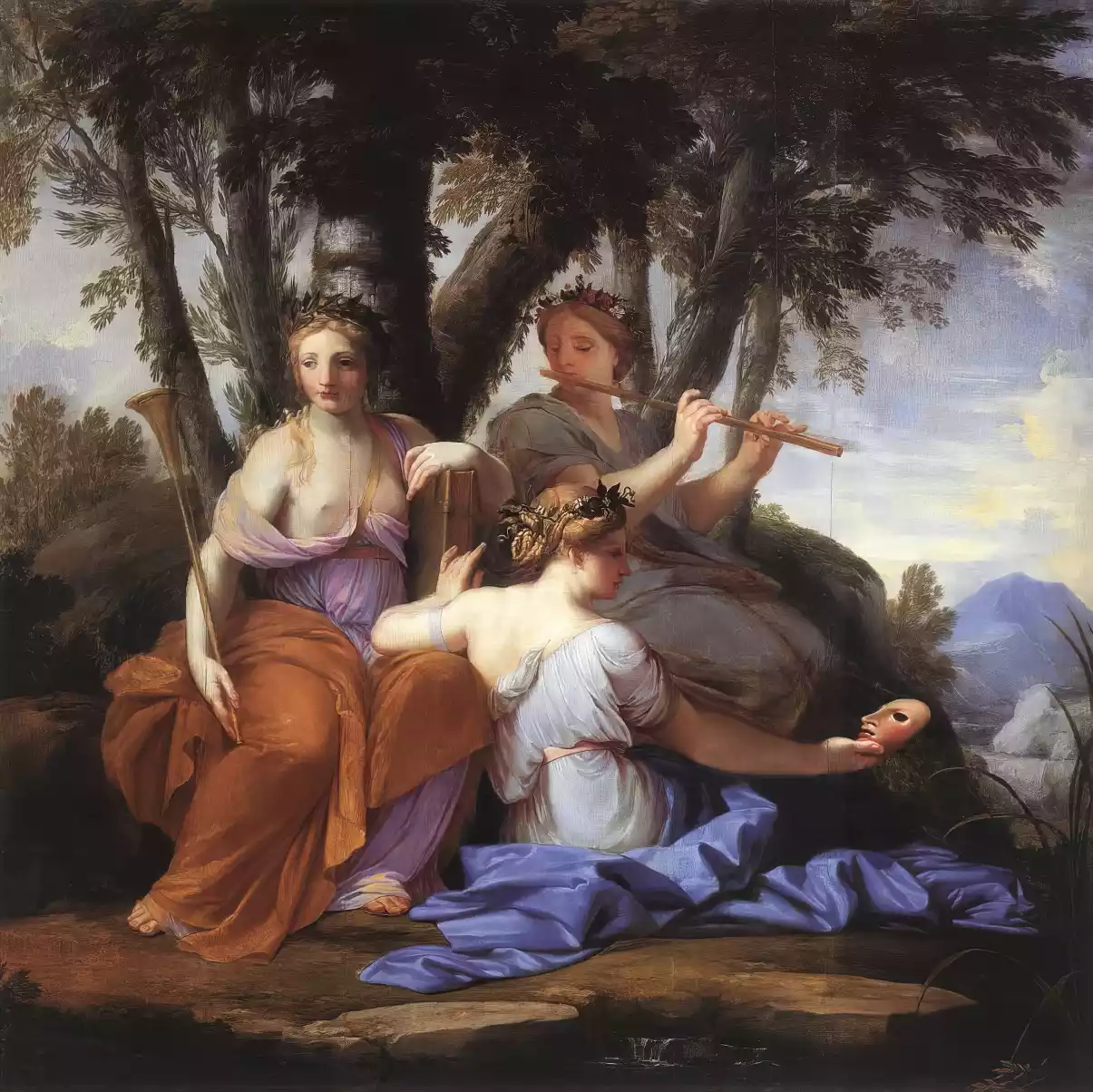
Crotus, a name that may not be widely known, holds a unique position in Greek mythology. Unlike the Olympian gods or the demigod heroes, Crotus does not star in epic battles or spectacular adventures. His story is more subtle, intertwined with art, music, and the expression of approval. He was the son of Eupheme, the nurse of the Muses, and was raised alongside them on Helicon. This close relationship with the Muses explains his invention: applause. It was a way to express his admiration and gratitude for the arts, a way that was destined to become universal (search: history of applause).
The story of Crotus, though brief, gives us a taste of the importance the ancient Greeks placed on art and the expression of emotions. They were not merely spectators but active participants, expressing their admiration in a way that resonates even today. Crotus, as the inventor of this form of expression, deserves a place in the pantheon of lesser-known but equally important mythological figures. Furthermore, his connection to archery and his depiction as a centaur add additional layers to the interpretation of his myth, opening avenues for further study (search: relationship between archery and music in antiquity). The figure of Crotus offers a different perspective on Greek mythology, focusing on daily life and the small but significant moments of expression.
Crotus and the Muses
Crotus, son of Eupheme, had the fortune to be raised in an environment full of inspiration and art: Helicon, the mountain of the Muses. Eupheme, as the nurse of the nine deities of music, poetry, dance, and the arts, ensured a unique education for her son. Imagine Crotus growing up surrounded by the melodies of Apollo, the poetic recitations of Calliope, and the harmonious movements of Terpsichore (search: music in ancient Greece). This daily contact with art shaped his character and led to the invention that made him known.
The invention of applause by Crotus was not a random discovery but a natural evolution of his need to express admiration for the Muses. As he watched them sing and dance, Crotus felt the need to reciprocate, to show his appreciation. Thus, he began to clap his hands rhythmically, creating a sound that accompanied their melodies. This sound, applause, quickly became the way people expressed their approval of the arts, a way that survives to this day. According to Nigidius Figulus, this invention is directly linked to the presence of the Muses and the need for immediate, audible reward for their art (Figulus).
Beyond the invention of applause, Crotus is also connected with archery. This connection likely stems from his depiction as a centaur, a creature half-human and half-horse, known for its skills in hunting and the use of the bow. Archery, like music, requires precision, rhythm, and harmony, elements that may explain Crotus’s connection with both these arts. We can imagine Crotus practicing archery, following the rhythm of nature, just as he followed the rhythm of music when applauding. The study by Andreas P. Antonopoulos and colleagues mentions that the main theme of the myth was likely the invention of applause and/or archery (Antonopoulos, et al.).
The Legacy of Crotus
Applause in Antiquity
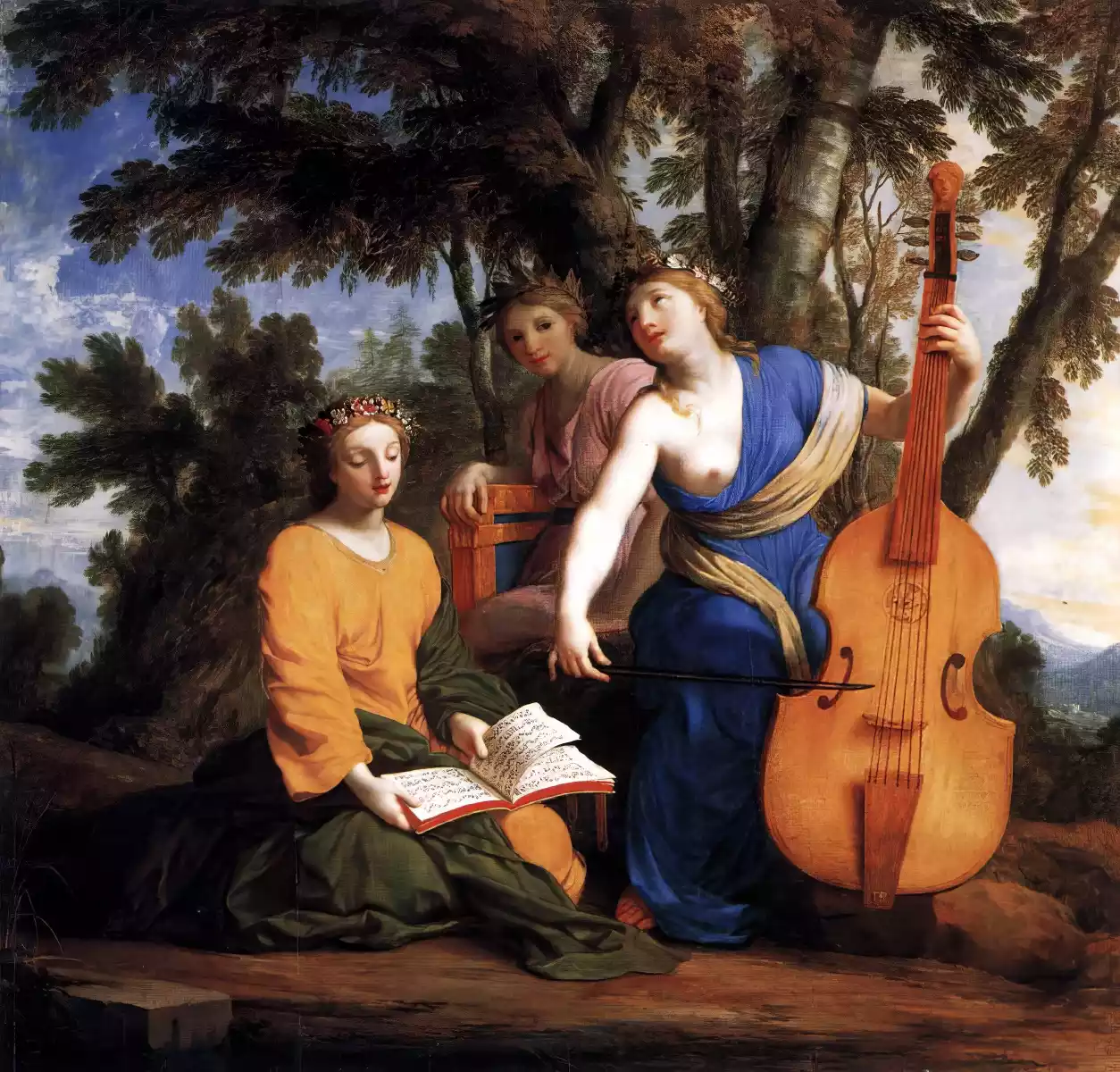
The legacy of Crotus is inextricably linked to the act of applause. In ancient Greece, applause was not just a sign of approval but also a form of active participation in religious ceremonies and artistic performances. The clapping of hands, as mentioned in the excerpt from Decharme, often accompanied sacred ceremonies, such as those of the Curetes, where the noise from their weapons and, likely, the applause, covered the cries of the newborn Zeus (Decharme). This shows that applause had a practical, almost ritualistic, dimension.
From the simple rhythmic movement of hands, applause evolved into a complex form of expression. Different rhythms and intensities could convey different emotions, from excitement and admiration to disapproval (search: types of applause in antiquity). Even body posture, facial expressions, and vocal manifestations often accompanied applause, creating a multi-layered experience.
Rhythm was a determining factor in the evolution of applause. It was not just a clapping of hands but a conscious effort to create a sound pattern. This pattern could be simple or complex, fast or slow, depending on the context and the emotion the applauder wanted to express.
Applause was never an individual act. It was, and remains, a social activity, a way to connect with others, to share a common experience, and to express collective emotions. In ancient Greece, applause united the audience with the artists and priests, creating a sense of community and participation.
Today, applause continues to be the dominant form of approval worldwide. From concert halls and theaters to sports stadiums and political gatherings, the clapping of hands remains a powerful way to express admiration, gratitude, and enthusiasm. The legacy of Crotus, though often overlooked, lives on in every applause.
Crotus as a Symbol
Crotus, as a mythological figure, transcends the simple invention of applause. He symbolizes the very value of approval, the recognition of effort and talent. In a world where criticism is often easy and abundant, approval acts as a counterbalance, encouraging creativity and excellence. The story of Crotus reminds us of the importance of recognizing and appreciating the efforts of others, whether they are artists, athletes, scientists, or anyone trying to offer something positive to the world.
Beyond approval, Crotus symbolizes the deep connection between art and audience. Applause is not just a reaction but a bridge of communication. It is the way the audience expresses understanding, emotion, and admiration for the work of art. Without the audience, art remains incomplete, a monologue without response. Crotus, with his invention, created the dialogue, the lively interaction that completes the artistic experience (search: interaction between audience and artist).

Finally, Crotus represents the importance of active participation. It is not enough to be passive spectators or listeners. True appreciation of art, effort, and life in general requires active participation, expression of emotions, interaction. Applause, the simplest and most direct form of participation, invites us to become part of the experience, to connect with others, and to express our shared humanity. The applause is a reminder that life is richer when we live it actively and with enthusiasm.
In reflecting upon the narrative of Crotus, we are presented with a profound and timeless lesson, one that resonates deeply within the fabric of human interaction. The tale, while concise, serves as a potent reminder of the inherent significance of expressive communication, the vital necessity of forging meaningful connections with our fellow beings, and the indispensable role of active engagement in the grand tapestry of life. The very act of applause, a seemingly simple gesture attributed to the ingenuity of Crotus, transcends its auditory manifestation. It embodies a multifaceted expression of gratitude, a shared manifestation of collective joy, and a unifying force that integrates individuals into a communal experience. This act, in its essence, serves as a bridge, a conduit that establishes a profound connection between us and the diverse array of individuals who grace our lives—artists, athletes, speakers, and all those who strive to impart to us something of beauty, of significance, and of truth. In a manner akin to the enduring spirit of innovation that has shaped the very foundation of the United States of America, where the pursuit of expressive freedom has been woven into the nation’s heritage, Crotus’s contribution highlights the universal desire to connect and appreciate. Let us, therefore, endeavor to retain in our consciousness the legacy of this often-overlooked, yet undeniably significant, figure from the annals of Greek mythology, ensuring that each instance of applause serves as a testament to the enduring power of human connection.
Indeed, the story of Crotus, though a brief interlude in the vast expanse of mythological narratives, acts as a powerful beacon, illuminating the fundamental human need for expression and connection. It compels us to consider the myriad ways in which we interact with the world around us and the subtle, yet profound, impact of seemingly simple gestures. The act of applause, in its essence, is a testament to our capacity for empathy and our innate desire to share in the experiences of others. It transcends cultural and linguistic barriers, serving as a universal language of appreciation and recognition. In the same way that the diverse cultural heritage of the United States has enriched its artistic and expressive landscape, the legacy of Crotus reminds us that acts of appreciation are a vital part of a vibrant and connected society.
Bibliography
- Antonopoulos, Andreas P., Menelaos M. Christopoulos, and George W. M. Harrison. Reconstructing Satyr Drama. Walter de Gruyter GmbH & Co KG, 2021.
- Bampiniōtēs, Geōrgios. Dictionary of the Modern Greek Language with Comments for Correct …. Lexicology Center, 1998.
- Decharme, Paul. Mythology of Ancient Greece. ELECTRA, 2015.
- Figulus, Nigidius. Nigidius Figulus: Roman Polymath. Oxford University Press, 2024.
- Varvatēs, K. Lexikon Italo-Hellēnikon epitomōn. Volume 2, 1861.


