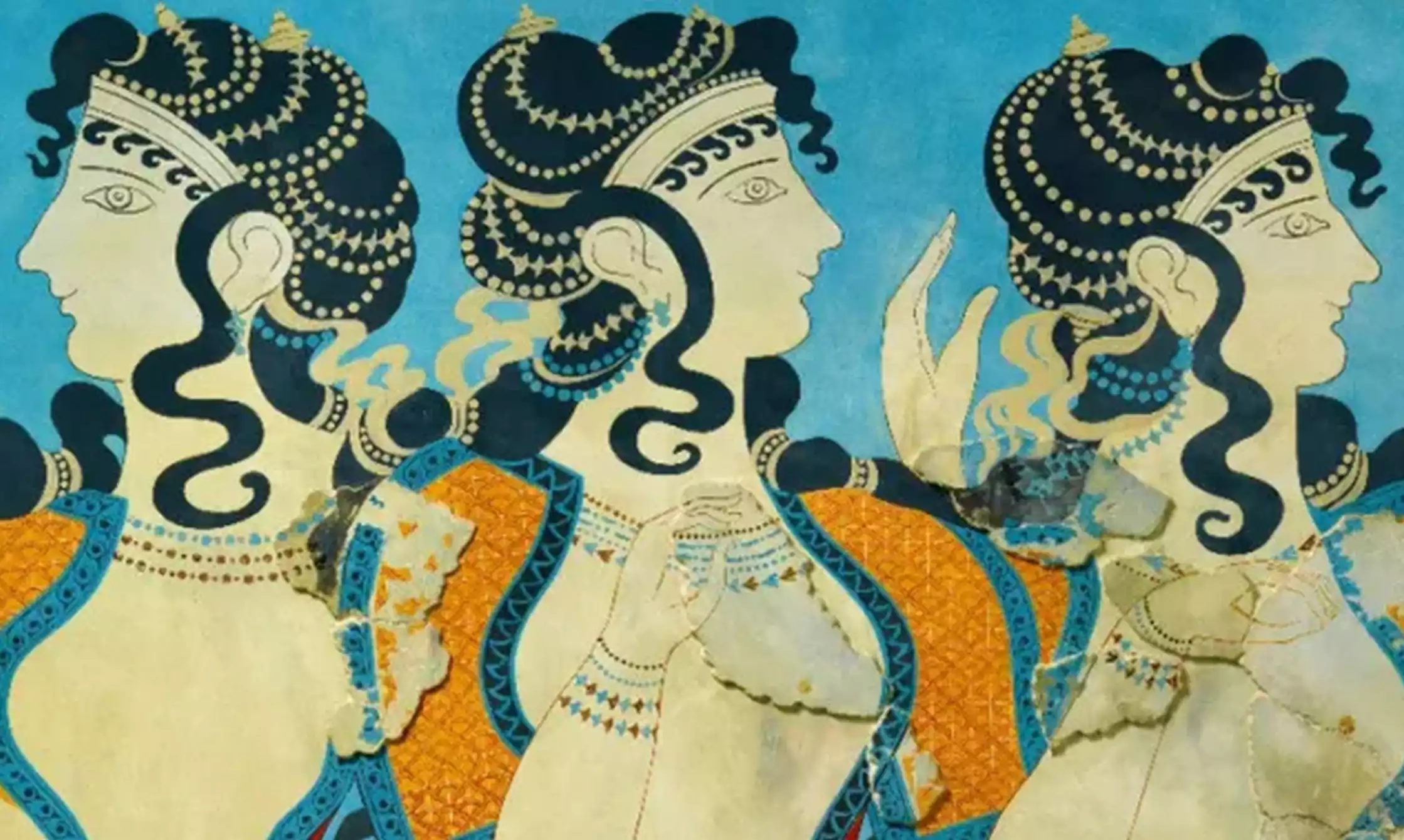
Depiction of Minoan frescoes featuring scenes from the daily lives of women.
Minoan art is one of the most significant artistic treasures of prehistoric Mediterranean culture, flourishing in Crete during the Bronze Age. It reflects an exceptionally refined civilization that thrived thousands of years ago. With characteristics that make it unique for its time, Minoan art is distinguished by its vivid naturalism, appreciation for the natural environment, and a remarkable sense of vitality that permeates all its expressions. From the magnificent frescoes of the palaces to the intricate pottery and finely crafted jewelry, the Minoans left behind an artistic legacy that continues to captivate today.
The artists of that era, although lacking the knowledge of perspective as developed later, managed to create works with astonishing expressiveness and a charming innocence. The harmony of colors they employed is so striking that many contemporary art critics have described Minoan painting as the most beautiful and faithful expression of aesthetic trends that we still encounter today. In various Minoan frescoes, scenes from both religious and secular life are captured, offering us a unique window into the world of this ancient civilization.
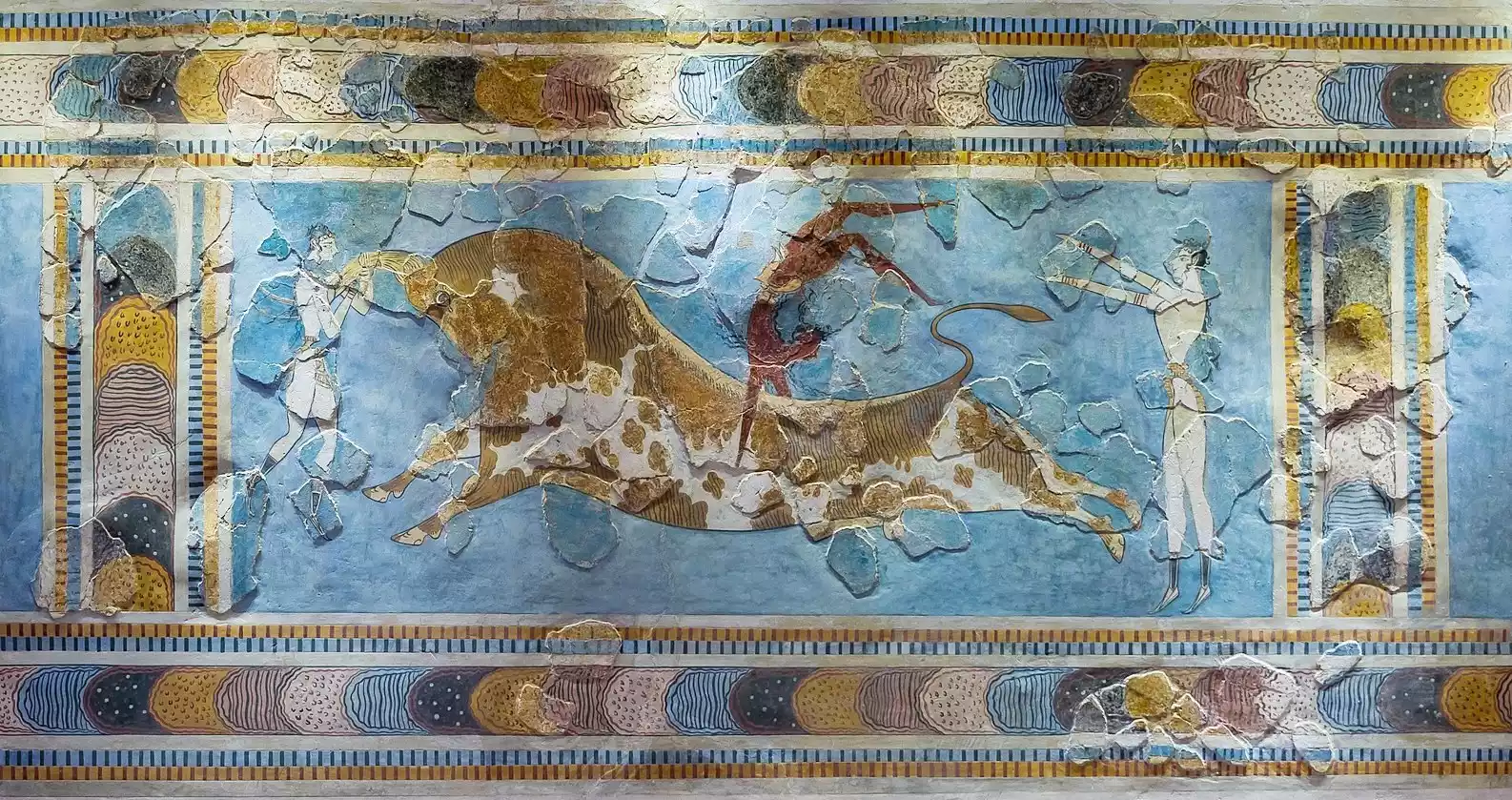
The famous bull-leaping fresco from the palace of Knossos (1600-1450 BC), depicting the ritual sport. Heraklion Archaeological Museum.
The Evolution of Minoan Art in Crete
Minoan art developed in distinct phases that reflect the evolution of civilization in Crete. From the Prepalatial period (3000-1900 BC) to the Protopalatial (1900-1700 BC) and its peak during the Neopalatial period (1700-1400 BC), we observe a gradual refinement of artistic techniques and aesthetic perception. Each period bears its own distinctive characteristics in the representation of forms and the use of materials.
Minoan art was not merely decorative; it reflected deeper social and religious beliefs. In the palaces, which served as centers of administrative and religious power, art also served propagandistic purposes, showcasing the strength of the ruling class. The depiction of rituals, dances, and athletic events such as bull-leaping reveals the central role of these activities in the Minoan civilization (Search for more information with the term: Minoan Religion Rituals).
Crete’s geographical position at the center of the eastern Mediterranean facilitated contact with cultures from Egypt, the Near East, and the rest of the Aegean. This interaction is evident in the transfer of styles and patterns. However, Minoan art always maintained its unique identity, selectively assimilating foreign influences and adapting them to local aesthetic perceptions.
One of the most characteristic elements of Minoan art is the emphasis on curves and fluid lines. Minoan artists avoided strict geometric forms, preferring organic shapes that convey a sense of movement and vitality. This preference is reflected in the depictions of plants, animals, and human figures, which are rendered with a dynamic naturalness that significantly differs from the more static and rigid representations of other contemporary cultures.
The impressive variety of materials used by Minoan artists—from clay and stone to ivory and precious metals—reveals their high level of craftsmanship. The processing of these materials required specialized knowledge and skills, while access to exotic raw materials indicates the existence of extensive trade networks. The technical excellence displayed in Minoan artifacts is a testament to an organized system of education and apprenticeship for artists, while the investment in art reflects the economic prosperity and cultural maturity of Minoan society.
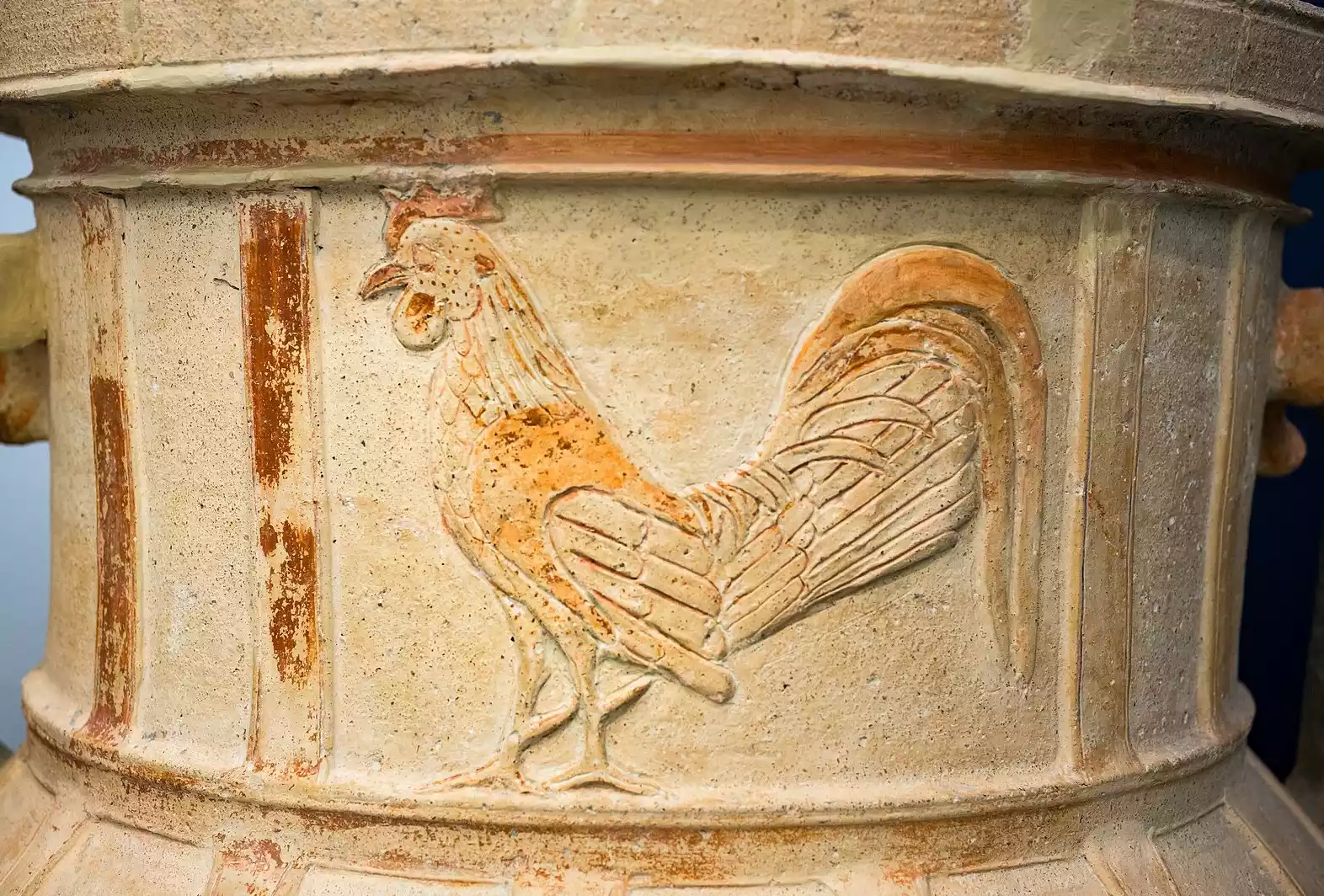
Relief pithos-jar with rooster decoration from Minoan Crete during the Orientalizing period (c. 620-580 BC). Found in Phaistos and housed in the Heraklion Archaeological Museum (P 8405).
Frescoes as a Reflection of Minoan Society
Minoan artists developed exceptional techniques for creating their frescoes, employing methods that reveal a deep understanding of materials and their properties. The fresco technique, where colors were applied to wet plaster, was the most common. This method allowed the colors to integrate into the surface as it dried, ensuring the longevity of the work. As noted by Bernice R. Jones in her study, the materials and techniques used were closely linked to the symbolic dimension of art, particularly in religious depictions.
The themes of Minoan frescoes are impressively diverse, with a dominant presence of the natural world. The so-called “zoomorphic” depictions, where animals are rendered with exceptional liveliness and detail, form a significant part of the Minoan iconographic repertoire. Humans are depicted in various activities—religious ceremonies, dances, athletic events like bull-leaping, banquets, and everyday scenes. The emphasis on movement and expression of forms reveals a profound aesthetic perception that values vitality and dynamic representation.
One of the most striking features of Minoan frescoes is the bold use of color. Vivid reds, blues, yellows, and blacks create vibrant contrasts that energize the compositions. The organization of space in the frescoes reveals an advanced understanding of composition, where, despite the absence of perspective in the modern sense, a sense of depth is achieved through the overlapping of forms and layers. The artists also employed the technique of multi-layered canvases, creating scenes that unfold in different zones, thus enhancing the narrative quality of their works (Search for more information with the term: Minoan painting technique).
Frescoes and Architectural Space: A Symbiotic Relationship
Frescoes were not merely decorative elements but an integral part of the architectural conception of spaces. The iconographic themes were often adapted to the function of each space—religious representations in worship areas, naturalistic scenes in everyday living quarters, formal ceremonies in reception halls. The frescoes contributed to shaping a holistic aesthetic experience, extending the physical space and creating visual narratives that influenced the perception and behavior of people moving through these areas.
Beyond their aesthetic value, frescoes served as carriers of symbolic messages, reflecting the beliefs and values of Minoan society. Recurring motifs such as double axes, sacred horns, snakes, and specific plants (lilies, crocuses) formed part of an iconographic language with deeper religious and social connotations. As highlighted in recent research on the zoomorphic culture of the Minoans, the relationship between humans and animals as depicted in art reflects a worldview that recognized the interconnectedness of all living beings, approaching nature with respect and admiration.
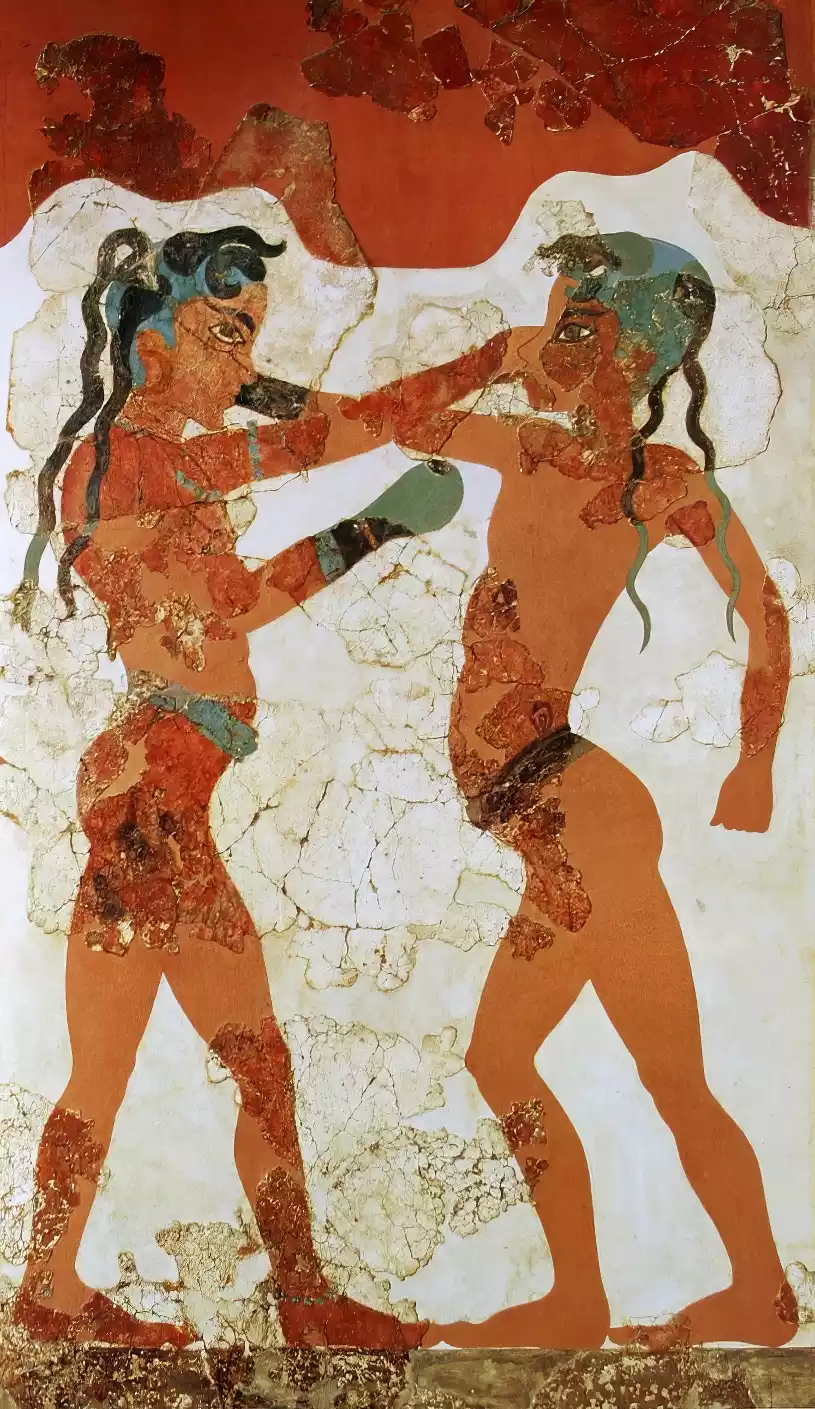 The fresco of young boxers (1600-1500 BC) from room B1 of building B in Akrotiri, Santorini. It depicts two children with distinctive hairstyles and boxing gloves. National Archaeological Museum of Athens.
Minoan Sculpture and Pottery: Art in Daily Life
Minoan sculpture, although it did not develop large-scale works like other contemporary cultures, is distinguished by the expressiveness and delicacy of small objects. The absence of monumental sculpture is likely due to the different character of Minoan religion, where rituals primarily took place in outdoor spaces or sacred caves. Small figurines, often made of faience, ivory, or bronze, mainly depict deities, priestesses, or worshippers, with famous examples like the “Goddesses of Snakes” found in the palace of Knossos. The dynamic posture and expression of these figures capture the Minoans’ emphasis on movement and vitality, even in their smallest works.
Minoan pottery was one of the most widespread and advanced forms of art in Minoan Crete. From the simple shapes of the Prepalatial period to the intricate and colorful vessels of the Neopalatial era, we observe a continuous technical and aesthetic evolution. The so-called “Kamares style” of the Middle Minoan period, with its elegant shapes and vibrant multicolored decoration on a dark background, is one of the masterpieces of Minoan pottery (Search for more information with the term: Kamares style pottery).
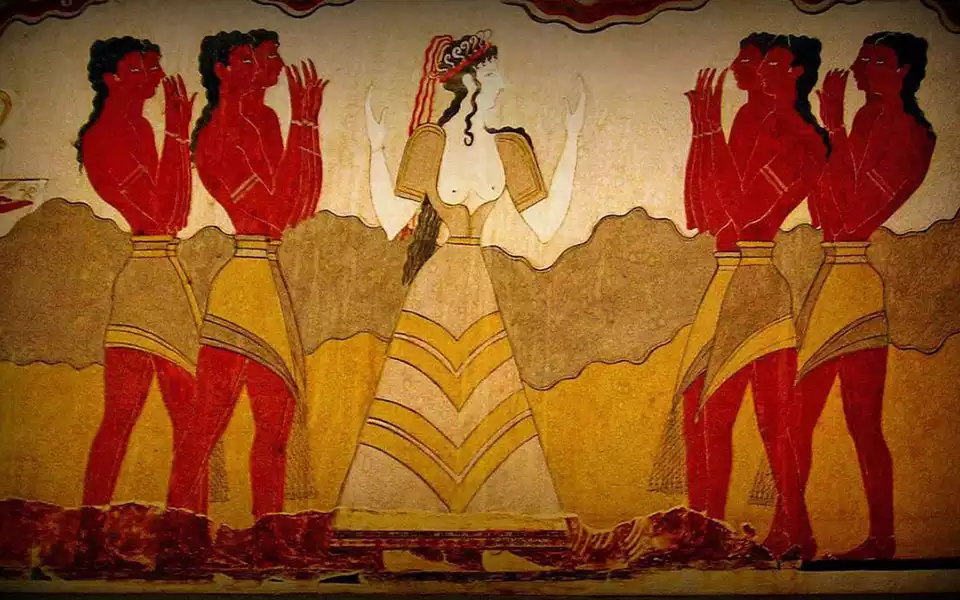 The frescoes of the Minoan civilization reveal the daily activities and rituals of the Minoans.
Jewelry and Decorative Arts: The Aesthetics of Luxury
Minoan jewelry, with its exceptional technical perfection and aesthetic delicacy, represents unique examples of the artistic sensitivity of this civilization. Using precious materials such as gold, silver, and semi-precious stones, artisans created intricate jewelry with naturalistic and symbolic motifs. The techniques of granulation and filigree were applied with remarkable skill, creating works like the famous bees of Malia, showcasing the impressive observance and technical ability of Minoan goldsmiths.
Minoan seals represent a unique combination of artistic expression and practical utility. These tiny works of art, often less than 2 centimeters in diameter, were carved from hard materials like semi-precious stones and depicted a stunning variety of scenes: battles, hunting, religious rituals, mythological creatures, and naturalistic patterns. Beyond their artistic value, they served as personal symbols of identity and tools of administrative control, revealing the complexity of Minoan social organization.
According to Rodney Castleden, Minoan art is not merely an aesthetic expression but a window into the social organization of the Bronze Age in Crete. Access to luxurious materials and the employment of skilled artisans required a financially robust ruling class, while the dissemination of artistic techniques across various centers of the island suggests the existence of organized workshops and apprenticeship systems. The study of various art forms also reveals aspects of gender identity and the social roles of different groups in Minoan society.
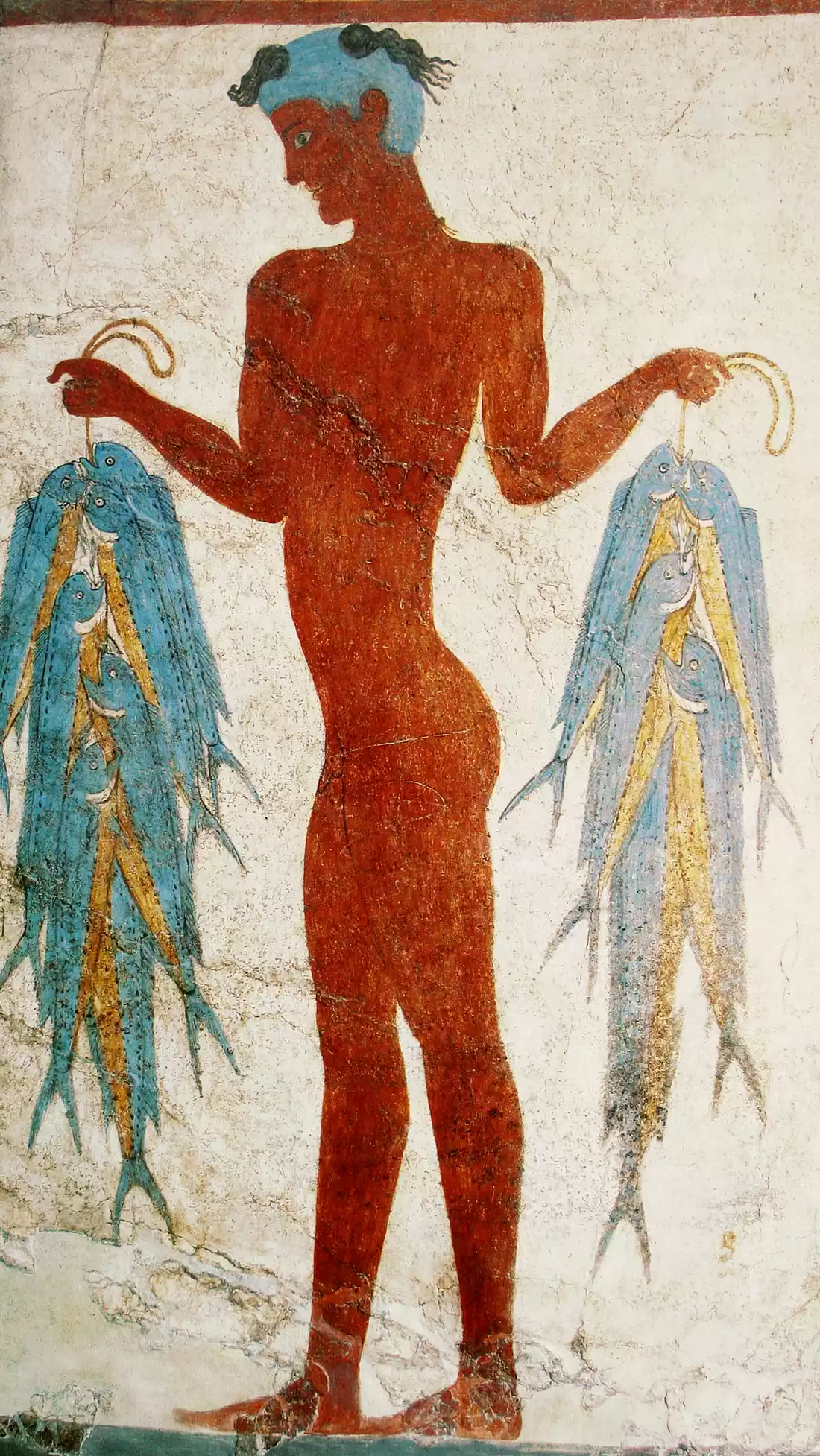 The fresco of a fisherman with dolphinfish (Coryphaena hippurus) from Akrotiri in Santorini, dating to the Late Cycladic I period (c. 1600 BC). It is a unique example of Minoan influence in the Aegean world.
Minoan art, in its diverse expressions, constitutes a unique chapter in the history of human civilization. Through impressive frescoes, finely crafted jewelry, expressive figurines, and intricate pottery, a world of deep aesthetic sensitivity and exceptional technical skill is revealed. The study of Minoan art is not merely an exercise in artistic appreciation but a window into the spiritual and social aspects of a civilization that flourished in the Aegean thousands of years ago. The artistic achievements of the Minoans, with their love for nature, emphasis on movement and vitality, and the remarkable harmony of colors and compositions, continue to inspire and captivate, serving as a timeless testament to human creativity.
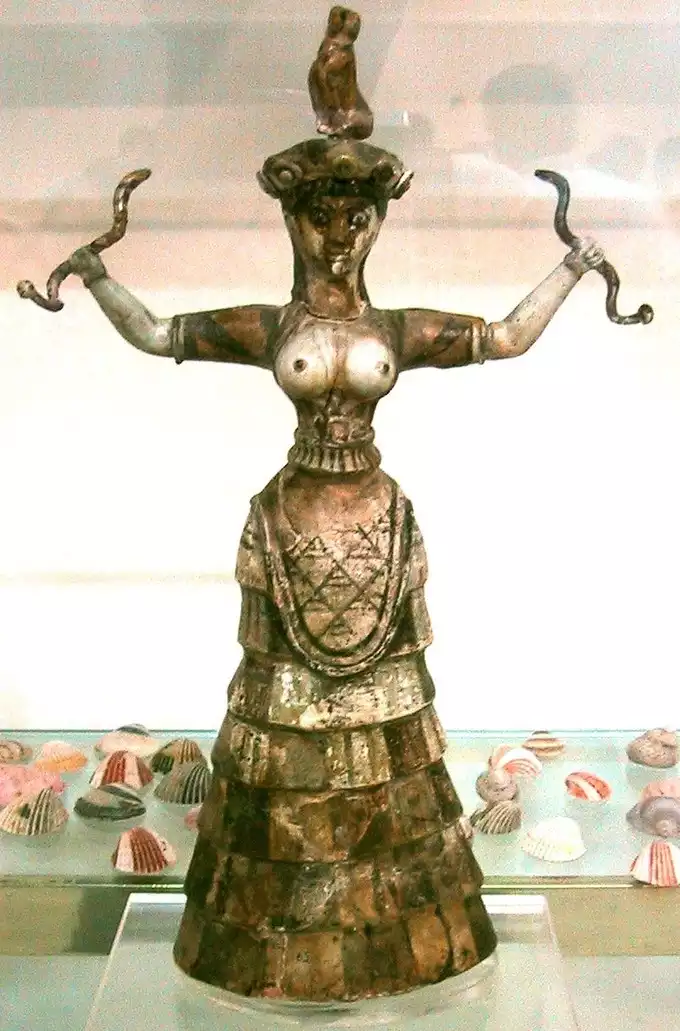 Holding a snake in each hand, the priestess-goddess is depicted as a symbol of chthonic worship in Minoan Crete, where the snake, as a “guardian serpent” and sacred animal, is considered benevolent and holy. Symbolizing the goddess of fertility, identified with the Mother Goddess, the Snake Goddess highlights the sacred dimension of the snake in Minoan religious practice.
Frequently Asked Questions
What are the main characteristics of Minoan art?
Minoan artistic expression is characterized by vivid naturalism, a love for the natural environment, and lively depictions of people, animals, and plants. Features include fluidity of lines, emphasis on movement, bold use of colors, and a sense of spontaneity. Unlike other contemporary cultures, Minoan art is not static or strictly symmetrical but is marked by a dynamic and vibrant approach to representation.
How is religious life depicted in Minoan frescoes of Crete?
The frescoes of the Minoan civilization reveal a rich religious world with an emphasis on nature worship. They depict rituals such as sacred processions and offerings, as well as female figures likely representing priestesses or deities. Sacred symbols such as double axes, sacred horns, and snakes are often presented. The immediacy and liveliness of the scenes suggest a spirituality deeply embedded in daily life.
How does Minoan pottery differ from other pottery traditions of the Bronze Age?
Minoan pottery stands out for its refined delicacy, high technical quality, and rich decoration. The Kamares style, with its colorful patterns on a dark background, is particularly characteristic. Unlike other contemporary pottery traditions, Minoan artists emphasized naturalistic themes, especially marine organisms, and preferred fluid, organic forms over geometric shapes.
How did Minoan art influence later cultures in the Aegean?
The artistic tradition of Minoan Crete significantly influenced Mycenaean art in mainland Greece, with the Mycenaeans adopting many elements of Minoan iconography and techniques. Through trade and cultural exchanges, Minoan aesthetics spread throughout the Aegean and the eastern Mediterranean. Elements survived even after the decline of Minoan civilization, leaving their mark on early Greek art.
What is the significance of seal carving in understanding Minoan society and art?
Minoan seals are valuable sources of information about the social structure and artistic values of the time. Serving as personal symbols of identity and tools of administrative control, they reflect the organization of a complex bureaucracy. Their iconography, which includes religious scenes, hunting, battles, and naturalistic patterns, provides a condensed image of the Minoan world and aesthetic perception, despite their tiny size.
Bibliography
- Emily S. K. Anderson, Minoan Zoomorphic Culture: Between Bodies and Things (2024), p. 53. Anderson.
- Theoharis Eustratiou Detorakis, History of Crete (1986), p. 43. Detorakis.
- Bernice R. Jones, Minoan Wall Painting of Pseira, Crete: A Goddess Worshipped (2024), p. 43. Jones.
- Stylianos Alexiou, Minoan Civilization: Guided by the Palaces of Knossos (1964), p. 272. Alexiou.
- Rodney Castleden, Minoans: Life in Bronze Age Crete (2002). Castleden.
- Studies in Mediterranean Archaeology, volumes 66–69 (1983), p. viii. Studies in Mediterranean Archaeology.
- Charlotte Langohr, PERIFEREIA: Regional Study of Crete in the Recent Minoan (2017), p. 201. Langohr.
- Halina Wingerath, Studies on the Representation of Humans in Minoan Art (1995), p. 241. Wingerath.
- Arturo Echavarren, Sergio Carro Martin, Esther Fernández Medina, Mediterráneos: An Interdisciplinary Approach to the Cultures (2014), p. 187. Echavarren et al..


