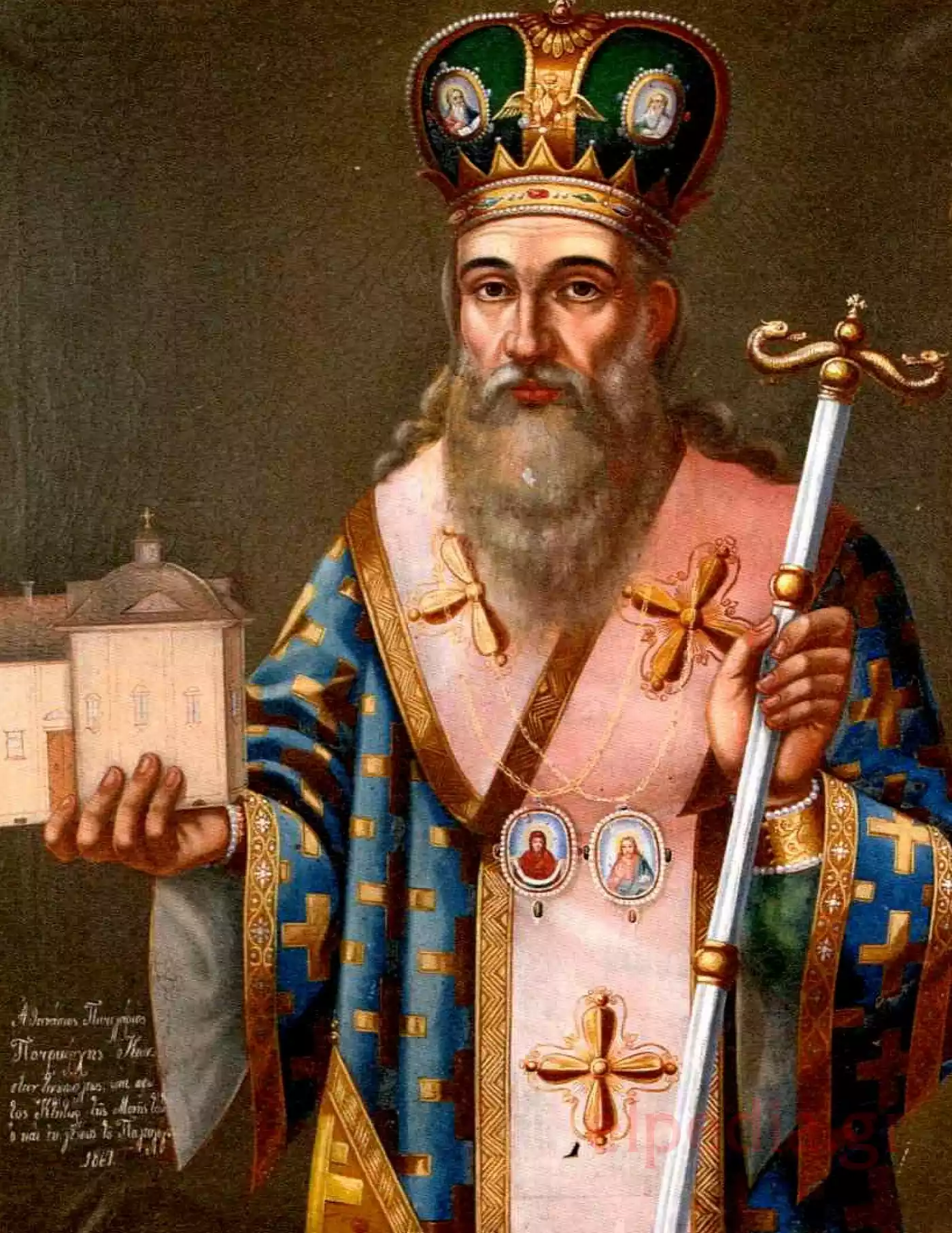
Oil painting from 1867 by the Vatopedi Monastery depicting Saint Athanasios III Patellaros, Patriarch of Constantinople, in his mature years.
Before us stands a robust, almost stern figure, adorned in the grandeur of patriarchal vestments. This is Saint Athanasios III Patellaros, captured in this 1867 oil painting, preserved at the Vatopedi Monastery. The artwork is not merely a religious image; it serves as a historical document, a visual gateway to the tumultuous 17th century. The life of this man was an unending adventure. Born in Rethymno around 1597, Athanasios lived during a time of radical changes and conflicts that shaped the course of the Orthodox world, highlighting the complex relationships between the Greek and Russian churches. The history of the Russian church is filled with such pivotal moments of interaction (Lallos). But how can a portrait capture the essence of a life marked by three patriarchates, exiles, and a death far from home? The answer lies in the details of the depiction, which invite us to decipher a journey filled with faith, diplomacy, and suffering, illuminating a critical period for Orthodoxy (Miron).
A Life Devoted to the Church and Diplomacy
Athanasios Patellaros’s path to the Ecumenical Throne was swift and fraught with challenges. He studied philosophy and theology, distinguished himself for his erudition, and soon ascended to the highest ecclesiastical ranks, eventually becoming the Metropolitan of Thessaloniki. His first election as Patriarch of Constantinople in 1634 was extremely brief, lasting only forty days, as intrigues and interventions from the Sublime Porte led to his immediate deposition, a common practice during that turbulent period.
He did not give up. He returned to the patriarchal throne for a second time in 1635 for just a few days, and for a third and final time in 1652, again remaining for a very short period. These interrupted tenures, rather than weakening him, transformed him into an experienced diplomat and tireless traveler seeking support for the beleaguered nation. His constant concern for the survival of the Patriarchate and the Orthodox populations under Ottoman rule led him to turn to the Orthodox Russia. Who could have imagined that this beleaguered hierarch would find the last and perhaps most significant role of his life thousands of kilometers away, in the heart of the Russian Empire? There, at the court of Tsar Alexei, Athanasios would become inextricably linked with one of the most iconic and controversial figures in Russian history, Patriarch Nikon (Spinka). The latter’s rise to power was a turning point that forever changed the landscape (Lobachev).
Athanasios’s presence in Moscow coincided with the onset of a significant religious crisis. Patriarch Nikon, a dynamic and authoritarian figure, had initiated a broad ecclesiastical reform aimed at correcting Russian liturgical books and practices to fully align with the Greek standards of the time (Kain). This effort, while theoretically sound, provoked massive backlash, leading to the infamous Schism of the Old Believers (Raskol), which deeply divided the Russian people for centuries. Athanasios III, with the prestige of a former Ecumenical Patriarch, provided Nikon with the necessary theological and moral support, asserting that the changes were essential for a return to genuine Orthodox tradition. Having lived for a time on Mount Athos, he conveyed the authority of the Greek East, assisting the Russian people with his words, deeds, and writings during a time when the life of Nikon was at the center of events (Шушерин). He passed away in 1654 and was buried seated on his throne, in accordance with an ancient custom, as a sign of eternal pastoral vigilance. His memory is honored as a saint, Saint Athanasios the Sitting, by both the Greek and Russian Churches.
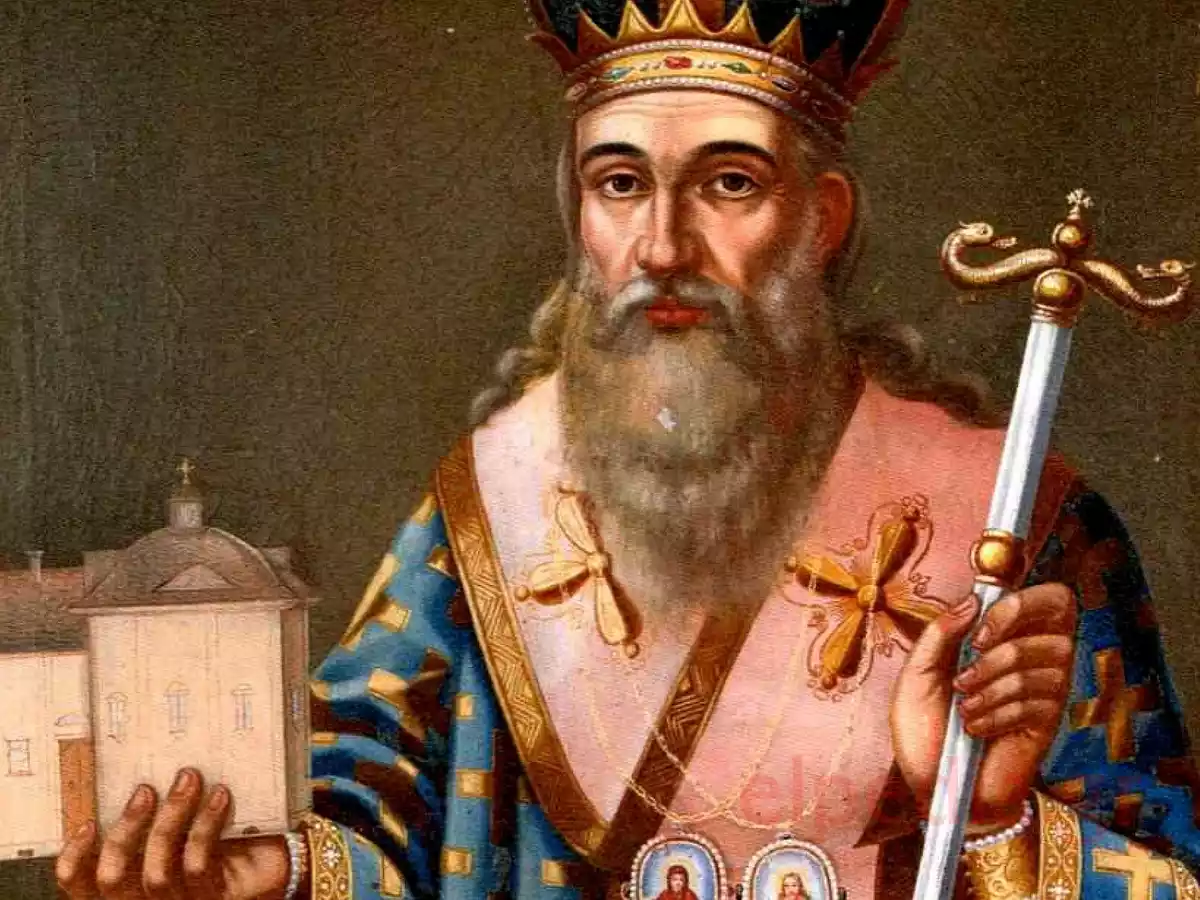
The face of Saint Athanasios III is rendered with realism, emphasizing the wisdom and hardships that marked his tumultuous life.
Bibliography
Kain, K. Patriarch Nikon’s Image in Russian History and Culture. 2004. Western Michigan University, PhD dissertation.
Lallos, A. History of the Russian Church: The Theory of the Third Rome. dspace.lib.uom.gr.
Lobachev, S. V. “Patriarch Nikon’s Rise to Power”. Slavonic and East European Review, 2001.
Miron, C. Orthodoxy in the Descriptions of the West (14th-17th Century). 2010. Aristotle University of Thessaloniki, PhD dissertation.
Шушерин, И. К. From Peasant to Patriarch: Account of the Birth, Uprising, and Life of His Holiness Nikon, Patriarch of Moscow and All Russia. 2007. Lexington Books.
Spinka, M. “Patriarch Nikon and the Subjection of the Russian Church to the State”. Church History, 1941.


