
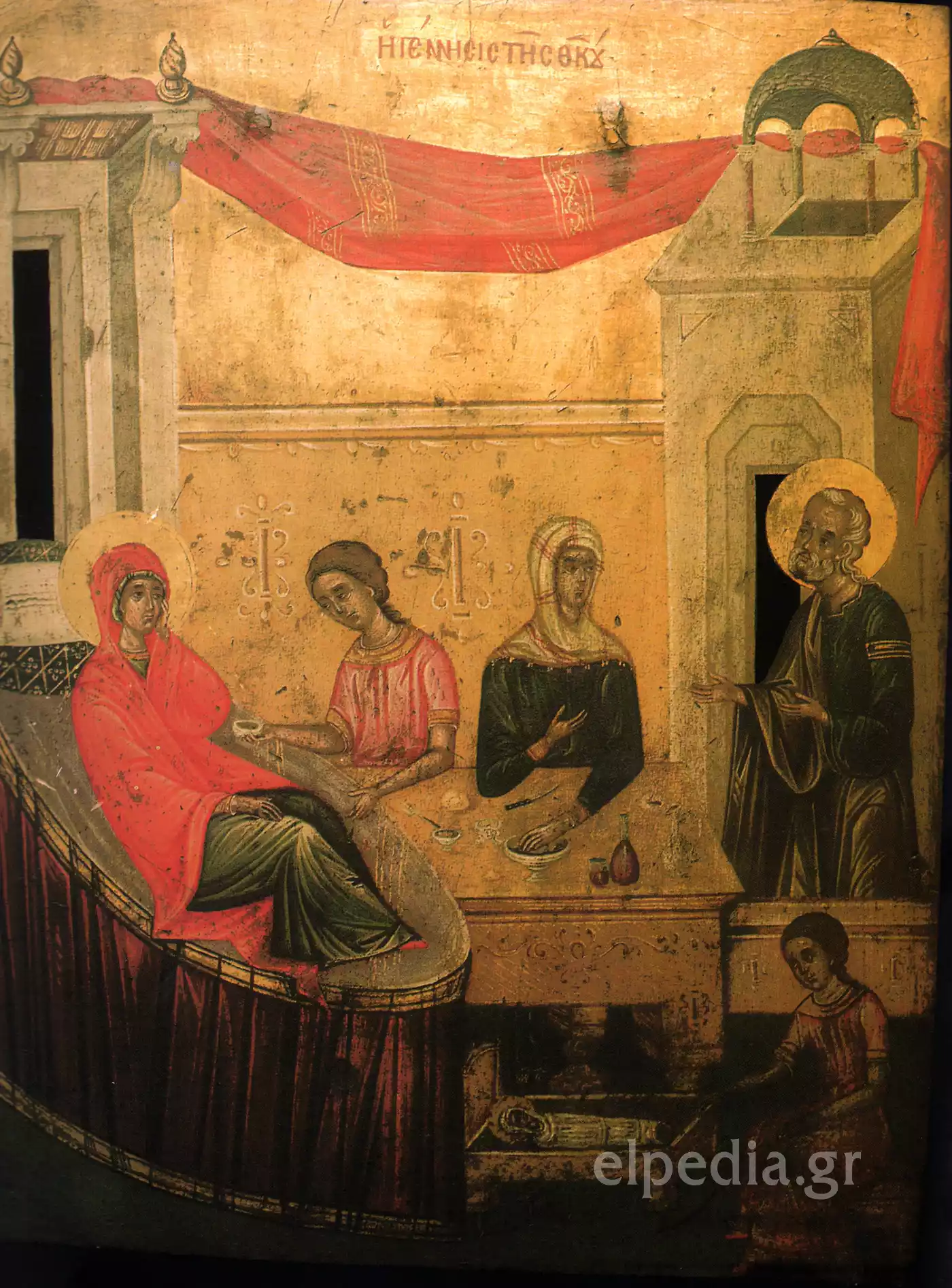
The rare 16th-century image of the Birth of the Virgin captures traditional Byzantine iconography with theological precision and spiritual depth
In the collections of the Greek Institute in Venice, there is an exceptional 16th-century image depicting the Birth of the Virgin. This work is a testament to the vibrant tradition of Byzantine iconography that continued unabated into the post-Byzantine era. The scene unfolds with the classic arrangement established by Byzantine standards, yet it incorporates distinctive elements from the period in which it was created, a time when Orthodox communities in the West preserved their iconographic traditions with religious reverence.
The iconography of the Birth of the Virgin draws from ancient apocryphal texts, particularly the Protoevangelium of James, which sought to address the “hermetic silence” surrounding the early years of the Theotokos’s life (Salvador-González). These narratives were elaborated and interpreted by significant Church Fathers, theologians, and preachers, resulting in a solid doctrinal body from which important Marian worship practices and liturgical feasts emerged. In Byzantine artworks of the 10th and 11th centuries, the iconography of the Birth of the Virgin was established as one of the most significant episodes in the life of the Theotokos, acquiring profound symbolic and theological meaning.
This iconographic type not only narrates the historical event of Mary’s birth from Anna and Joachim but also incorporates and foreshadows her salvific mission. It exemplifies that Byzantine theological thought that intertwines the historical with the doctrinal, the human with the divine, in a composition that transcends the narrow confines of narrative iconography.
Theological Dimensions and Patristic Interpretation of the Birth of the Virgin
The theological significance of the Birth of the Virgin in Byzantine thought far exceeds the confines of a simple historical narrative. As John of Damascus elaborates in his discourses, the birth of Mary represents a manifestation of the supernatural in the world. The first divine miracle, according to the great theologian, is that Anna’s relative barrenness—through which God prevented nature from being fruitful before conceiving Mary—was proven fruitful precisely in her old age, when God granted her the power to miraculously give birth to the future mother of the Redeemer.
This theological approach is directly reflected in the iconography of the present image. Anna is depicted in the characteristic posture of a woman in labor, reclining on her bed, dressed in rich red garments that symbolize both royal dignity and the bloodline of David. Her demeanor is calm, devoid of any signs of pain or distress, indicating the miraculous nature of the birth. Beside her stand attendants—traditionally interpreted as midwives—who care for the newborn, while everyday objects are visible, emphasizing the human aspect of the event.
The Damascene theologian establishes a perfect analogical parallel between the present birth of Mary and the future birth of Jesus. This dual similarity is reflected in the fact that both the Virgin and Christ are firstborn and only children: she from a barren mother (Anna), he from a virgin mother (Mary). This parallelism is not coincidental but reveals the divine design that permeates the entire history of salvation.
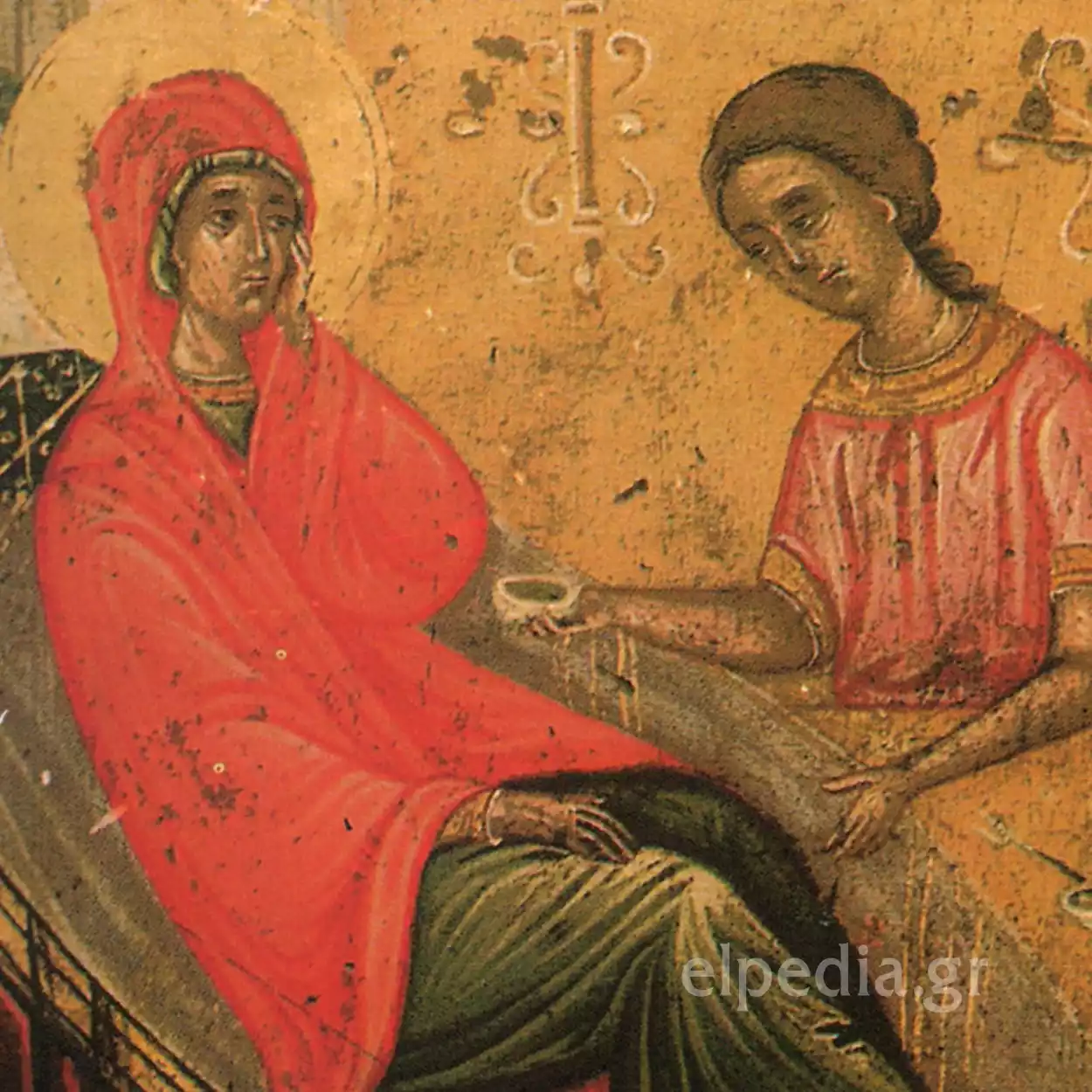
Saint Anne in a reclining position with rich red garments in the Byzantine iconography of the Birth of the Virgin symbolizes royal dignity, 16th century
Joachim as a Silent Witness to the Divine Mystery
In the second image we examine, the figure of Joachim dominates, distinguished by the golden halo that marks him as a saint. His dark robe and contemplative posture contrast with the lively activity unfolding around the women’s chamber. This iconographic choice is not incidental. In Byzantine tradition, Joachim is often portrayed in a secondary role during the birth of his daughter, not due to a lack of importance, but as an acknowledgment of the unique nature of this event, which primarily belongs to the feminine sphere of the mystery of motherhood.
Joachim’s presence at the bottom of the composition serves as a testimony to paternal dignity and the continuity of the genealogy. His sacred character is highlighted not only by external iconographic elements but also by the position he occupies in the economy of salvation. According to the apocryphal narratives processed by the Church Fathers, Joachim was a righteous man who faced scorn and rejection due to his wife’s barrenness before the divine mystery was revealed.
The artistic rendering of his figure demonstrates the maturity of 16th-century post-Byzantine iconography, which preserved traditional typologies while enriching them with details that reflect the spiritual depth of the era. Joachim’s gaze, filled with reverence and contemplation, bears witness to his understanding of the sacredness of the moment in which he participates as a witness rather than a central protagonist.
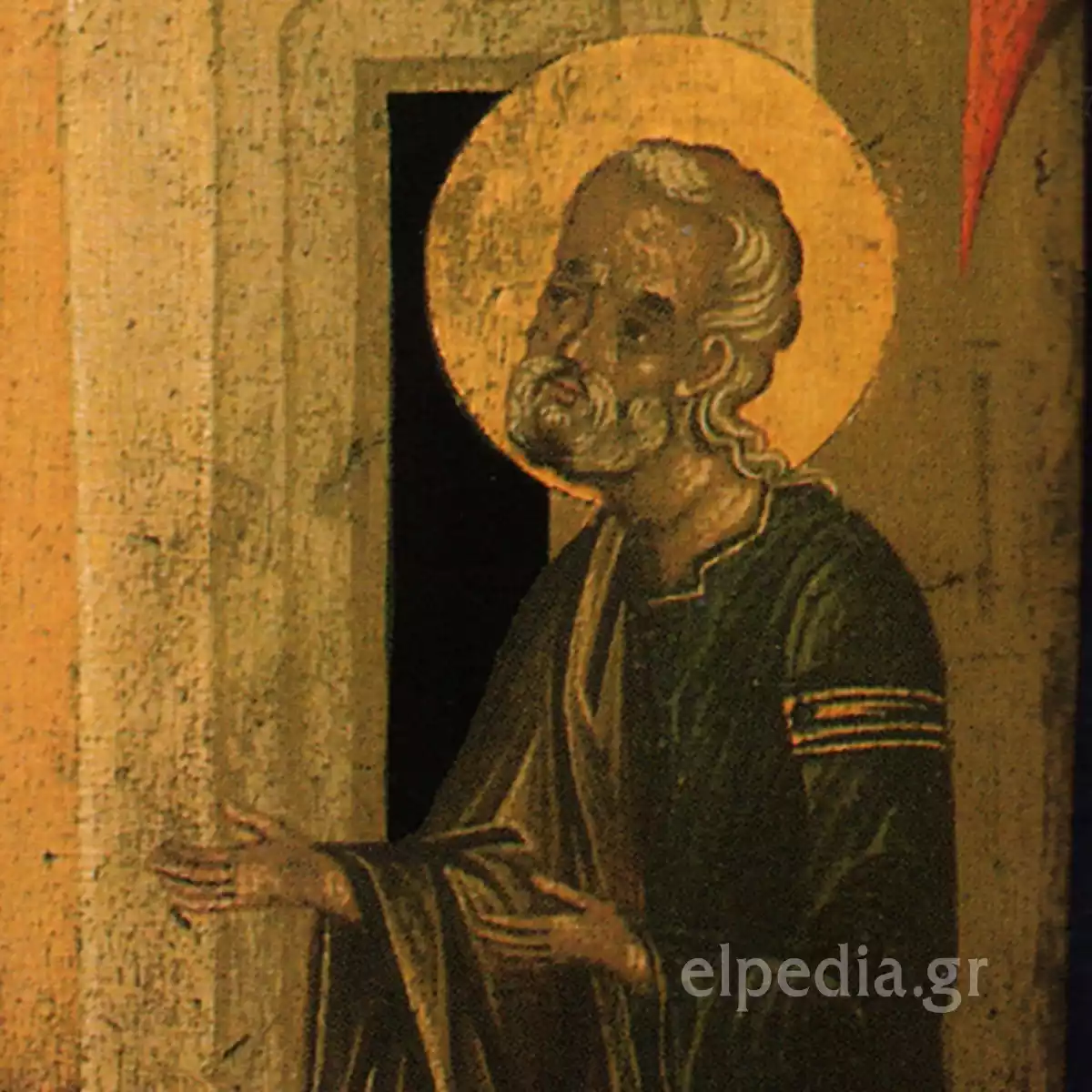
Saint Joachim with a golden halo and dark garments in the Byzantine iconography of the Birth of the Virgin expresses the silent reverence of a father, 16th century
Overall View of the Iconographic Composition: Architecture of Sacred Space
The overall iconographic composition, as depicted in the third image, reveals the sophisticated arrangement characteristic of 16th-century Byzantine art. The architecture of the sacred space is structured around classical elements referring to the early Christian and Byzantine church: columns with capitals, arches, domes, and railings that create a dignified space for the sacred event. The red veil extending at the top of the scene serves both as a decorative element and as a symbol of the royal dignity of the Theotokos’s parents.
We observe how the artist organizes the space into levels that complement each other. The main action unfolds at the central level around Anna and the newborn, while secondary characters are placed in the lateral and lower sections, adding fullness and depth to the scene. This arrangement reflects the hierarchical thought that permeates Byzantine theology and iconography, where each element occupies its place according to its spiritual value and function.
Particular attention is warranted for the depiction of the small infant at the lower center of the composition. This representational detail is not merely decorative but carries deeper symbolic meaning connected to the theology of the “new Eve” developed in patristic texts. This image foreshadows Mary’s future role as the mother of the Redeemer and symbolizes the beginning of the rebirth of humankind.
In conclusion, the present image of the Birth of the Virgin represents a mature example of the Byzantine iconographic tradition that was preserved and evolved in the post-Byzantine years. Beyond its artistic value, it functions as a theological text written in colors and forms, revealing the profound spirituality and sophisticated doctrinal thought that characterized the Orthodox tradition of the time. The preservation of classical iconographic types combined with the technical innovations of the 16th century creates a work that serves as a bridge between the old and the new era, maintaining the theological and spiritual message of the Byzantine tradition intact.
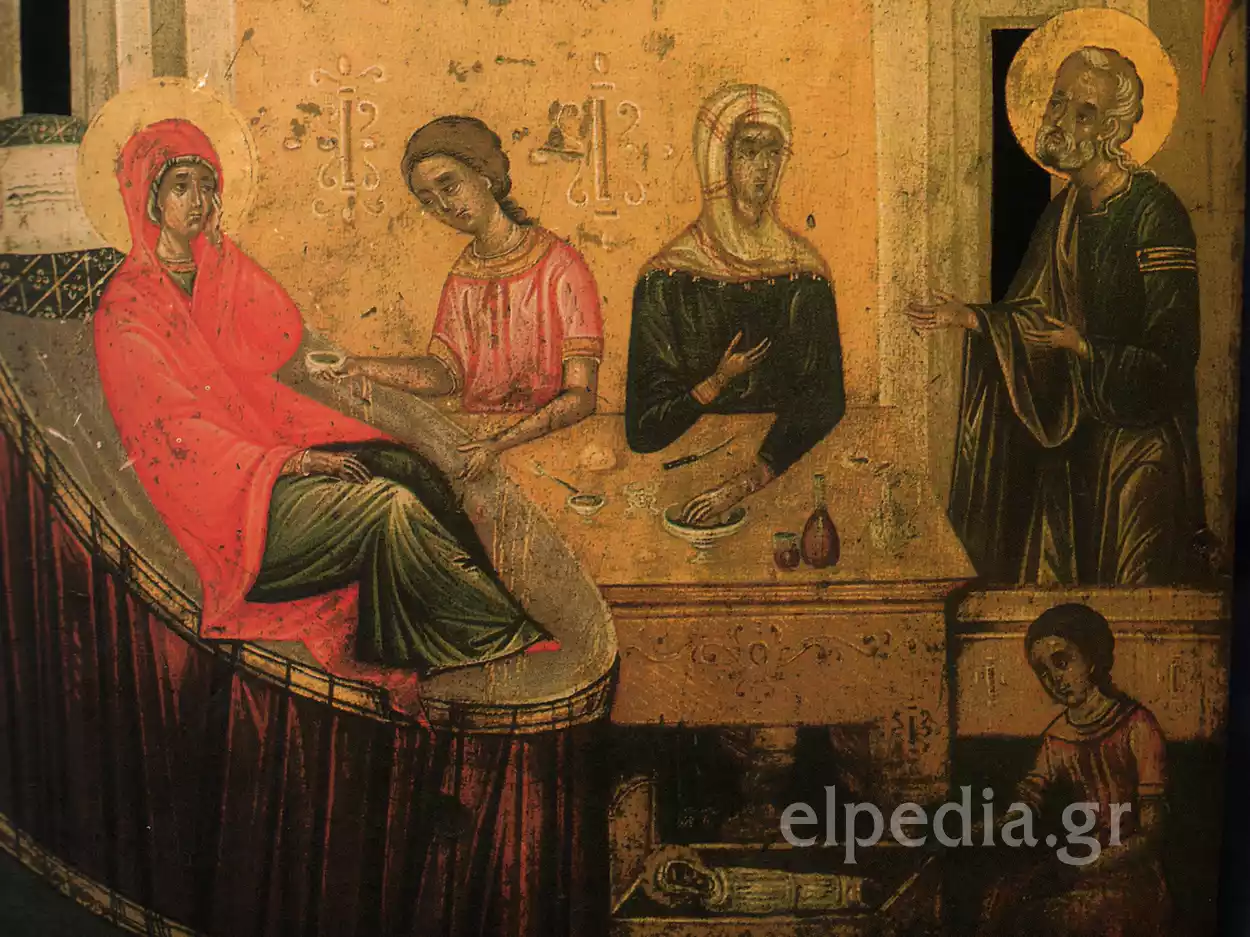
The domestic atmosphere of the scene in Byzantine iconography of the Birth of the Virgin balances the sacred with the human element in a harmonious composition, 16th century
Bibliography
Costello, Angela L. “The Cult of the Virgin Mary in 6th Century Byzantium.” Academia.edu, October 25, 2016.
Kalodimos, Christina A. “Portrayal and significance of the Virgin Mary in Byzantine passion iconography during the eleventh and twelfth centuries.” Graduate Research Theses & Dissertations, Northern Illinois University, 1991.
Salvador-González, José María. “Byzantine iconography of The Nativity of the Virgin Mary in the light of a homily of St. John Damascene.” Academia.edu, June 8, 2015.
Salvador-González, José María. “Byzantine iconography of The Nativity of the Virgin Mary in the light of a homily of St. John Damascene.” Mirabilia Ars, no. 2 (2015): 200-226.
Salvador-González, José María. “Byzantine iconography of The Nativity of the Virgin Mary in the light of a homily of St. John Damascene.” ResearchGate, July 24, 2018.


