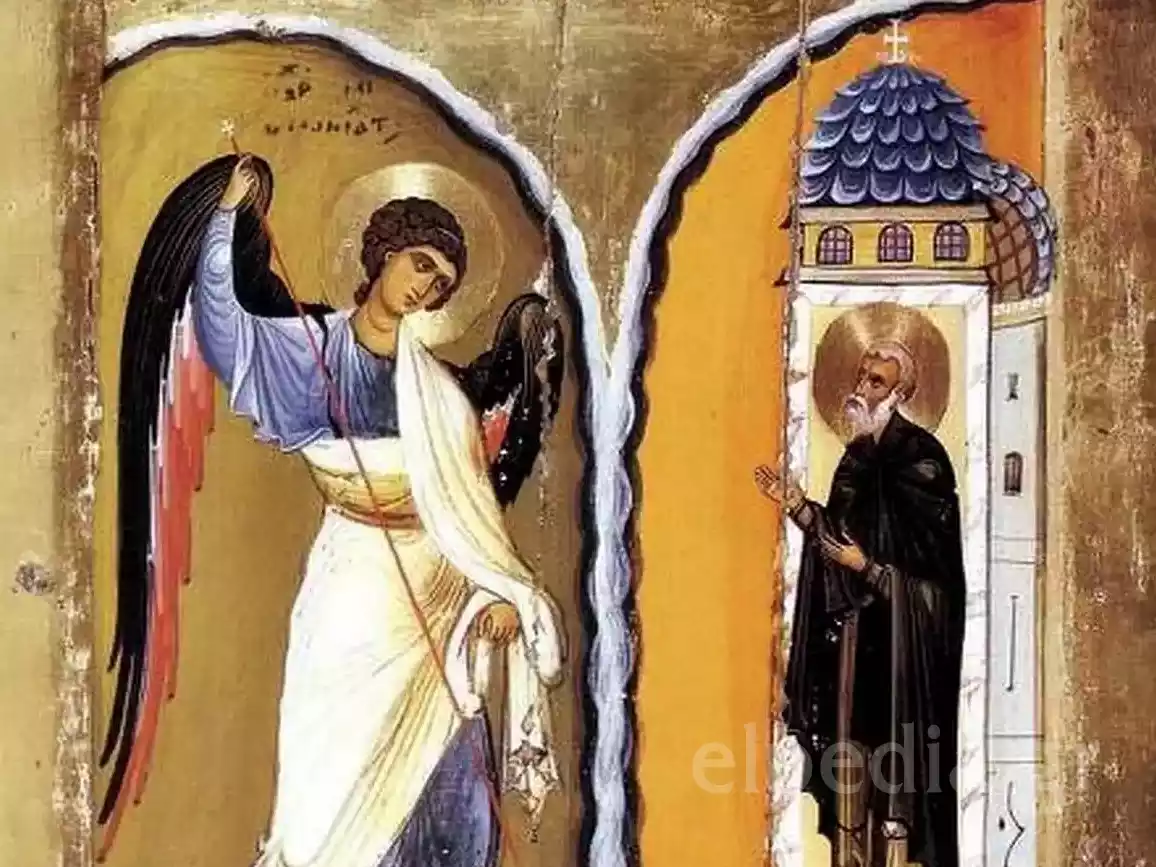
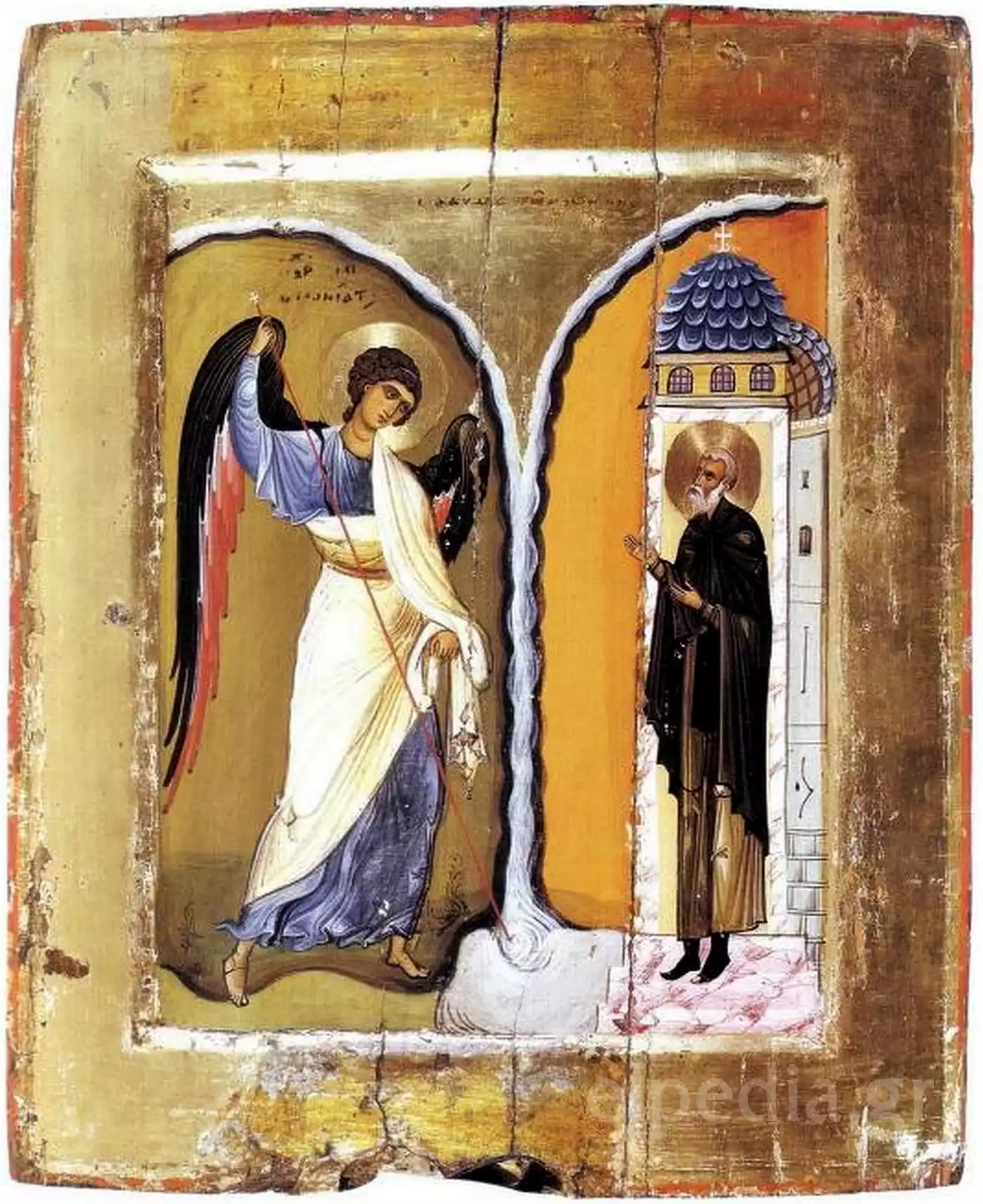
“The Miracle at Chonae of Archangel Michael,” a Byzantine icon from the 12th century at the Monastery of Saint Catherine in Sinai. A masterpiece of Komnenian art.
A small wooden panel, nearly square, measuring just 37.7 by 31.4 centimeters, carries the silence and weight of nine centuries. Created sometime in the second or third quarter of the 12th century, this masterpiece of Komnenian art tells a story that is both violent and miraculous: the miracle at Chonae of Archangel Michael. The scene is simple, almost austere—on the left, the winged Archangel rushes forward with a movement full of restrained power, while on the right, the hermit Archippus stands motionless before the temple entrusted to him. Between them flows a river that resembles a fissure in the golden canvas of time. Yet, this object, which narrates a conflict, is preserved in a place of unique coexistence, the Monastery of Sinai, a successful example of shared sacred space, as shown in a recent study (Hamilton and Jotischky). Art often narrates battles, but objects simply… endure.
The Theatricality of Absence
Where are the villains? The narrative is clear: “Greek-speaking men,” that is, pagans, attempted to destroy the pilgrimage of Archangel Michael at Chonae in Phrygia by diverting a river to drown it. Yet, the painter of this icon chooses to completely ignore them. They are absent. The scene is devoid of the human malice that caused it. This absence is, paradoxically, the most striking element of the composition, a conscious decision that transforms a local conflict into a monumental, almost cosmic, statement.
A Scene of Two Figures
The artist divides his world in two with the unnatural, vertical flow of water. On one side, we have divine intervention. The Archangel Michael does not fight; he simply acts. With an elegant, almost dance-like movement, he plunges his spear into the ground, and the chaos of the river is subdued, swallowed into a chasm that opens in the earth. The drapery of his garments follows this rhythmic motion, while his expression remains serene, almost melancholic. On the other side, human faith. The expectant Archippus, depicted on a smaller scale, does nothing. He stands with his hands raised in prayer, a silent witness to the miracle. It is the ultimate contrast: heavenly action and earthly stillness.
The Echo of Violence
By removing the physical perpetrators of the threat, the painter strips the event of its historical context and adorns it with a pure theological significance. The issue here is no longer a group of pagans—they are insignificant. The real conflict lies between divine order and the elements of nature that were weaponized against it. This choice—the removal of human adversaries—is not merely an aesthetic simplicity but a profound theological positioning that shifts the drama from human conflict to a pure, unmediated display of divine power, thus rendering the entire narrative internal, spiritual, almost allegorical. The miracle is not the victory over the enemy. It is the moment when the order of the world bends, even if just for a moment, before the impossible. After that, we simply continue.