Within the profound philosophical framework of Byzantine theological thought emerges a fundamental challenge that transcends mere aesthetic expression: how might the material realm serve as a conduit for spiritual revelation? The templon, functioning as an architectural mediator between the visible and invisible, the temporal and eternal, represents one of humanity’s most radical artistic solutions to the question of religious transcendence. The Great Deesis, as both theological programme and iconographic system, reveals the sophisticated complexity of a civilisation that endeavoured to construct bridges of communication with the absolute through saintly intercession.
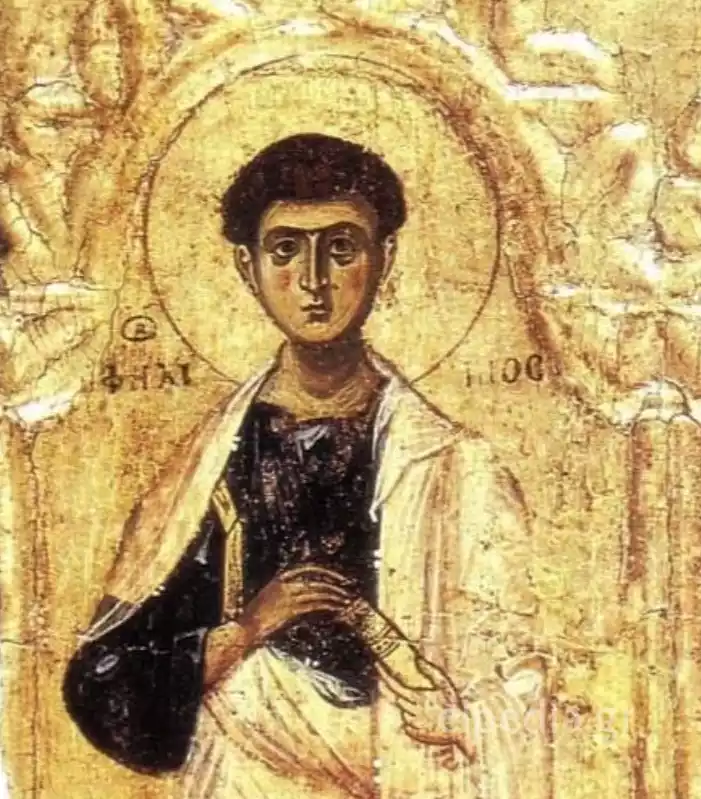
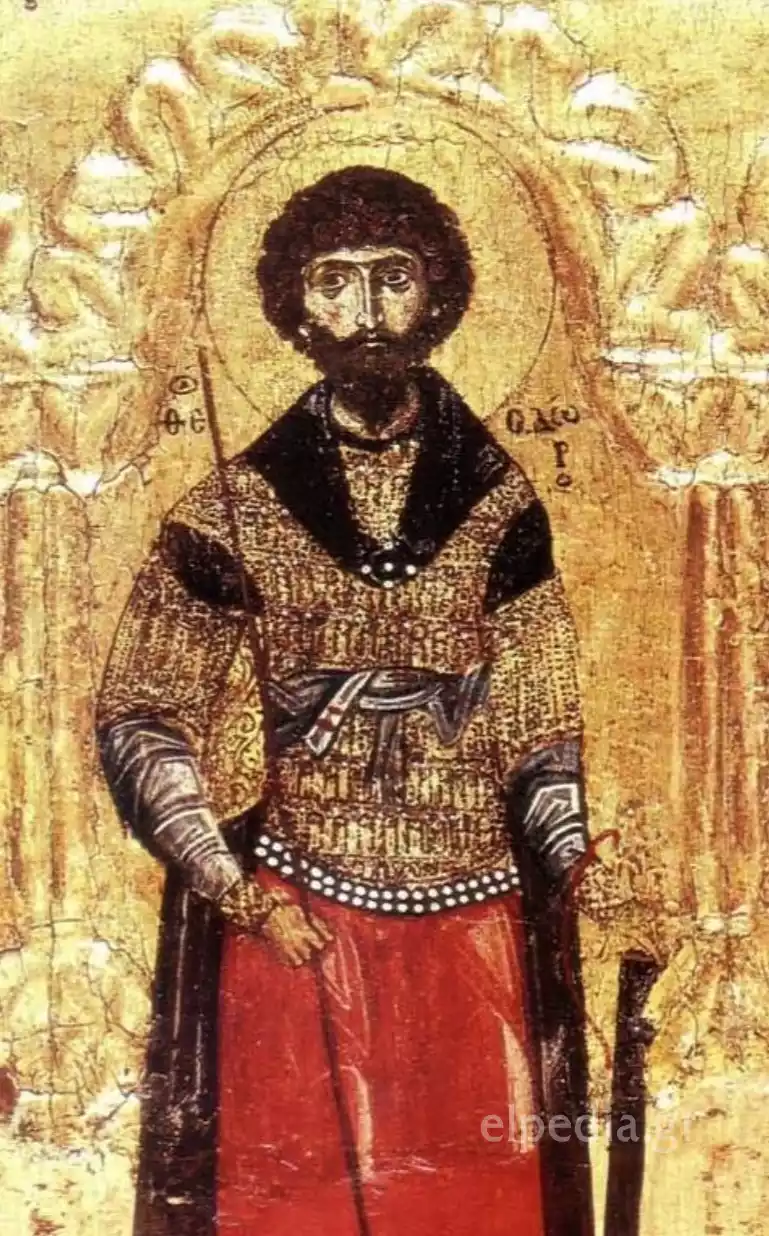
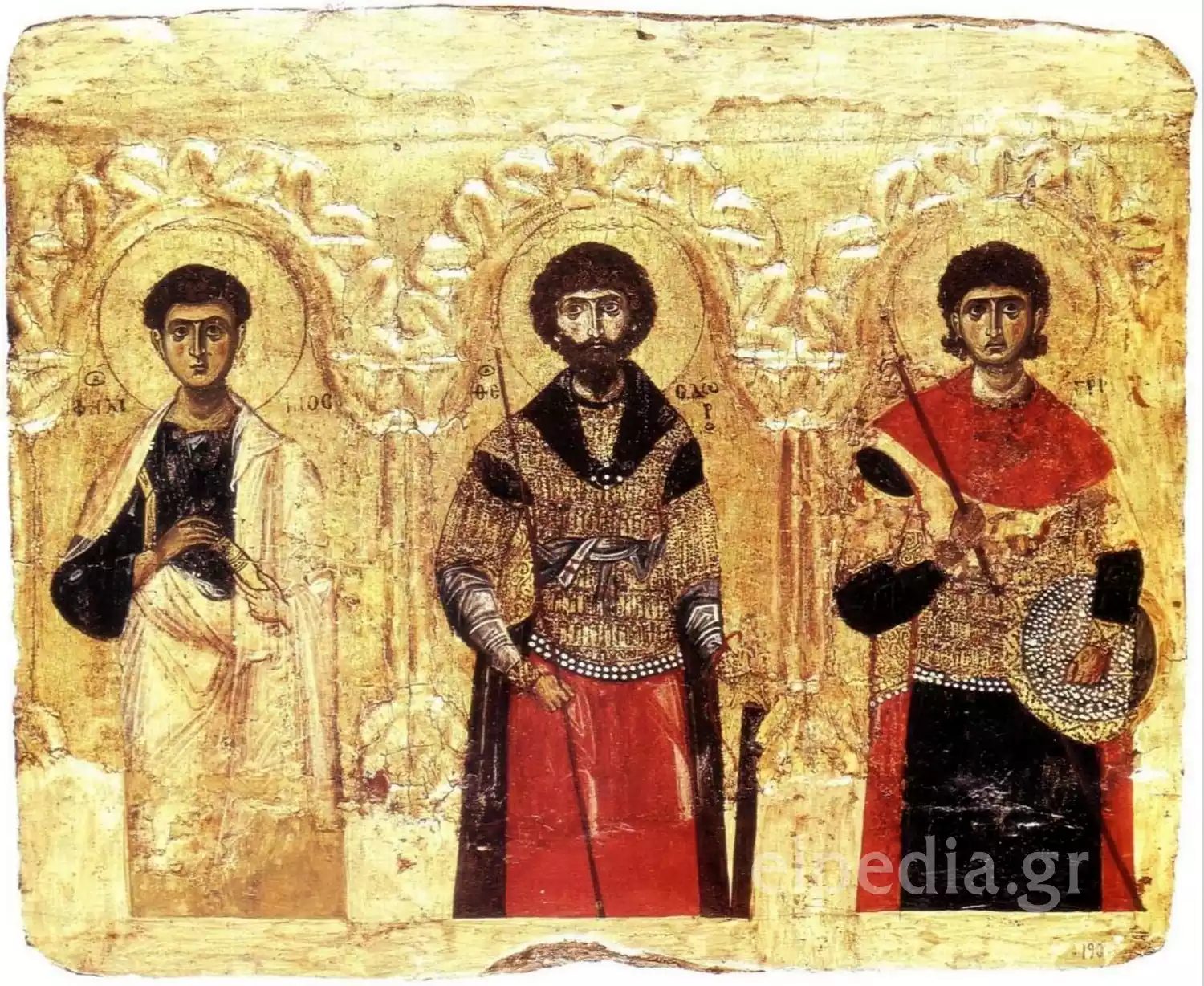
This particular historical artefact under examination—an epistyle fragment from the first half of the 12th century housed in the Hermitage Museum—exemplifies the transitional period during which the Byzantine templon evolved from a simple architectural partition into a complex iconographic programme embodying the theology of intercessory mediation. The three saints depicted—the Apostle Philip and the military saints Theodore and Demetrius—constitute not merely decorative elements but philosophical entities representing different modes of spiritual virtue and worldly presence.
The sophisticated arrangement of saints beneath relief arches supported by paired columnettes reveals a programmatic conception of the church as a cosmological microcosm. These columnettes, forming characteristic knots, function as symbolic axes connecting material reality with metaphysical dimensions. This architectural solution reflects a fundamental philosophical inquiry permeating Byzantine thought: through what means can the finite gesture towards the infinite?
Architectural Philosophy and Spatial Dialectics
The triple arrangement of saints follows a profound theological principle corresponding to the triadic structure of Christian ontology. The central saint, clothed in more sumptuous vestments, occupies a position of prominence reflecting the hierarchical conception of the Byzantine world, where each level of existence corresponds to specific degrees of divine grace and temporal authority. This iconographic organisation indicates a society attempting to reconcile the necessity of worldly order with the pursuit of spiritual transcendence.
The presence of military saints Theodore and Demetrius within a templon of expanded Deesis reveals the multidimensional nature of Byzantine theology, which refused simple opposition between spiritual and material realms. Their armour, adorned with white and blue bosses, constitutes symbolic references to the spiritual warfare waged by Christians against forces of dissolution and disorder.
Military Sanctity and Secular Witness
The iconographic deviation in depicting Saint Demetrius with a moustache, contrary to his traditional beardless appearance, suggests local traditions or specific theological emphases reflecting the multicultural reality of the Byzantine Empire. The dense eyebrows and vivid red patches on the cheeks endow these figures with psychological density transcending simple typological representation, indicating an artistic philosophy seeking to reveal the interior world of saintly personality.
The Apostle Philip, as representative of apostolic tradition, completes the iconographic programme with a dimension opening towards the eschatological prospect of Christian hope. His white vestment, contrasting with the polychrome robes of the military saints, suggests different modes of spiritual witness: active intervention in the world through deed, and distancing from it through cosmic transcendence.
Theological Dimension and Spiritual Intercession
The overall composition forms part of an expanded Great Deesis, an iconographic programme incorporating the supplicatory dimension of ecclesiastical worship within a broader theological framework aimed at revealing divine philanthropy. The saints function not as mere intermediaries but as living elements of a cosmic drama continuing perpetually between divine and human.
The artistic execution of this work, despite the deterioration it has suffered, maintains the impressive aesthetic quality characterising 12th-century Byzantine art. Its provenance from Mount Athos lends the work particular spiritual authenticity, as the Holy Mountain constituted a centre of theological and artistic creativity that decisively influenced Byzantine aesthetic development.
The study of this archaeological monument reveals the complexity of a society that succeeded in reconciling spiritual quest with worldly reality, creating an artistic language that continues to speak to contemporary consciousness about eternal questions of human existence and the search for the absolute. Through examination of these historical documents, we discover not only the aesthetic philosophy of a bygone era but the timeless dimensions of humanity’s desire for spiritual transcendence through art.
Bibliography
Epstein, A.W. “The Middle Byzantine Sanctuary Barrier: Templon or The Iconostasis?” Journal of the British Archaeological Association 134 (1981): 1–28.
Freeman, Evan. “Late Byzantine naturalism: Hagia Sophia’s Deësis mosaic.” Smarthistory, 2021.
Freeman, Evan. “The Byzantine World.” ARTS 101: Art and Architecture from the Prehistoric World through the Medieval World, 2025.
Historyen. “The Deesis Mosaic: A Byzantine Masterpiece.” Historyen, 2024.
Melvani, Nicholas. “The Middle Byzantine Sanctuary Barriers of Mount Athos: Templon and Iconostasis.” Academia.edu, 2015.
Obraztsova, Kseniia B. “The Deesis Composition in the Decoration System of the Byzantine Templon of the 12th — Early 13th Centuries.” Actual Problems of Theory and History of Art 7 (2017): 232–240.
Obraztsova, Kseniia B. “The Deesis Composition in the Decoration System of the Byzantine Templon of the 12th — Early 13th Centuries.” ResearchGate, 2017.