The 7th-century archangel in the eastern arch of Panagia Drosiani is an exceptional example of early Byzantine iconography with profound theological significance.
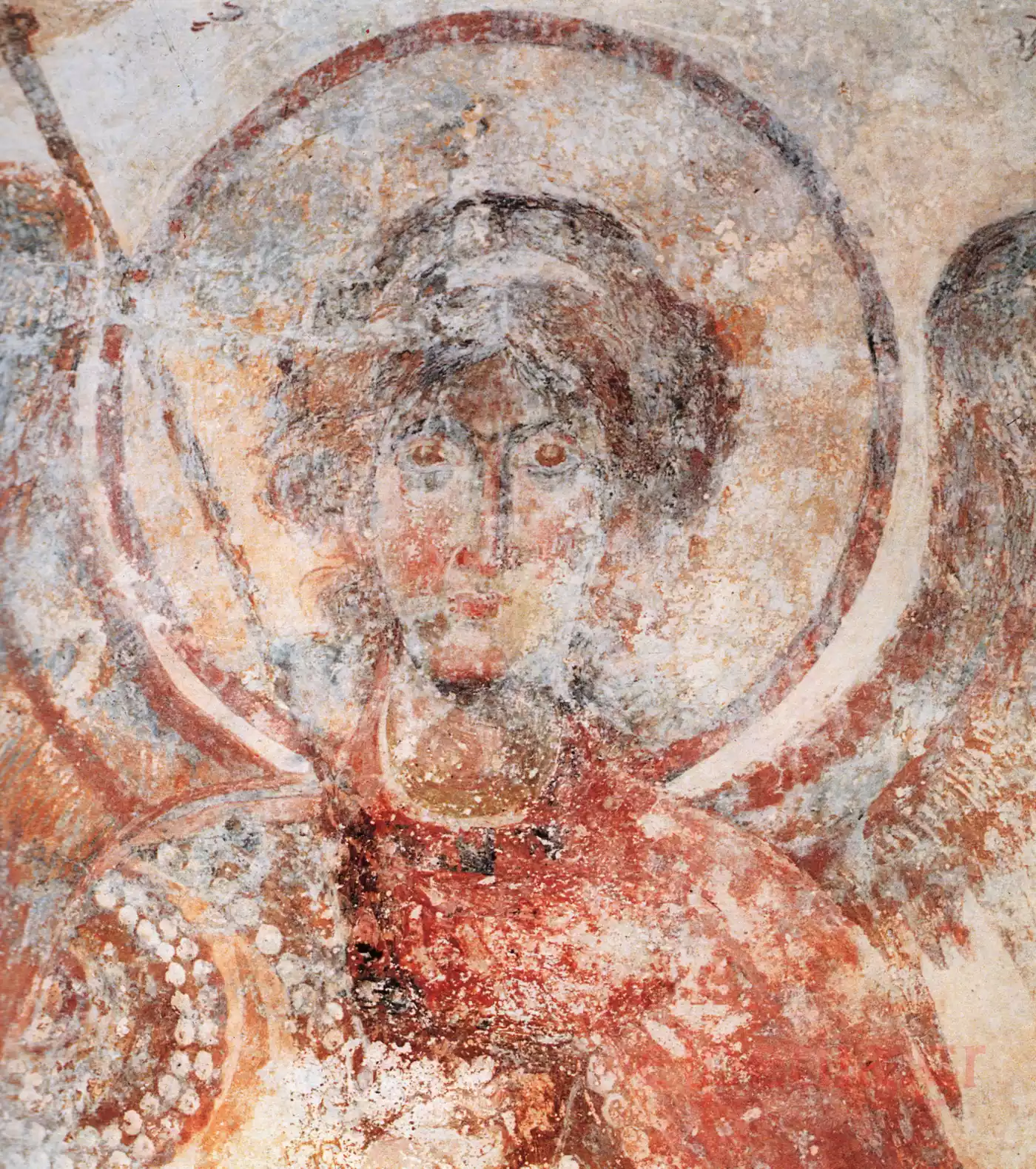
In the church of Panagia Drosiani in Naxos, one of the most significant frescoes from the 7th century AD is preserved in the inner arch of the eastern section. The depiction of the archangel is a remarkable representation of early Byzantine iconography. This work holds a special place in the cultural heritage of the Cyclades and globally.
The Drosiani monastery, represented today by the preserved church, was one of the oldest monastic centers in the Balkans, while the iconography of archangels in the 7th century was a central theme in Christian art (Dix). Historical sources indicate that the construction of the church likely began in the 6th century AD, while this particular fresco dates back to the 7th century AD, a crucial period for the development of Byzantine iconographic tradition.
Iconographic Analysis and Artistic Features
The archangel is depicted in full frontal view. He wears a wide-sleeved tunic with folds and a narrow belt at the waist, while a mantle covers the right chest, fastening on the left at the base of the neck. The luxurious attire is adorned with rows of pearls on the round embellishments and other decorative elements, indicating the imperial tradition of the time – the Byzantine iconography of the 7th century shows strong influences from the Constantinopolitan court (Vionis).
The head of the heavenly messenger is surrounded by rich curly hair adorned with a white ribbon. Strands escape low, fluttering, creating a sense of movement that is enhanced by the delicate outline following the line of the hair. A similar technique is found in the depiction of Apostle Andrew in Santa Maria Antiqua in Rome at the beginning of the 8th century.
Powerful wings converge above in a graceful arc around the broad halo. The archangel holds a scepter in his right hand and a globe in his left – elements that signify his heavenly authority and cosmic role. The iconography of the Ascension often includes archangels in similar forms (Dewald), reinforcing the idea that this depiction is part of a broader theological composition.
Theological and Symbolic Content
The facial features of the archangel reveal spiritual nobility and the ancient classical tradition that characterized Byzantine art of the period. Slender and agile, with gently rounded shoulders, he exudes a formal demeanor restrained within the narrow surface of the arch. The charming face, despite the wear on the color of the iris, maintains a noble, steady, and light presence.
The modeling is bold in its color contrasts of red, yet soft in execution. Against the pale white background, the figure stands out with a dignity that reflects the theological understanding of archangels as mediators between the heavenly and earthly realms. The early Christian iconography of the 21st century emphasizes the importance of such representations in the development of theological thought (Kiilerich).
The choice to depict the archangel in the eastern arch is not coincidental – this position symbolizes heavenly glory and eschatological expectation. A serious and solemn ethos permeates the depiction, reflecting the monastic spirituality of the era that flourished in the Aegean islands despite the political upheavals of the 7th century.
Historical Context and Dating
The 7th century AD was a pivotal moment for the Byzantine Empire and the development of Christian art. In Panagia Drosiani, the archangel fresco is preserved from the initial phase of iconographic decoration, dated before the iconoclastic period. This makes the work particularly significant for understanding the pre-iconoclastic tradition.
The Byzantine iconoclasm of the 8th century that followed led to the destruction of many frescoes from that period (Gero). The preservation of this particular depiction in Naxos is attributed to the relative isolation of the island from the central events of the empire, allowing the survival of images that were destroyed elsewhere.
The elements of the attire and technique refer to the Constantinopolitan tradition, as seen in comparisons with depictions in Santa Maria Antiqua in Rome. This was a period of flourishing monastic centers in the Aegean, when islands like Naxos became significant spiritual hubs of the Christian East.
The theme of the seven archangels and their symbolic significance in messianic theology (Dix) particularly captured the Christian thought of the period. In Drosiani, the depiction is part of a broader composition that included the Ascension and other eschatological scenes, as evidenced by the surviving frescoes of the church.
The exceptional preservation of this work makes the 7th-century archangel in Panagia Drosiani a unique monument of early Byzantine iconography, combining theological depth, artistic integrity, and historical significance for understanding Christian art in the Greek world.
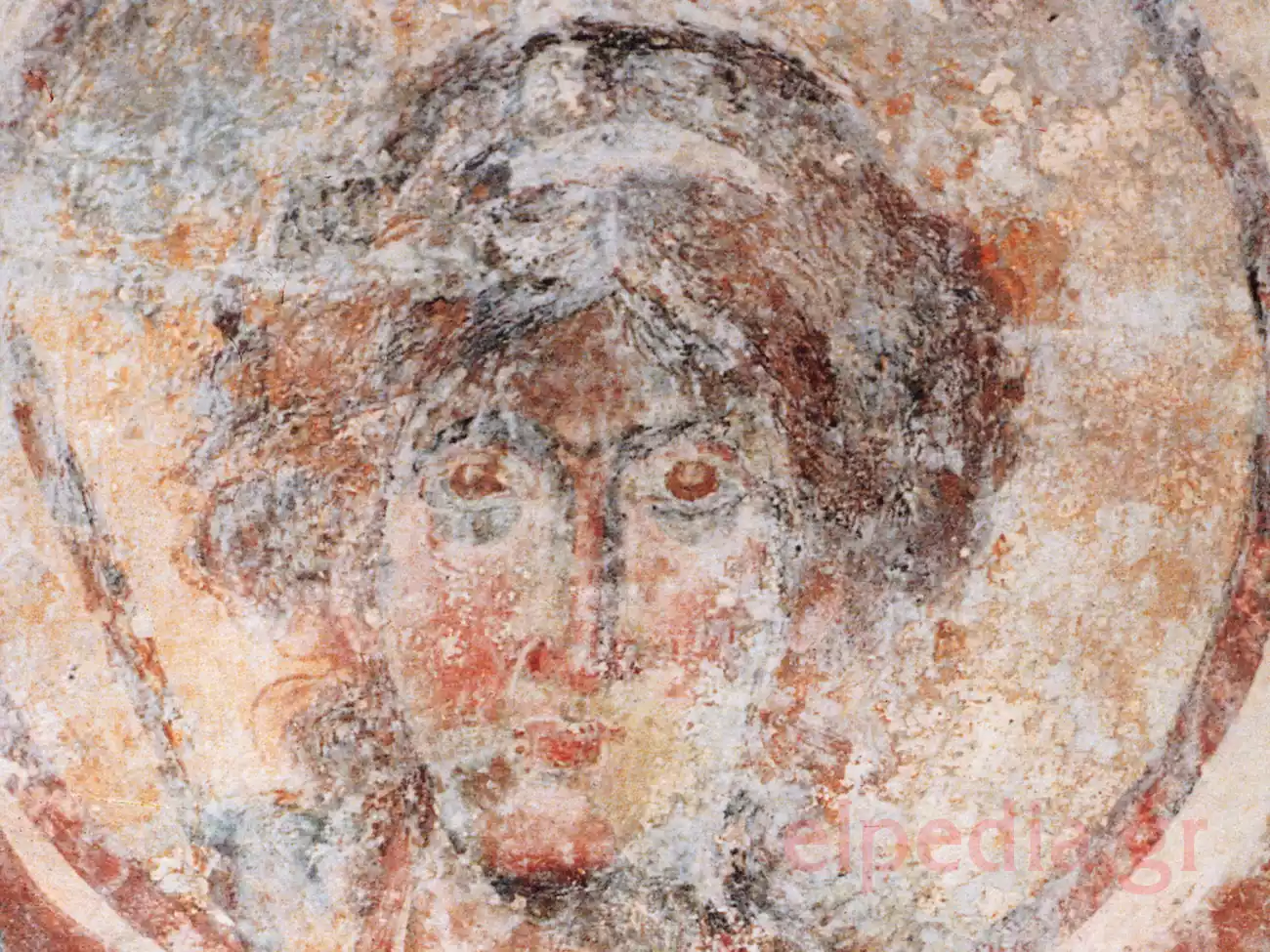
Detail of the archangel’s face with curly hair and white ribbon, characteristic of 7th-century Byzantine style in Drosiani Naxos
Bibliography
Dewald, Ernest T. “The Iconography of the Ascension.” American Journal of Archaeology, Vol. 19, No. 3 (Jul.-Sep., 1915): 277-319.
Dix, G. H. “The Seven Archangels and the Seven Spirits: A Study in the Origin, Development, and Messianic Associations of the Two Themes.” The Journal of Theological Studies, Vol. 28, No. 111 (April, 1927): 233-250.
Gero, Stephen. “Notes on Byzantine Iconoclasm in the Eighth Century.” Byzantion, Vol. 44, No. 1 (1974): 23-42.
Kiilerich, Bente. “The State of Early Christian Iconography in the Twenty-First Century.” Studies in Iconography, Vol. 36 (2015): 99-134.
Vionis, Athanasios. “Island Responses in the Byzantine Aegean: Naxos Under the Lens of Current Archaeological Research.” ResearchGate (April 15, 2018).


