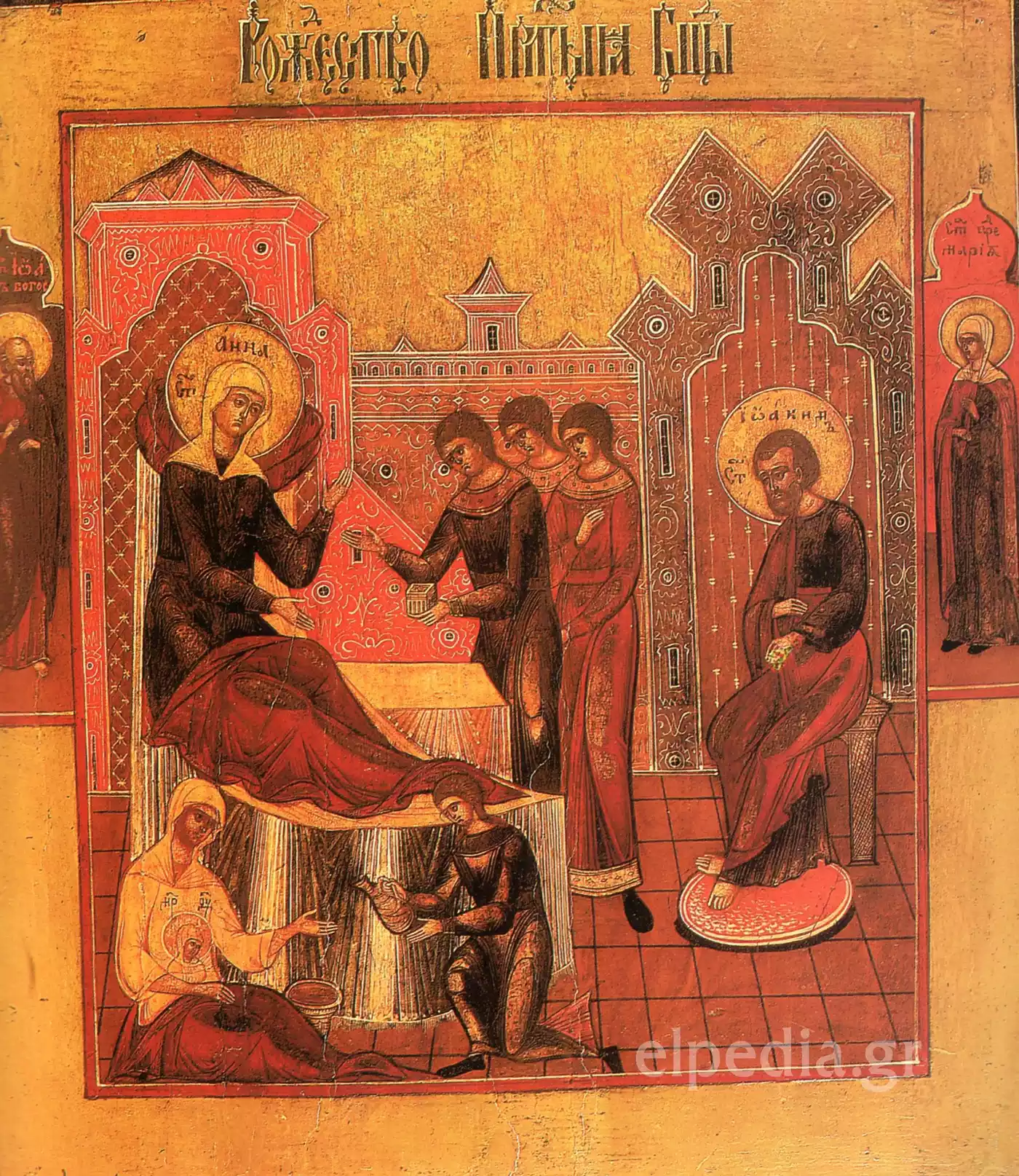
19th-century Russian Byzantine icon of the Birth of the Virgin Mary in red hues
Byzantine Icon: The Birth of the Virgin Mary and the Nativity. Russia, 19th century. Galleria Antiquaria, Rome.
Byzantine iconography serves as a multi-layered communication code that transcends mere artistic expression. In the iconographic depiction of the Birth of the Virgin Mary, we encounter a theological construct of remarkable complexity. This theme refers to the birth of the Theotokos from Saint Anna and Saint Joachim, a pivotal event that sets the stage for the Incarnation of the Word.
In the 19th-century Russian Byzantine tradition, this theme takes on a significant Byzantine importance. The iconographic composition we examine is a vital testament to the continuity of Orthodox tradition in northern Russia, where iconographic art flourishes with remarkable vitality. It represents a significant example of post-Byzantine tradition that continues the unbroken flow of Orthodox iconography through the ages.
The Birth Scene: Theological and Artistic Perspective
The central image depicts the scene with Saint Anna resting after giving birth to the Virgin Mary. Red hues dominate the composition, creating an atmosphere of warmth and deep spirituality, while simultaneously highlighting the theological significance of the event as a prelude to the salvific mission that the newborn will fulfill. Saint Anna’s bed is positioned at the center of the composition, with the saint adorned with a golden halo of sanctity, dressed in dark garments that symbolize the seriousness and reverence of the occasion.
On the left side of the image, three men are shown offering gifts, in accordance with the tradition of visiting the newborn. These figures, dressed in brown and red robes, wear golden halos and hold offerings that symbolize the recognition of the sacred nature of the event. Their iconographic representation follows classical Byzantine conventions, with particular emphasis on the spiritual dignity and religious devotion expressed through their movements and facial expressions.
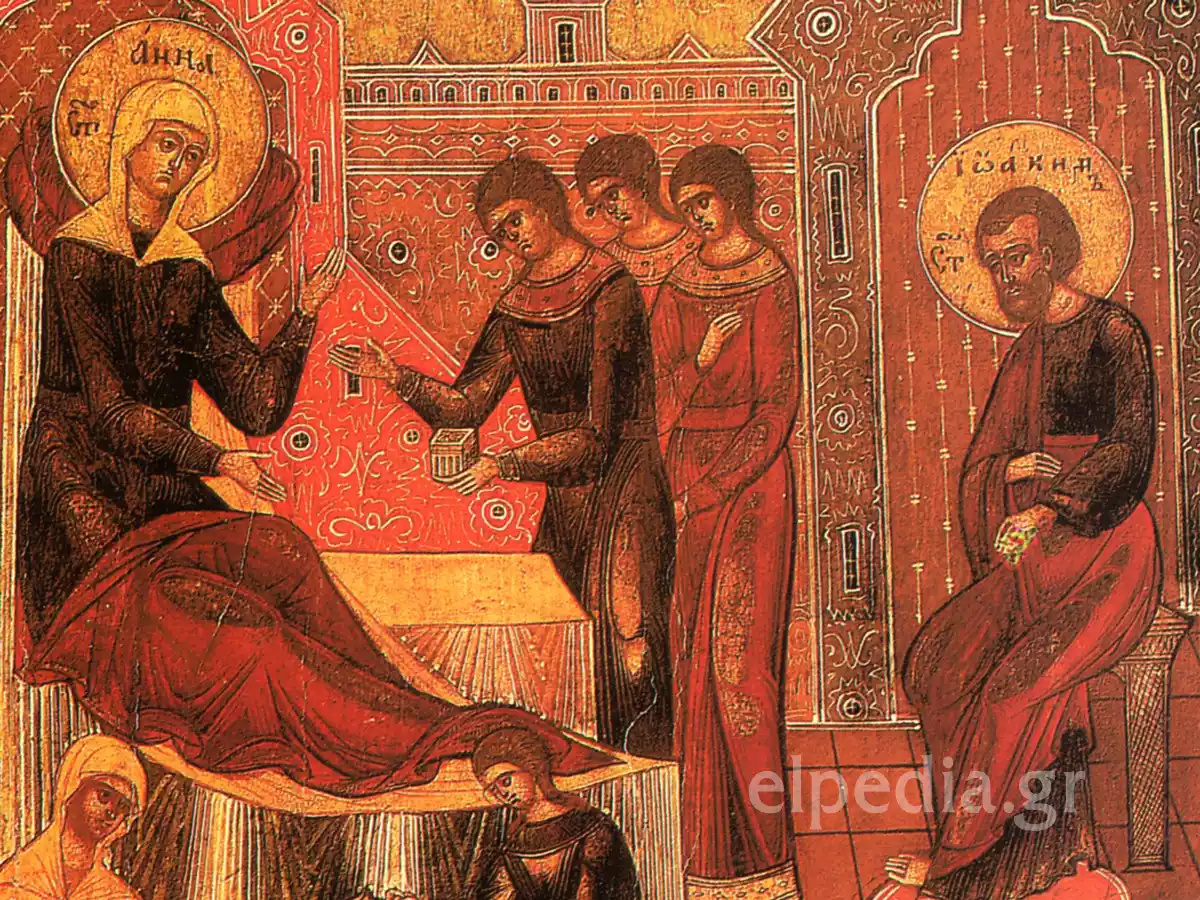
Saint Anna rests after giving birth to the Theotokos, Byzantine iconography in red hues and golden halo of sanctity
Saint Joachim and the Symbolic Aspect of Fatherhood
On the right side of the composition, Saint Joachim is depicted in a posture of contemplation and prayer. His figure, characterized by the maturity and wisdom conveyed by his beard, expresses paternal pride and a spiritual awareness of the significance of the event taking place. His dark garments and golden halo underscore his role as a holy father, who, through his presence, affirms the divine providence governing the mystery of the Theotokos’s Birth.
The architecture surrounding the scene is a significant element of the iconographic language. The two-toned buildings with their geometric decorations evoke early Christian and Byzantine architectural traditions, creating an environment that blends the earthly with the heavenly, the historical with the supernatural!
The Bath Scene: Human Care and Divine Grace
At the bottom of the image, the scene of the newborn’s bath adds a dimension of human tenderness to the theological construct of the composition. The female figure caring for the infant, dressed in traditional red and gold colors, represents maternal care and the human love that surrounds the Theotokos from her earliest moments of life. The basin with water and the fabrics surrounding the scene symbolize purity and innocence, foreshadowing the virgin nature of the newborn.
This iconographic approach combines the theological with the anthropological, the supernatural with the everyday, creating a holistic image that embraces the mystery of the divine-human economy. Through this scene, Byzantine art manages to express the belief that God’s grace operates through simple human actions, transforming the ordinary into a space of revelation and blessing. This art is not merely decorative but serves as a means of theological teaching and spiritual elevation, offering the faithful a visual theology that speaks directly to the heart and conscience.
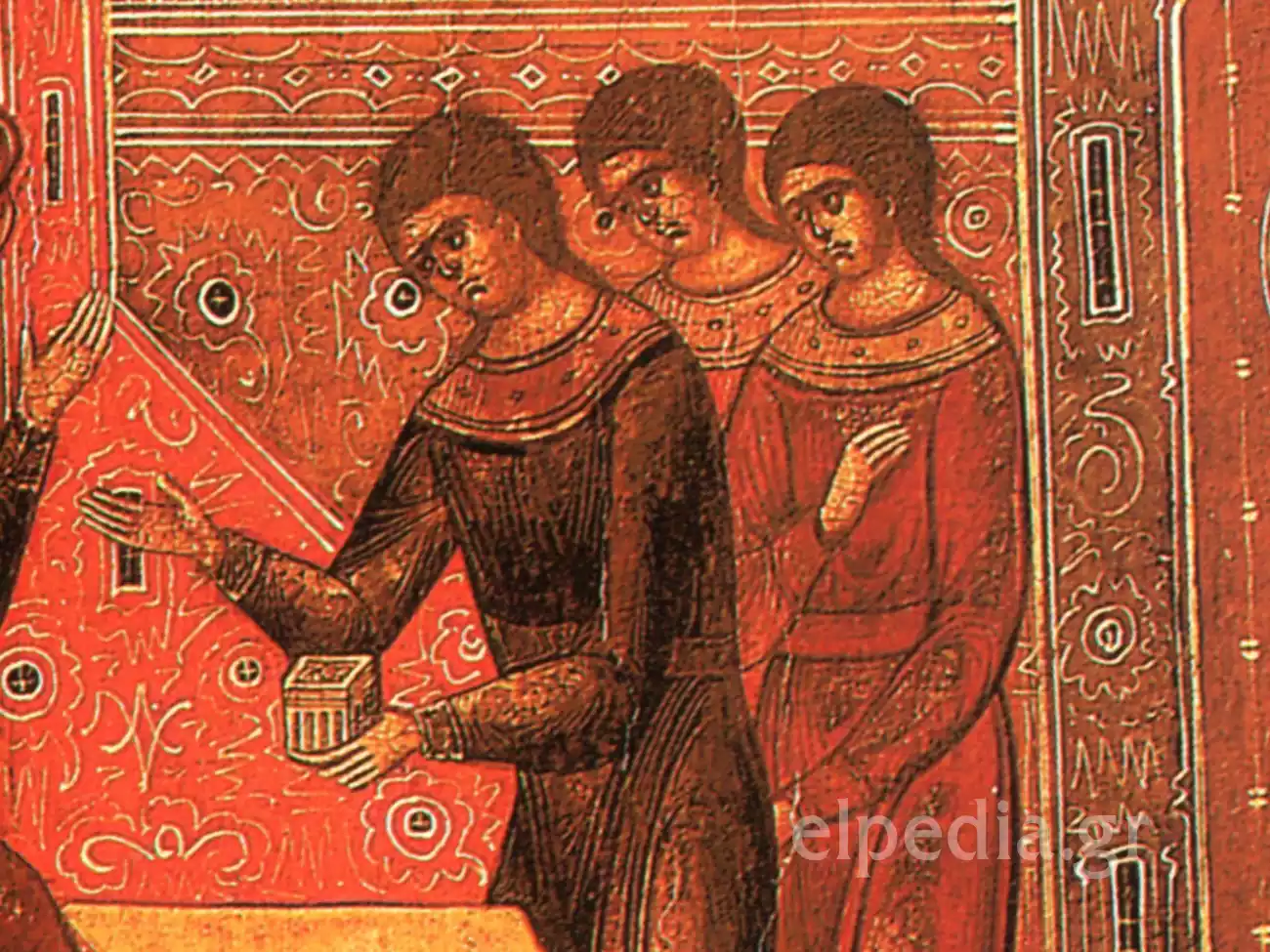
Three holy men offer gifts to the newborn Theotokos, Byzantine tradition with golden halos and spiritual devotion


