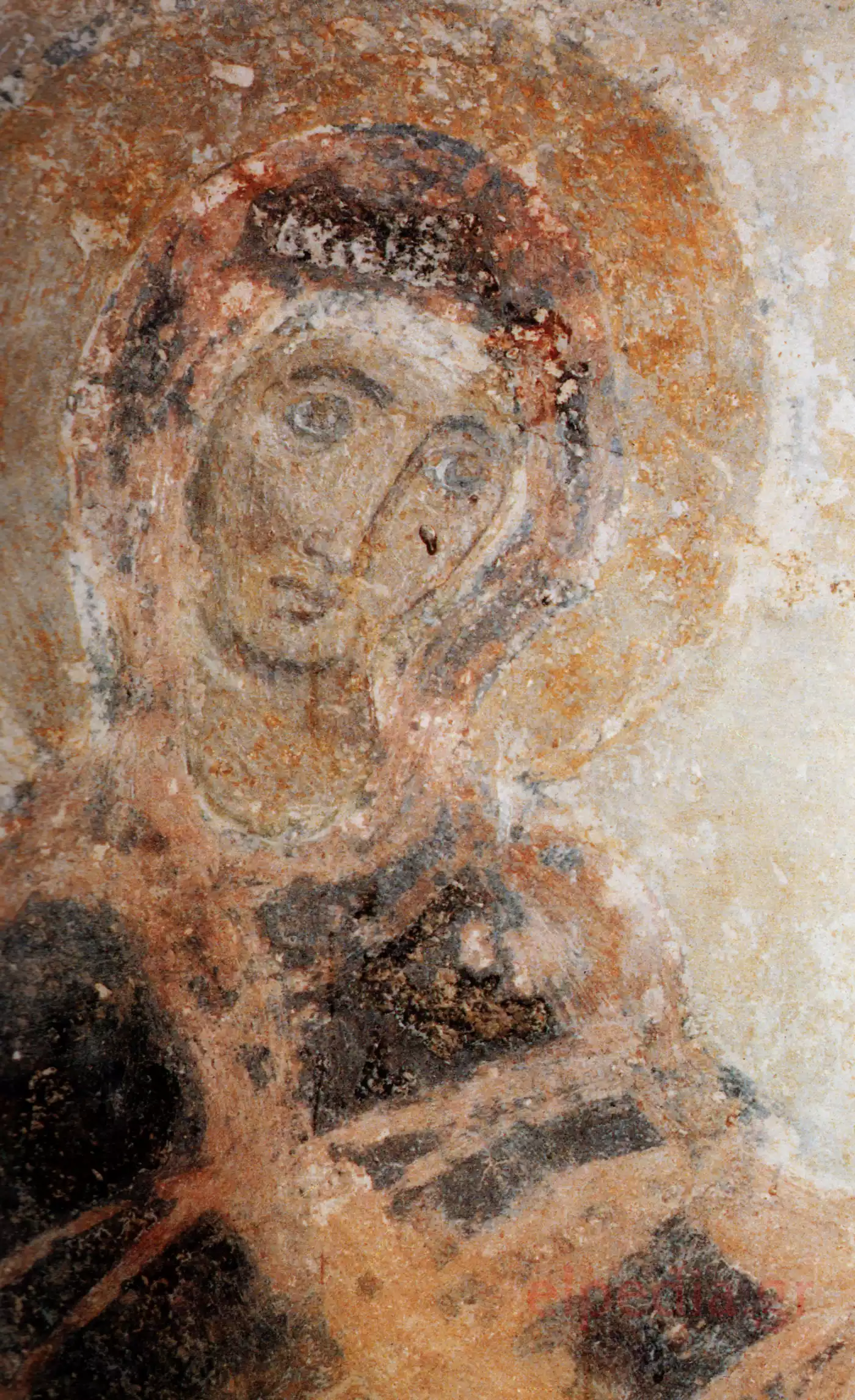
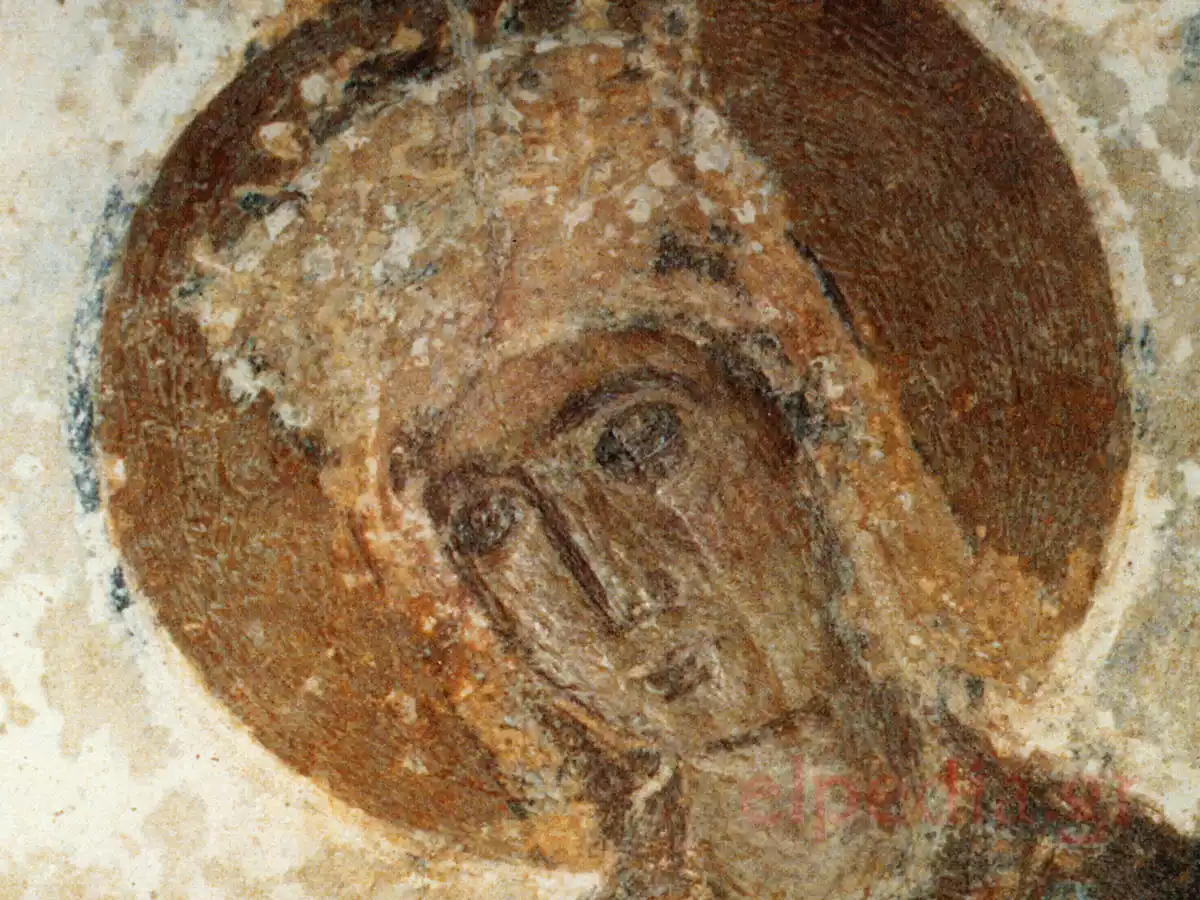
Representation of the Virgin Mary as “Saint Mary” in the Deesis of Panagia Drosiani, depicted in a supplicatory posture with delicate features typical of 7th-century Byzantine iconography
In the northern apse of the church of Panagia Drosiani in Naxos, one of the oldest known representations of the Deesis is preserved, dating back to the 7th century AD. This chapel, considered one of the oldest in the Byzantine world, hosts a complex iconographic composition that transcends the typical triadic arrangement of Christ, the Virgin, and the Forerunner. The significance of this fresco lies not only in its remarkably early dating but also in the rare preservation of pre-iconoclastic frescoes that survived the destruction of the iconoclastic periods.
This unique Deesis additionally includes two mysterious figures, forming a five-figure representation of unprecedented theological complexity. The iconographic innovation and rich symbolic content of the depiction reveal the mature theological thought of the time and the unique spiritual atmosphere that prevailed in the Aegean island monasteries during the 7th century.
Iconographic Composition of the Deesis
Christ occupies the center of the composition. He is depicted in a distinct space that emphasizes his cosmic authority, bearing a cruciform halo with the revelatory inscription “THE ONE WHO IS” in ancient letters referencing the second canonical writing (Exodus 3:14). The authenticity of this inscriptive testimony gains particular significance when examined in the context of pre-iconoclastic Byzantine theology, where the divinity of Christ was expressed through specific inscriptive typologies established by the ecumenical councils.
Holding the closed scroll of the Word and blessing with a sovereign gesture, Christ is presented in the iconographic type of the era with short hair and a trimmed beard that suggests the youthful age of the eternal Word. To the right and left of the Lord, two slender figures are depicted in supplication with outstretched hands – on the left, “+ Saint Mary,” as the Virgin was characteristically referred to in pre-iconoclastic representations, and on the right, an enigmatic female figure dressed in luxurious royal attire and a crown, surrounded by a halo like all the sacred figures in the depiction.
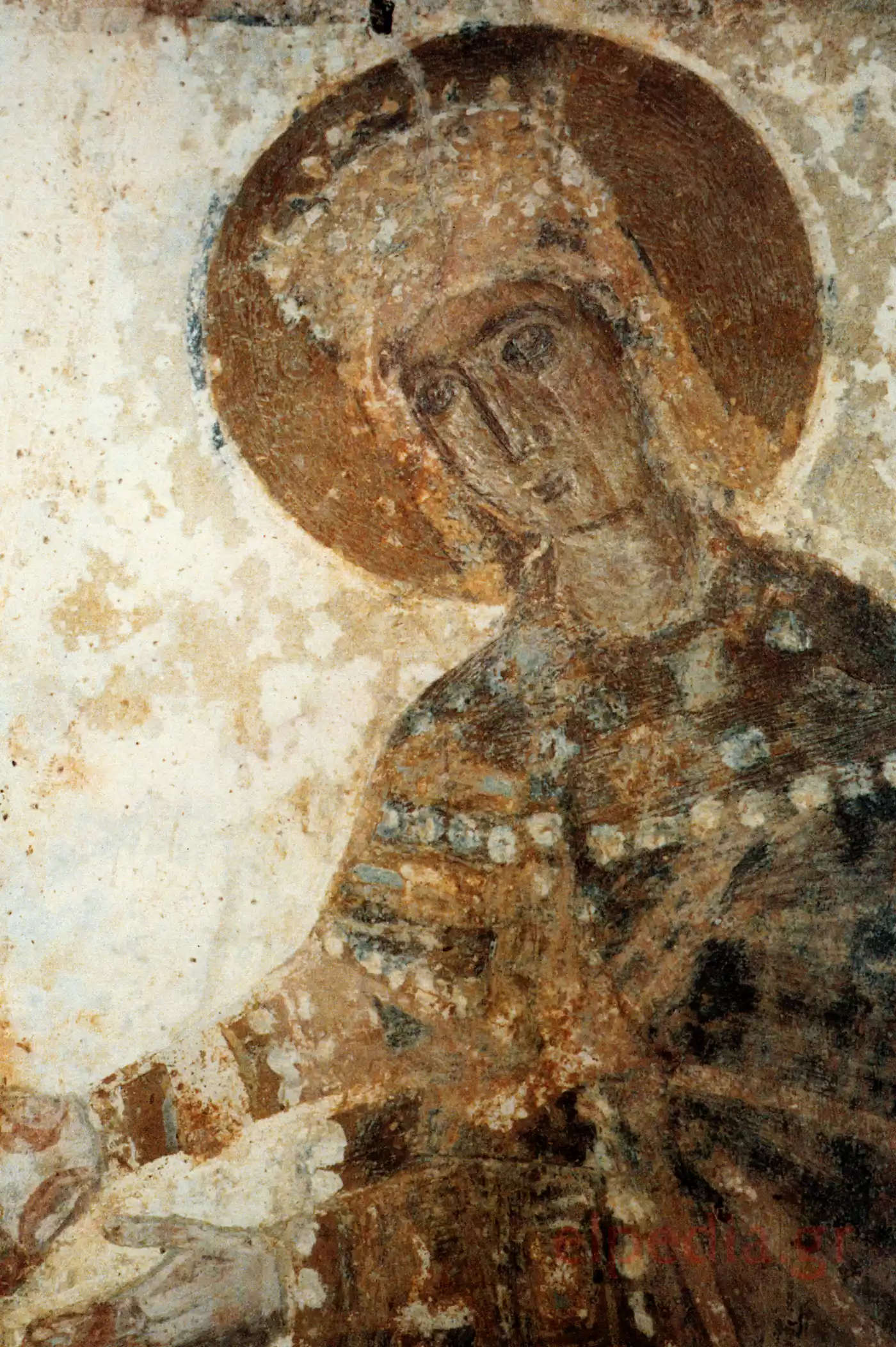
Representation of Saint Solomon in royal attire with a cross on his chest, adding Old Testament dimensions to the 7th-century Deesis of Panagia Drosiani
Theological and Symbolic Content
The presence of “+ Saint Solomon” on the left near the Virgin adds dimensions to the composition associated with Old Testament prefiguration. Depicted in royal attire in a frontal official stance, he holds a cross with a small wreath at the center – a symbol that directly evokes the idea of the Passion and messianic prophecy. The iconographic choice to include the wise king of the Old Testament provides theological dimensions that transcend the usual context of the Deesis, as Solomon’s wisdom prefigures the Divine Wisdom embodied in Christ the Word.
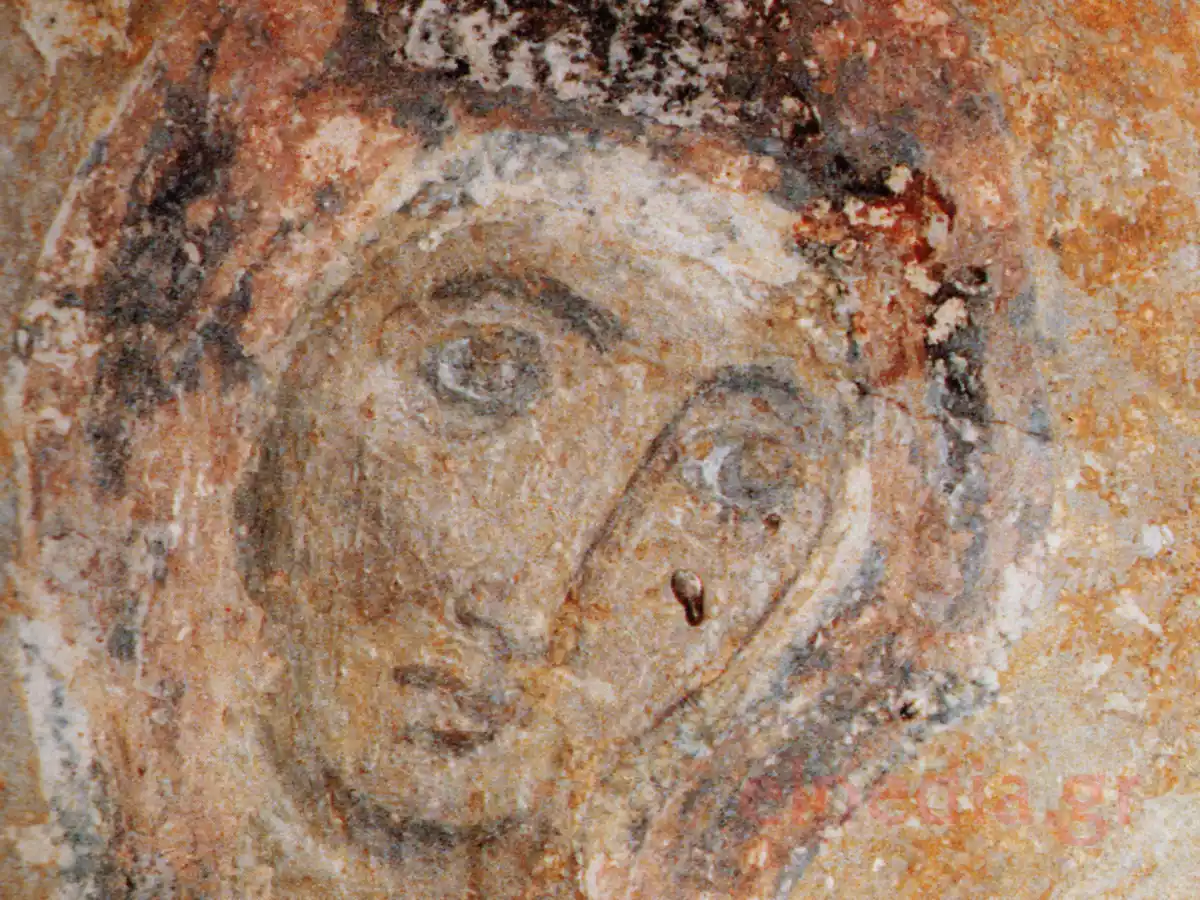
According to a recent interpretative approach, the crowned female figure personifies the “Bride of Christ” Church, as indicated by remnants of inscriptions that mention this designation. As the institution of Divine Wisdom, as suggested by Solomon’s presence, the Church appears in a revelatory form as a queen, interceding alongside the Lord Christ with the Virgin and the Forerunner for the salvation of the world. This ecclesiological dimension of the depiction reveals the mature theological thought of the circles that designed this iconographic program.
Pre-Iconoclastic Presence and Historical Significance
The pre-iconoclastic dating of the Deesis of Panagia Drosiani makes it one of the rarest surviving monuments from the period preceding the major iconoclastic crises of the 8th and 9th centuries. Most pre-iconoclastic images were destroyed during the first (726-787 AD) and second (815-843 AD) iconoclastic periods, rendering the surviving representations invaluable evidence for understanding Byzantine iconography before the organized destruction of images.
The rich in meaning Deesis continues with the depiction of the majestic Virgin with Christ-Emmanuel in the upper part of the apse, creating a whole with multidimensional revelatory and soteriological content that reflects the spiritual maturity of the monastic centers of the Aegean. The fact that such complex iconographic programs developed in the island regions of the Byzantine world demonstrates the widespread dissemination of theological education and the active participation of local monastic communities in the doctrinal and iconographic developments of the time.

The 7th-century Deesis at Panagia Drosiani stands as a unique example of pre-iconoclastic Byzantine art that preserves the complexity and spiritual depth of an era that definitively shaped Christian iconography. Through this exceptional monument, the profound theological consciousness and artistic maturity that characterized Byzantine ecclesiastical art before the major crises that would follow in the 8th century are revealed.
Bibliography
Carr, Annemarie Weyl. “Deesis.” In The Oxford Dictionary of Byzantium, edited by Alexander P. Kazhdan, et al., volume 1. Oxford and New York: Oxford University Press, 1991.
Hilsdale, Cecily J. Byzantine Art and Diplomacy in an Age of Decline. Cambridge: Cambridge University Press, 2014.
Metropolitan Museum of Art. “Icon with the Deesis – Byzantine.” Accessed 2025.
Smarthistory. “Late Byzantine naturalism: Hagia Sophia’s Deësis mosaic.” Accessed 2025.


