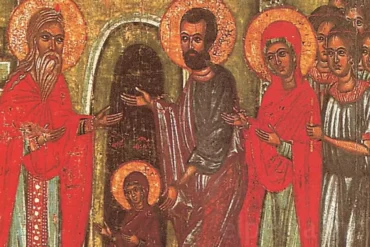
Detail featuring the parents Joachim and Anna in the image of the Entrance of the Theotokos, 14th century.
JoinedJanuary 22, 2024
Articles138
Detail: The solitary figure in the blue cap in the shadows, a work by Giuseppe Abbati
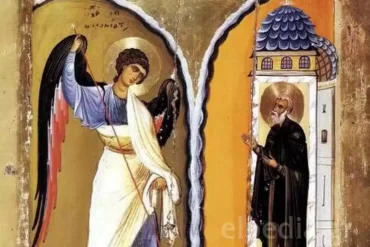
Saint Archippus in a posture of prayer before the temple, in the Byzantine icon "The Miracle at Chonae."
In the misty, fairy-tale dawns of ancient Greek thought, where mythological imagination meets primal philosophical inquiry, the Pelasgian creation emerges as one of the most captivating cosmogonic narratives in human tradition. This cosmogonic tradition, attributed to the Pelasgians—the early inhabitants of the Greek region—represents a multi-layered myth that encompasses profound symbolism regarding the origin of the universe and human existence. This myth narrates the cosmic creation through the actions of the goddess Eurynome [...]
**Bibliography**
Discover the Orphic Mysteries: the beliefs, rituals, and Orpheus in Greek mythology.
Byzantine art flourished for over 1,000 years, centered in Constantinople and focused on the Christian Orthodox Church. It is marked by religious icons, monumental churches, and a sense of timelessness.
Definitions and key characteristics of Byzantine art
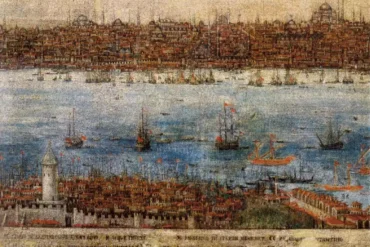
Byzantine art thrived within the context of the Byzantine Empire, with Constantinople serving as its capital from 330 AD until the fall in 1453. It spans a period of more than a millennium and is characterized by a sense of continuity and timelessness.
Within the profound philosophical framework of Byzantine theological thought emerges a fundamental challenge that transcends mere aesthetic expression: how might...
Discover the Orphic Mysteries: the beliefs, rituals & Orpheus in Greek mythology.
A figure shrouded in the mists of time. Who was Io? One might hastily answer, a priestess, the daughter of the river god Inachus, whose fate was sealed by the gaze of a god, a father of gods and men, Zeus. Her story, a tale woven of divine whim, the jealousy of a woman that becomes a scourge, and an unspeakable, almost incomprehensible transformation, is not merely a parable of ancient Argos but a mirror reflecting the facets of the [...]
Before a work of such density, almost square, with dimensions of 25.6 x 25.9 centimetres, guarded like the apple of...
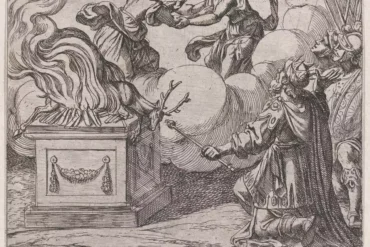
Engraving by Antonio Tempesta depicting the divine intervention during the sacrifice of Iphigenia.
The fresco of the Virgin Mary of Nikopoiou (7th century) in the northern apse of the church of Drosiani, Naxos.