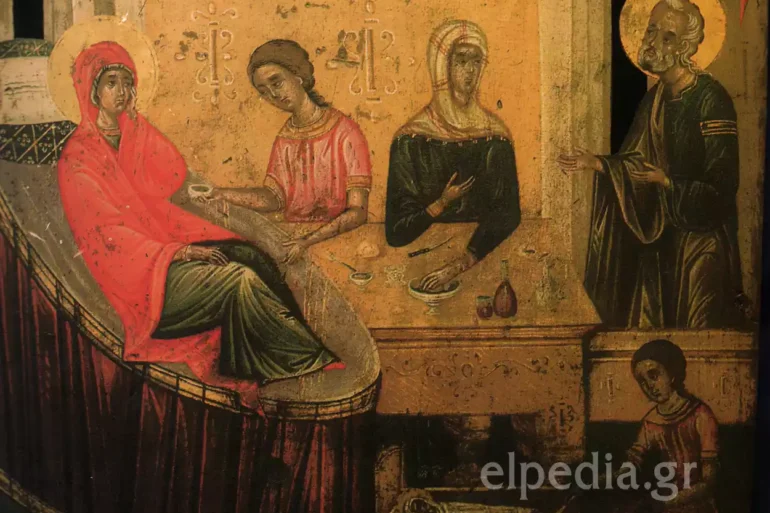
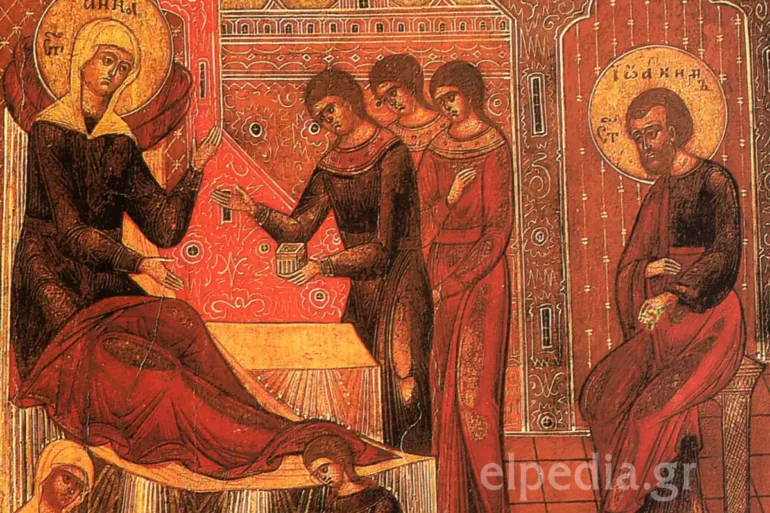
19th Century Russian Byzantine Icon of the Nativity of Mary in Red
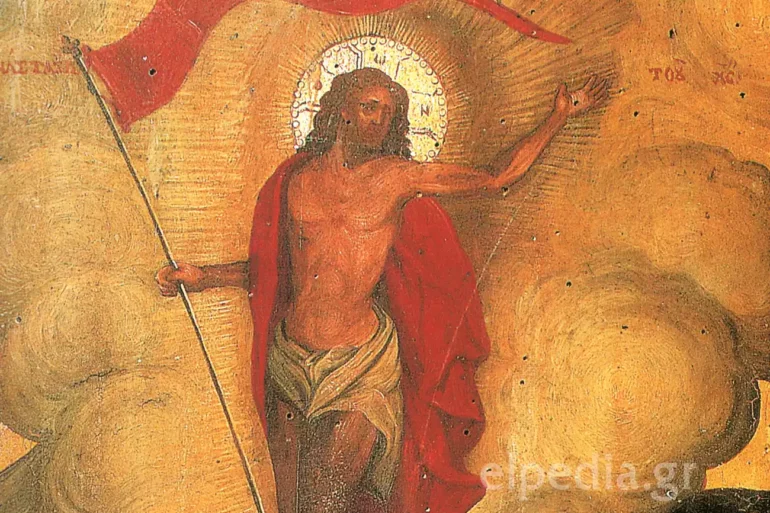
Golden atmosphere of a Byzantine icon reflecting the uncreated glory of the Resurrection.
Byzantine art flourished for over 1,000 years, centered in Constantinople and focused on the Christian Orthodox Church. It is marked by religious icons, monumental churches, and a sense of timelessness.
Definitions and key characteristics of Byzantine art
Byzantine art thrived within the context of the Byzantine Empire, with Constantinople serving as its capital from 330 AD until the fall in 1453. It spans a period of more than a millennium and is characterized by a sense of continuity and timelessness.
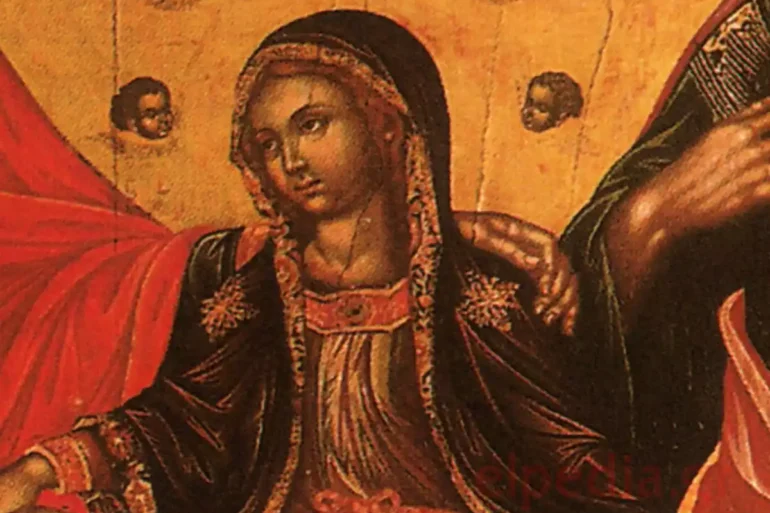
Within the profound philosophical framework of Byzantine theological thought emerges a fundamental challenge that transcends mere aesthetic expression: how might...
The art of Crete, particularly during the 16th century, constitutes a field of perpetual, almost agonising, osmosis; a place where...
Before a work of such density, almost square, with dimensions of 25.6 x 25.9 centimetres, guarded like the apple of...
To come upon an icon, especially one wrenched from its original devotional context and nestled within the cultivated silence of...
This extraordinary miniature, which comes from a Gospel manuscript of the Syriac version dated to around 1219-1220, now kept in...
The Harrowing of Hell, an icon attributed to the great Russian master Dionysius and his workshop circa 1502, is perhaps...
The Anastasis. Christ’s triumphant descent into Hades. An extraordinary fresco—Anastasis, or Resurrection—has a profound power, a theological and artistic statement...
Christ’s Descent into Hades, also revered in the Orthodox tradition as the Anastasis or Resurrection, is one of the most...
Step into a world where devotion met artistry. We’re looking at a remarkable double-sided wooden cross, a stunning piece attributed...