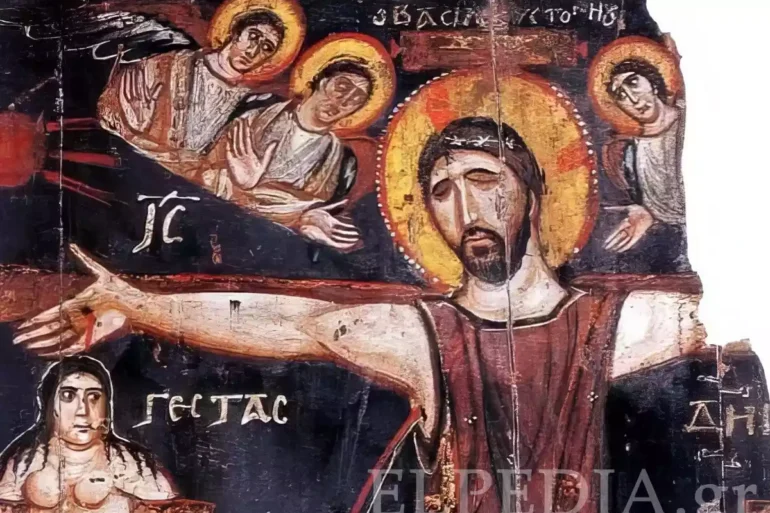
Title: The Iconic Crucifixion at Sinai Monastery: A Masterpiece Artist Name: Unknown Master Genre: Religious Icon Date: 8th century CE...
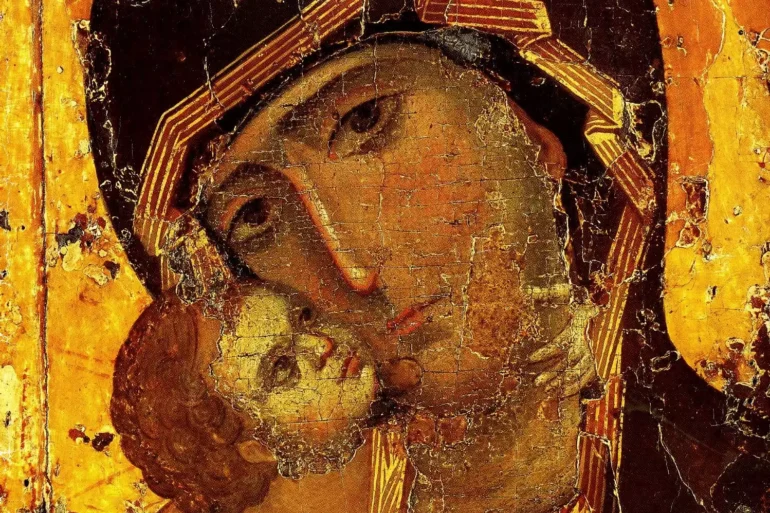
The Virgin of Vladimir icon’s intimate portrayal of mother and child created a new standard for Orthodox iconography Title: Our...
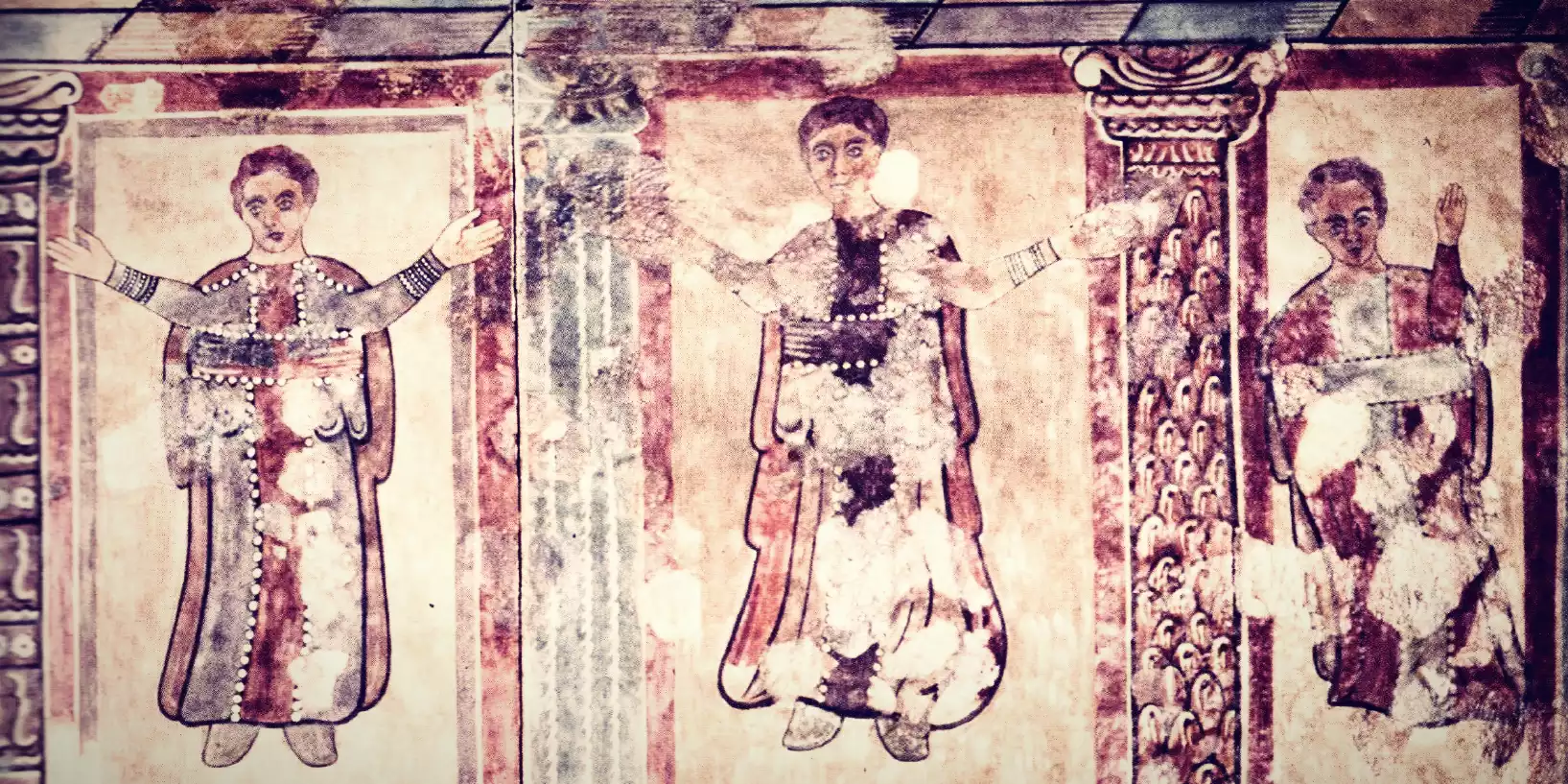
Early Christian Art was born out of the fusion of pagan and Christian symbols and themes. The Emperor Constantine played...
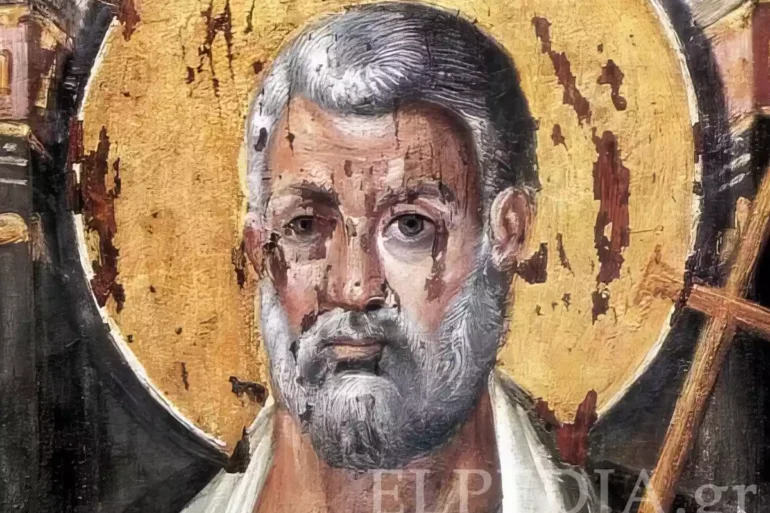
The Saint Peter encaustic icon stands as an extraordinary exemplar of early Byzantine sacred art, demonstrating remarkable technical sophistication and...
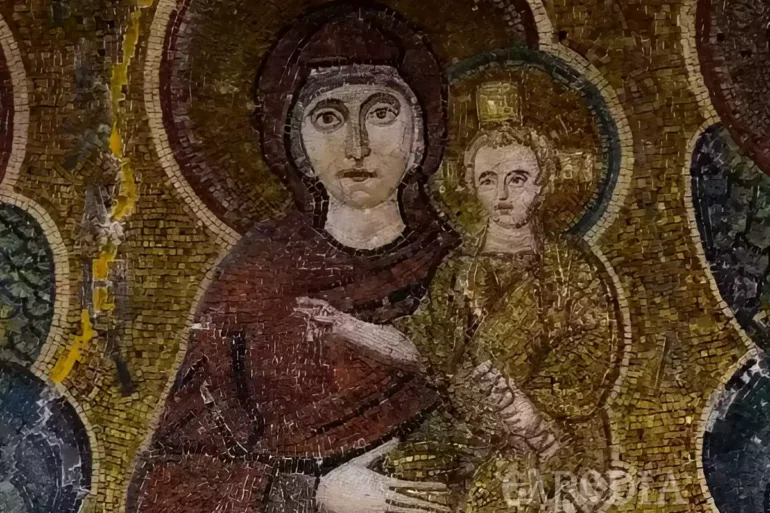
The Panagia Angeloktisti mosaic represents one of the finest surviving examples of early Byzantine art from the 6th-7th century AD....
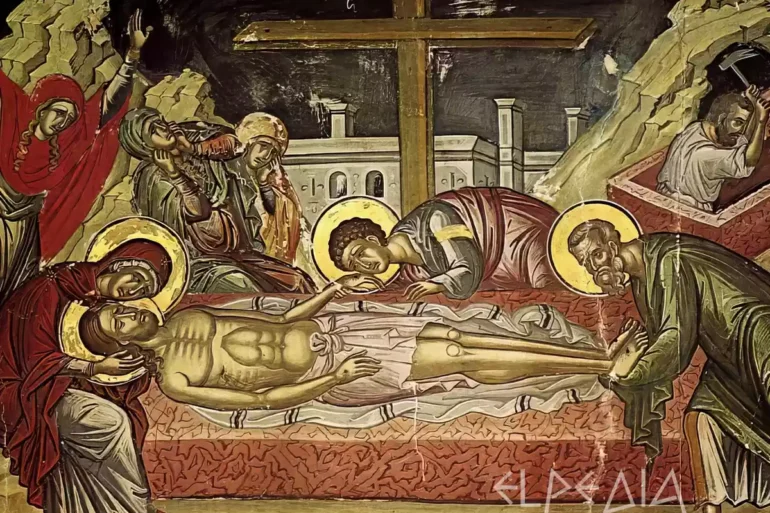
Title: Christ’s Burial (1546) Artist Name: Theophanes the Cretan Genre: Byzantine Religious Art / Post-Byzantine Icon Date: 1546 CE Materials:...
Genre: Religious Byzantine Iconography Date: 13th century Materials Materials: Egg tempera and gold leaf on wood panel Location Location: Constantinople...
The black-figure amphora depicting Achilles and Penthesilea by Exekias is one of the most important examples of Archaic vase painting. This exceptional work, dating approximately to 540-530 BC, is currently housed in the British Museum in London. It is an amphora with a height of 41 centimeters, depicting the dramatic moment of the duel between Achilles and the queen of the Amazons, Penthesilea. The technical perfection and detailed rendering of the figures demonstrate the exceptional craftsmanship of Exekias, one of [...]
Title: Virgin and Child with Saints and Angels Artist: Unknown Byzantine Master Genre: Encaustic Icon Date: Second Half of 6th...
The Last Supper by Andrea del Castagno is an iconic work of the Italian Renaissance. Andrea del Castagno, born around 1419 in Castagno and deceased in 1457 in Florence, created this impressive fresco in 1447. The work, located in the Monastery of Sant'Apollonia in Florence, highlights Castagno's artistic prowess and his ability to combine traditional iconography with innovative techniques. The composition, with its strong color contrasts and exceptional perspective, [...]
The Lamentation of Christ by Fra Angelico is one of the most significant works of the early Renaissance. Fra Angelico, born Guido di Pietro (c. 1395-1455), was an Italian Renaissance painter and a Dominican friar. The work, dated between 1436 and 1441, is currently housed in the San Marco Museum in Florence. The composition, executed with tempera and gold on wood, depicts the scene of mourning for the dead Christ. The work reflects both the artistic prowess of Fra Angelico and [...]
The funerary steles in ancient Athens were an important means of expression and remembrance for the dead during the classical period (5th-4th century BC). These carved monuments, often decorated with relief depictions and inscriptions, offered a glimpse into the social, cultural, and artistic life of the era. Through the evolution of their design and iconography, the funerary steles reflect the changing perceptions of death, family, and identity in ancient Athens. In the heart of ancient Athens, among [...]