Title: The Dormition of the Theotokos Artist: Unknown Iconographer of the Novgorod School Type: Russian Orthodox Icon Date: circa 1650 Dimensions: Unknown Materials: Egg tempera and gold leaf on wooden panel Location: Museum of Russian Icons, Clinton, Massachusetts, USA
The Icon of the Dormition in Clinton is an exceptional example of 17th-century Russian iconographic art, originating from the renowned Novgorod School. The work depicts the Dormition of the Theotokos, one of the most significant events in the liturgical cycle of the Orthodox Church. The [...]
JoinedJanuary 24, 2024
Articles850
Kostas Georgiou holds degrees in History and Theology, a Master’s in Art History with a focus on Byzantine Art, and a PhD in Ecclesiastical Literature.
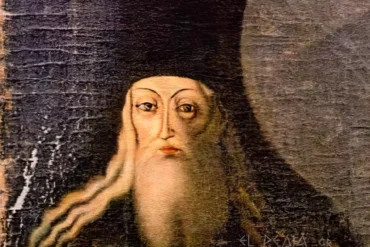
Saint Paisios Velichkovsky was a prominent figure of 18th-century Orthodox monasticism, with a decisive contribution to the revival of spiritual life in Russia and Romania. His presence on Mount Athos (1746-1763) was a milestone in his spiritual formation and in the subsequent revival of hesychastic monasticism in Slavic countries. His greatest contribution was the translation of the Philokalia into Slavonic, a work that profoundly influenced the spiritual life of Russia and played a crucial role in the resurgence of hesychastic monasticism. As a spiritual […]
Saint Cosmas the Zographite was a prominent figure of Athonite monasticism during the 13th-14th century. Born into a noble family in Bulgaria, he abandoned worldly life to embrace monasticism on Mount Athos. He entered the Monastery of Zographou, where he distinguished himself for his virtue and spirituality. Later, he withdrew to the desert, where he lived as an ascetic and gained a reputation as a miracle worker. Saint Cosmas passed away peacefully on September 22, 1323, leaving behind a rich spiritual legacy. His memory is honored every [...]
Saint Joseph the Younger (1568-1656) was a prominent figure of the Orthodox Church and Metropolitan of Timisoara. Born in Ragusa,...
Title: Fresco of Saint Cyprian
Artist: Unknown
Type: Fresco
Date: Early 15th century
Dimensions: Unknown
Materials: Fresco on plaster
Location: Holy Monastery of Valsamonero, Church of Panagia Odigitria, Crete
The fresco of Saint Cyprian is an excellent example of late Byzantine art from the early 15th century, adorning the walls of the Holy Monastery of Valsamonero in Crete. The work captures with unique mastery the artistic tradition of the Cretan School, combining Byzantine and Western elements. The mural is part of the broader iconographic program of [...]
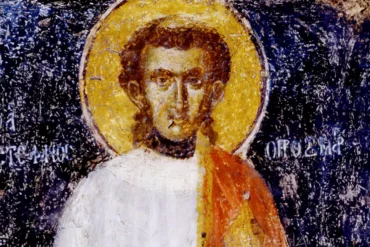
Title: Saint Stephen the Protomartyr Artist: Unknown Type: Fresco Date: Early 15th century Dimensions: Unknown Materials: Fresco on plaster Location: Holy Monastery of Valsamonero, Church of Panagia Odigitria, Crete
The fresco of Saint Stephen is an exceptional example of Byzantine iconography from the early 15th century, adorning the walls of the historic Monastery of Valsamonero in Crete. The work depicts Saint Stephen, the first martyr of the Christian faith, in a monumental and imposing stance. The style of the fresco reflects the artistic [...]
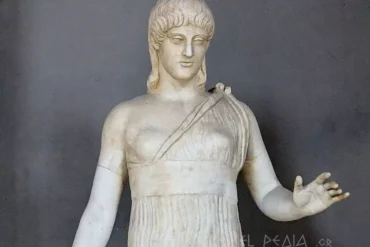
Atalanta is one of the most iconic figures of ancient Greek mythology, renowned for her exceptional prowess in hunting and athletics. Born in Arcadia or Boeotia, Atalanta was the daughter of King Iasus (or Schoeneus in the Boeotian version of the myth). According to tradition, her father, desiring a male heir, abandoned her as an infant on Mount Parthenius, where she was raised by a bear until hunters found her. As she grew up, Atalanta developed into an outstanding huntress, […]
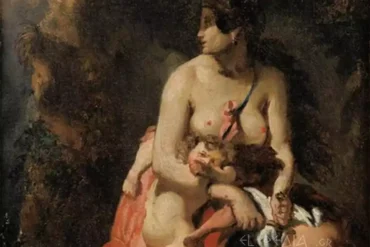
The myth of Medea, one of the most complex figures in Greek mythology, begins in ancient Colchis, on the eastern shores of the Black Sea. As the daughter of King Aeetes and the Oceanid Idyia, Medea had divine ancestry and exceptional magical powers, which she had acquired as a priestess of Hecate. Her life changed dramatically with the arrival of the Argonauts and Jason in Colchis, in search of the Golden Fleece. Under the influence of Hera and Aphrodite, Medea fell in love […]
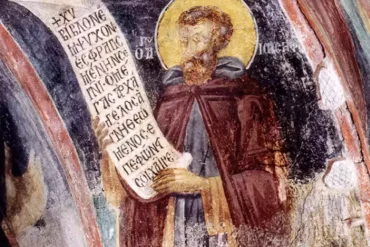
Title: Saint Joseph the Hymnographer Artist: Unknown Type: Fresco Date: Last decades of the 14th century Dimensions: Unknown Materials: Fresco on plaster Location: Holy Monastery of Valsamonero, Church of Panagia Odigitria, Crete
The fresco of Saint Joseph the Hymnographer is an exceptional example of late Byzantine art that flourished in Crete during the 14th century. The work is located in the Church of Panagia Odigitria of the Holy Monastery of Valsamonero, an important monastic complex in the Cretan countryside. The fresco depicts the Saint in a characteristic pose, holding [...]
Title: Mural of Saint Cosmas the Poet Artist: Unknown Type: Mural Date: Late 14th century Dimensions: Unknown Materials: Fresco Location: Holy Monastery of Valsamonero, Crete
In the holy church of Panagia Odigitria of the Valsamonero Monastery in Crete, the iconic mural of Saint Cosmas the Poet stands out, an exceptional example of late Byzantine art from the last decades of the 14th century. The figure of Saint Cosmas the Poet is depicted with particular mastery, highlighting his spiritual character and his hymnographic quality. The mural constitutes [...]
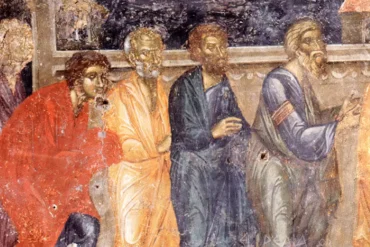
Title: The Communion of the Apostles Artist: Unknown Type: Fresco (mural) Date: 14th century Dimensions: Unknown Materials: Fresco on plaster Location: Holy Monastery of Valsamonero, Crete
The Communion of the Apostles at Valsamonero is an exceptional example of late Byzantine art from the 14th century. The mural, located in the katholikon of the Monastery of Valsamonero in Crete, depicts a composition of outstanding artistic and theological significance. The figures of the Apostles are presented with particular liveliness and expressiveness, while the color palette is characterized by the dominance of warm [...]
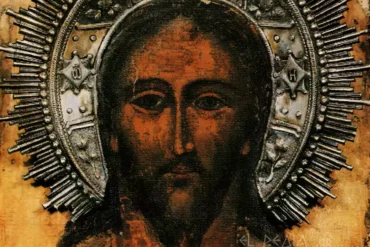
Title: Christ Pantocrator Artist: Unknown Master of the Moscow School Type: Orthodox Icon Date: Early 18th century Materials: Egg tempera and gold leaf on wooden panel Location: Moscow, Russia
The Pantocrator of Moscow is an exceptional example of Russian iconographic art from the early 18th century. The icon, crafted by an unknown artist of the Moscow School, depicts the face of Christ with intense spirituality and technical perfection. The composition is characterized by the classic depiction of the Pantocrator, where the [...]