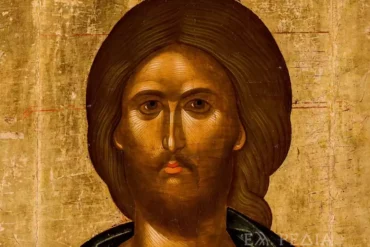
Title: Christ Pantocrator Artist Name: Angelos Akotantos Genre: Byzantine Icon Date: 15th century A.D. Dimensions: 89 x 57 cm Materials: Egg tempera and gold leaf on wood Location: State Museum of Fine Arts Pushkin, Moscow
The Pantocrator by Akotantos is one of the most significant examples of the Cretan School of iconography from the 15th century. The icon, crafted with exceptional mastery and theological precision, captures the form of Christ Pantocrator in a composition that combines spiritual strength with divine tranquility. The [...]
JoinedJanuary 24, 2024
Articles850
Kostas Georgiou holds degrees in History and Theology, a Master’s in Art History with a focus on Byzantine Art, and a PhD in Ecclesiastical Literature.
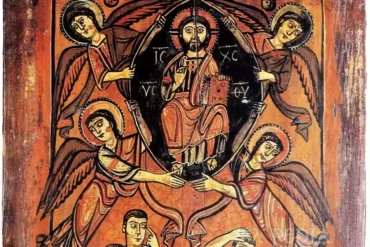
Title: Christ Pantocrator in Clinton (1580) Artist Name: Unknown Russian Iconographer Genre: Orthodox Christian Icon Date: c. 1580 AD Dimensions: 71 x 54 cm Materials: Egg tempera and gold leaf on wooden panel Location: Museum of Russian Icons, Clinton, Massachusetts, USA
Christ Pantocrator, as the dominant theme of Orthodox iconography, is depicted with exceptional mastery in this 16th-century Russian icon. The work is an exquisite example of the long-standing tradition of Russian iconography, where theological significance is harmoniously intertwined [...]
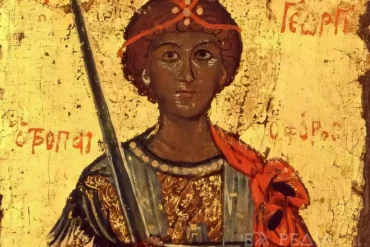
The Archangel and Saint George are the central theme of an exceptional 17th-century Byzantine diptych kept at the Holy Monastery of Saint Paul on Mount Athos. The work, crafted with egg tempera and gold leaf on wood, represents the pinnacle of Byzantine iconographic art. The vertical composition is divided into two distinct levels: the upper section is dominated by the figure of the Archangel with imposing wings, while the lower part depicts Saint George in military attire. The technique combines traditional Byzantine [...]
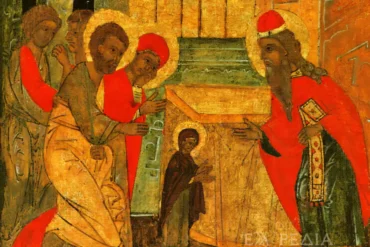
The Entrance of the Theotokos in Solvychegodsk is one of the most significant works of Russian iconographic art of the 16th century. The icon, dated around 1580-90, captures with exceptional mastery the biblical episode of the three-year-old Virgin Mary's entrance into the Temple. The scene takes place in an architectural setting that combines Byzantine and Russian elements, with the golden background creating a transcendent atmosphere. The figures are rendered with delicacy and precision, while the intense reds and golds dominate the composition creating [...]
In ancient Greek mythology, love endures. Few tales express this truth as poignantly as the one involving Alcyone and her...
Artist: Unknown Artist Date: 9th-10th century Dimensions: 41,8 x 27,1 cm. Materials: Egg tempera on wood Location: Sinai Monastery ...
Pandora, the first woman in Greek mythology, is an emblematic figure inextricably linked to the concept of humanity’s destiny. Created...
The Nemean Lion, a creature of frightful power and unyielding skin, was more than a mere figment of fancy. It...
Hephaestus, god of fire, metallurgy and technology in ancient Greek mythology, holds a special place in the pantheon of the...
Early Christian Art was born out of the fusion of pagan and Christian symbols and themes. The Emperor Constantine played...
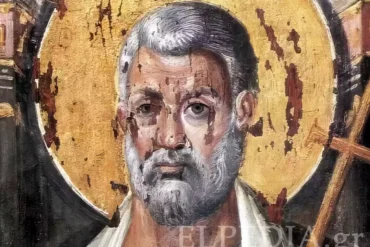
The Saint Peter encaustic icon stands as an extraordinary exemplar of early Byzantine sacred art, demonstrating remarkable technical sophistication and...
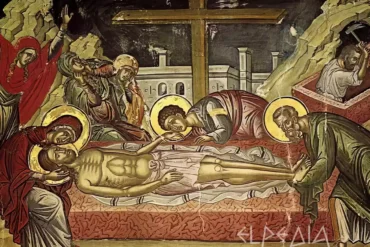
Title: Christ’s Burial (1546) Artist Name: Theophanes the Cretan Genre: Byzantine Religious Art / Post-Byzantine Icon Date: 1546 CE Materials:...