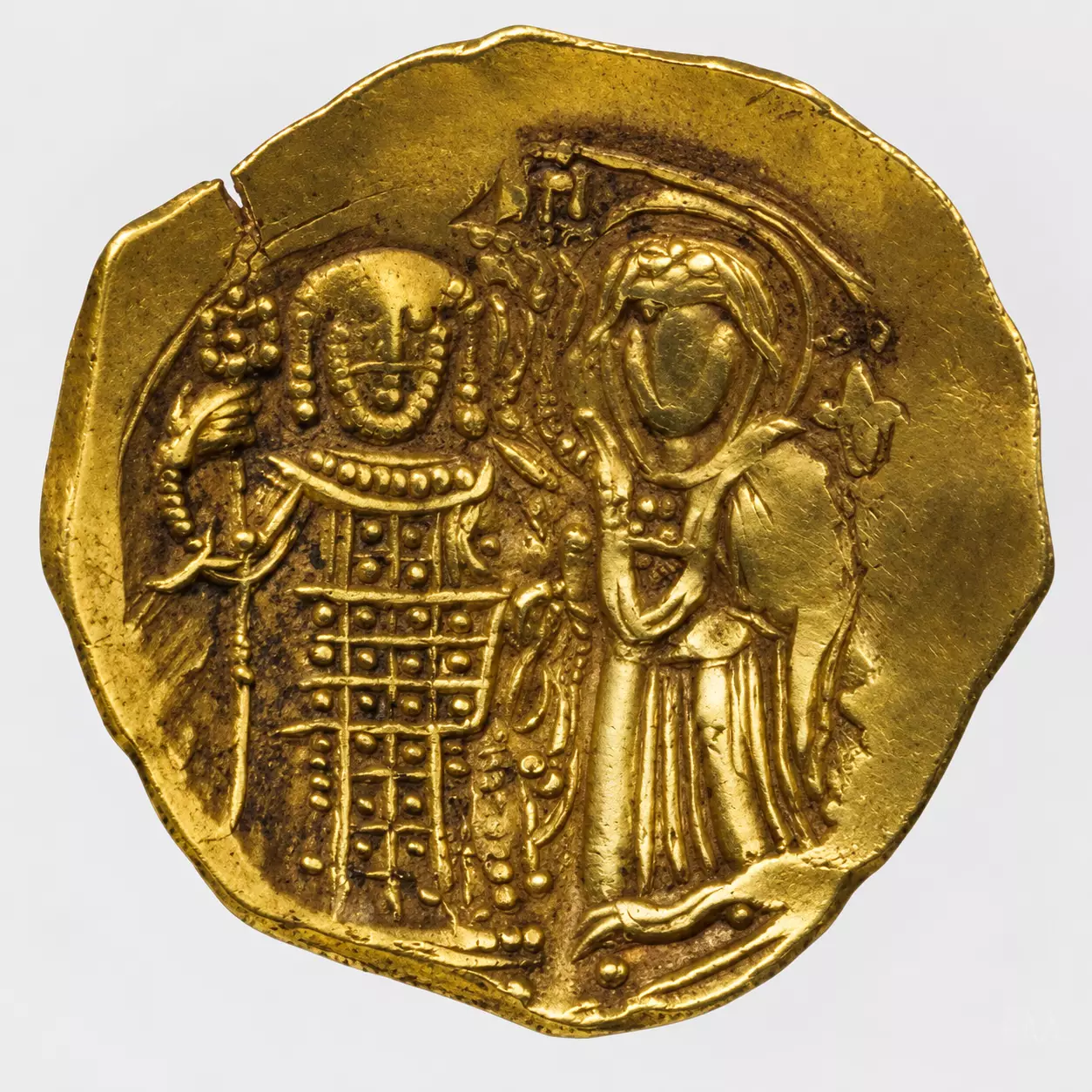
The John III Doukas Vatatzes hyperpyron, struck at Magnesia during the reign of the Nicaean emperor John III (1222–1254), brings imperial authority and sacred sanction together on a gold surface only a few centimetres across. The example preserved in the Museum of Byzantine Culture in Thessaloniki is dated by the Museum to 1224–1254, measures 2.6 cm in diameter and weighs 4.24 g. Its recorded provenance is Rentina. The coin belongs to the monetary production of the Empire of Nicaea, one of the Byzantine successor states established after the Latin conquest of Constantinople in 1204.
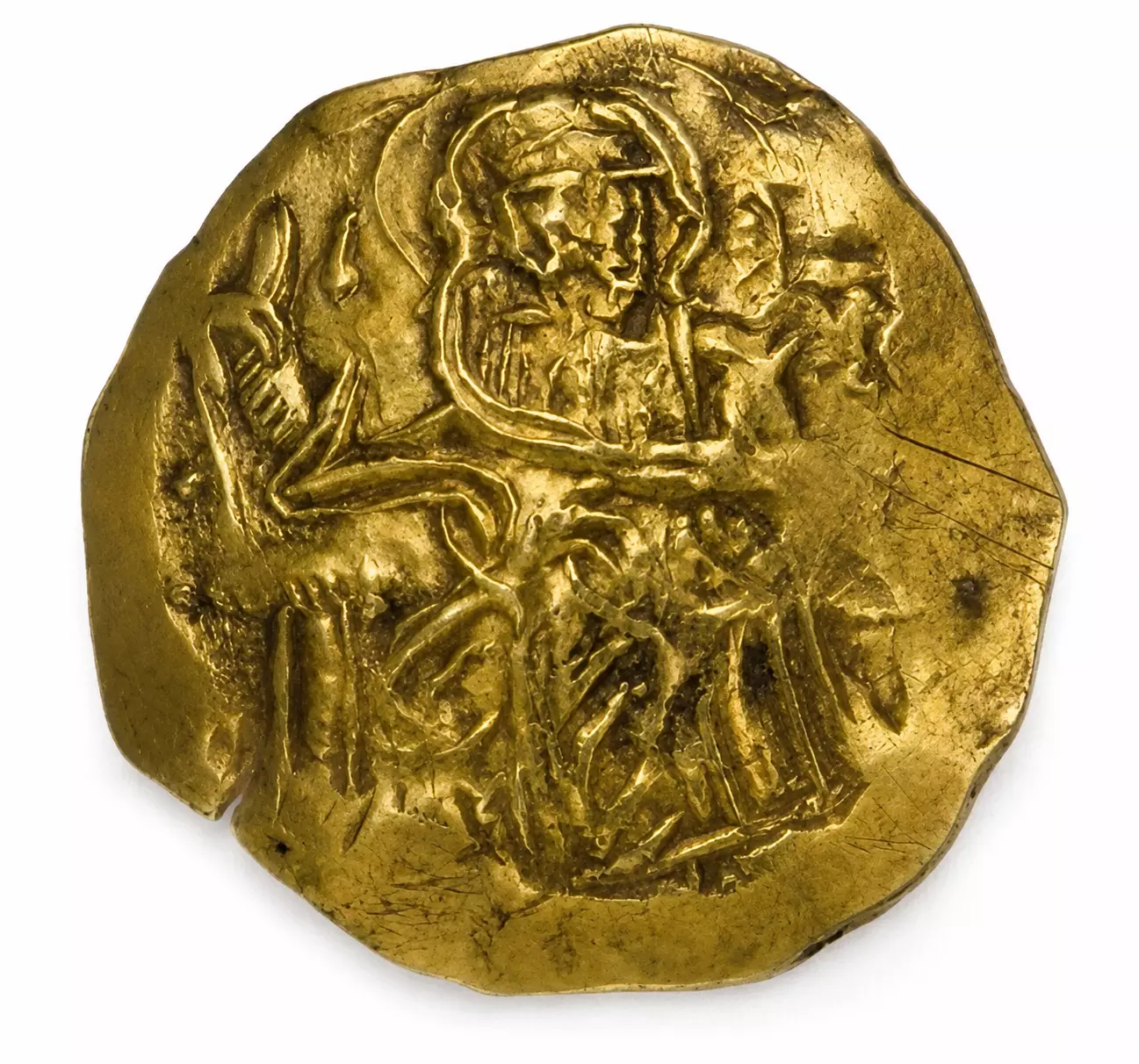
John III Doukas Vatatzes Hyperpyron: Imperial and Sacred Imagery
On one side Christ Pantokrator is shown enthroned frontally. His halo and the curved outline of the throne organise the compact field, while his raised hand gives the established gesture of benediction and the other supports the Gospel book. Compressed by the small scale and slightly irregular flan, the relief renders folds, facial features and throne through abbreviated lines and raised points. Wear and striking irregularities soften several details, yet the central image remains clearly legible. Comparable examples identify this Magnesia type with the enthroned Pantokrator.
The reverse is more densely occupied. John III stands in imperial dress, wearing the loros and holding the labarum and akakia, while the Theotokos extends her hand to crown him. Their figures nearly fill the available space. Between them, the coronation gesture becomes the visual centre of the composition: political rank is expressed through imperial regalia, while the Virgin’s direct participation places the emperor’s authority within a sacred visual framework. The same arrangement occurs on other surviving hyperpyra struck at Magnesia under John III.
Across both sides, minute irregularities in the gold disrupt individual contours and occasionally merge details into the surrounding relief. Still unmistakable is the fundamental hierarchy—Christ enthroned on one face, emperor and Theotokos on the other. In an object intended to circulate from hand to hand, an extensive language of Nicaean imperial representation has been condensed into a field scarcely larger than a modern coin.
(The translation was edited by K. Brown.)